
ULFA Leader’s Hidden Role in Maoist Unification Revealed
A Bhutan Connection to Left-Wing Merger
Indiadailyupdate.com – In Bhutan training camps key ULFA functionary Asanta Bagh Phukan played a pivotal role in unifying India’s radical left-wing movements during a critical period in the country’s counter-insurgency history. Recent revelations from Shantanu Nandan Sharma’s comprehensive book ‘Rebel Bastar: History, Maoism and the Search for Answers in India’s Heartland’ have shed new light on this remarkable chapter of political consolidation. The discovery reveals how an Assamese separatist leader helped bridge ideological divides between competing Naxal factions, ultimately creating a more formidable communist movement in India.
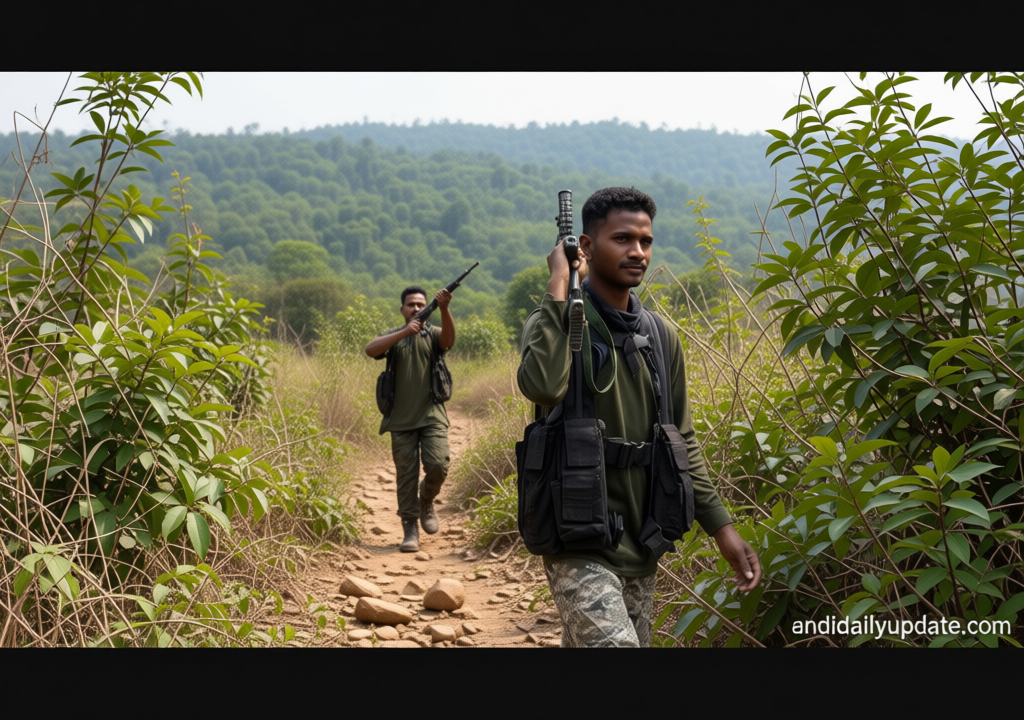
During the late 1990s and early 2000s, Phukan served dual roles as organizing secretary and central committee member of the United Liberation Front of Asom. His position overseeing ULFA’s training facilities in Bhutan provided him with unique access to multiple political groups operating in the region. Acting as a crucial intermediary, Phukan facilitated negotiations that would eventually bring together three separate Naxal organizations into one unified entity, strengthening their collective bargaining power and military capabilities.
“This formidable merger process, which began in 1998 with the unification of CPI (ML) PW and Narayan Sanyal’s CPI (ML) Party Unity (PU), was orchestrated by an Assamese extremist named Asanta Bagh Phukan. Surprisingly, the negotiations did not unfold in Bihar or Bastar but in the tranquil, remote hills of Bhutan, within a camp operated by the United Liberation Front of Asom (ULFA),” Sharma wrote in his detailed analysis.
Operation All Clear and the Mystery of Phukan
The timeline of Phukan’s involvement becomes particularly significant when considering Operation All Clear, a coordinated military campaign launched by the Royal Bhutan Army with crucial support from India’s armed forces. Conducted in December 2003, this operation targeted militant encampments across Bhutan, resulting in the displacement of numerous insurgents. Phukan’s name appears prominently on lists of individuals who disappeared during this operation, yet his exact whereabouts remain a subject of ongoing debate among researchers and intelligence analysts.
Sharma’s research team obtained valuable confirmation of Phukan’s active participation in the Maoist consolidation from Sashadhar Chowdhury, who served as ULFA’s foreign secretary during this transformative period. According to Chowdhury’s detailed account, the collaboration between ULFA and Maoist groups extended well beyond mere hosting arrangements.
“In 1997, Bagh Phukan was instrumental in hosting leaders from PU, MCCI, and CPI (ML) (People’s War) at our camps in Bhutan”.
“We also aided them in procuring arms and sent our cadres to their camps. I was then based in Dhaka and didn’t personally meet the leaders. I don’t know the nitty-gritty of the process.”
Historical Ties Between ULFA and Maoists
The relationship between ULFA and Maoist organizations extended far beyond the Bhutan training camps. Senior ULFA officials have previously documented numerous visits from prominent Maoist figures, including Ganapathy and Kishenji, to ULFA’s facilities in Bhutan during the early 2000s. These visits facilitated knowledge exchange, tactical coordination, and mutual support between the two movements facing similar challenges from state forces.
The parallel between ULFA and the Maoists extends beyond their historical connections. Much like ULFA, which has been reduced to approximately a few dozen combatants led by Paresh Baruah operating from forested regions in Myanmar, the Indian government announced in March 2026 that the Maoist movement had been effectively defeated following an extensive security campaign. This convergence of fortunes highlights the changing landscape of India’s internal security challenges.
Frequently Asked Questions
What was the significance of Bhutan as a training ground for Indian insurgents? Bhutan provided a neutral territory where various Indian militant groups could establish training camps away from direct Indian military pressure. The country’s geography and political stance made it an ideal location for cross-border insurgent activities.
When did Operation All Clear take place and what was its impact? Operation All Clear was conducted in December 2003 by the Royal Bhutan Army with Indian support. It resulted in the destruction of numerous militant camps and the disappearance of several key figures, including Asanta Bagh Phukan.
How did ULFA and Maoists support each other during this period? The two organizations exchanged cadres, shared training facilities, assisted in arms procurement, and maintained regular communication through their respective leadership structures, creating a robust network of mutual support.
What is the current status of both ULFA and Maoist movements? Both movements have significantly declined in strength. ULFA operates with approximately a few dozen combatants from Myanmar, while the Indian government declared the Maoist movement effectively defeated in March 2026 following sustained military operations.