When Politics Meets the Concert Stage
Indiadailyupdate.com – For years, political gatherings have followed a familiar pattern, with veteran leaders commanding attention while narratives shift according to current affairs. Yet the recent gathering in Prayagraj, along with two preceding events in Kota and Dehradun, transported me back to Bangalore in 2007. That was when I witnessed one of India’s earliest rock concerts by an international act. The journey there demanded considerable effort. Young attendees showed no hesitation spending eighteen hours crammed beside a sleeper-coach doorway on a train departing from Pune. Decades later, arriving at Prayagraj—historically the epicenter of student activism in Uttar Pradesh—for Rahul Gandhi’s youth outreach program, Chhatron Ki Goonj, revived that same sense of excitement.
A Storm That Couldn’t Dampen the Spirit
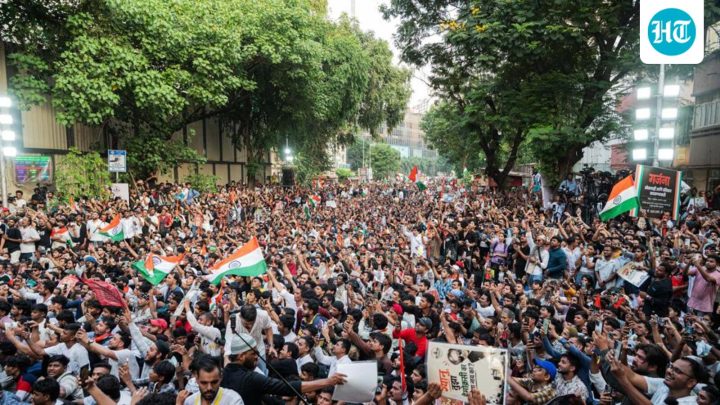
Continuous rainfall and baseless efforts to postpone the gathering did nothing to reduce the city’s enthusiasm for its beloved son. Navigating through mud and wet slush to enter the venue barely slowed down thousands of enthusiastic young supporters. The atmosphere crackled with energy. Numerous attendees climbed atop stationary trucks loaded with stage equipment, as well as bulldozers stationed nearby, all seeking an improved vantage point—mirroring how concertgoers shifted positions to catch a clearer view of the stage.
When the performance commenced, it became evident that India’s political arena has undergone considerable evolution. Campaigns and public addresses have transitioned from handwritten placards and traditional folk melodies to digital displays and sporadic musical segments. This particular event, however, was meticulously designed for its intended demographic—Generation Z, approximately thirty-eight crore individuals anticipated to qualify for voting in the 2029 national elections. Understanding this cohort, organizers recognized they would likely reject conventional rally formats.
The Rockstar Enters the Political Arena
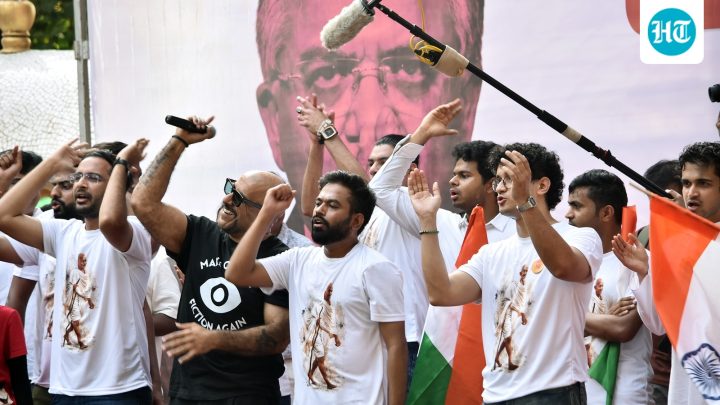
Rappers and disc jockeys established the evening’s mood, paralleling the electrifying opening acts that heighten anticipation before a headliner takes the stage. The performance area looked nothing like traditional political platforms—there was no wooden lectern or orderly rows of seating occupied by party dignitaries. Instead, a vast live-concert configuration dominated the space, illuminated by lights, enveloped in smoke, and amplified by powerful sound systems designed for a rock performer to own the stage.
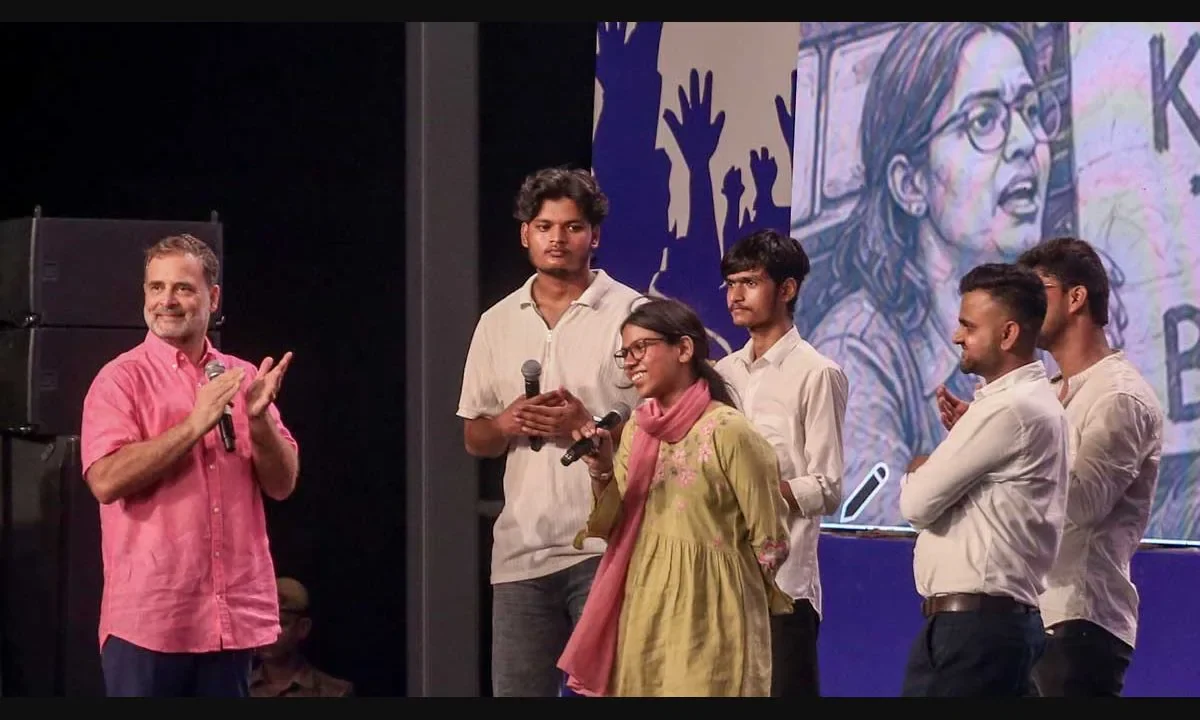
Every time the host announced his name, sound levels escalated, creating waves through the assembled crowd. Enthusiastic cheers and synchronized chants echoed throughout the venue, prompting a realization that I had witnessed this scene before. Then Rahul Gandhi appeared, surrounded by thunderous applause, cascading confetti, billowing smoke, and bursting fireworks. Clad in a relaxed pink shirt paired with dark trousers, his face radiated a wide smile as he received whistles, roars, and the illumination of countless mobile phone screens.
As he addressed the audience, their voices joined his. The most enthusiastic responses came when he referenced his family’s ties to Prayagraj—a topic he had extensively discussed earlier that day during a visit to his ancestral residence, Anand Bhawan, accompanied by his niece Miraya. His speech centered on three pillars: Dard, Data aur Daulat. With assured movements and a microphone in hand, he embodied the essence of a rockstar commanding a dynamic stage setting.
The audience responded collectively—much like our reaction to 2 Minutes to Midnight at that Iron Maiden performance in Bangalore—when he encouraged them to continue battling paper leaks and maintain the mohabbat ki dukaan. Following this, he engaged in a more personal exchange with young students, offering high-fives, posing for photographs, and sharing brief conversations, ultimately pledging commitment to non-violence.
A New Chapter in Political Mobilization
For a brief moment, the evening in Uttar Pradesh—the upcoming electoral battleground—seemed to witness a transformation in political communication. The rockstar-inspired presentation had seamlessly integrated into contemporary politics, indicating that something innovative was emerging. Perhaps this represents how political engagement functions in the era of Instagram reels—reduced emphasis on podiums, heightened focus on performance; diminished reliance on formal speeches, increased attention to spectacle. While the core message remains political, the delivery mechanism has fundamentally shifted.
If the enthusiastic crowd serves as any indicator, future politics may benefit considerably from studying the concert traditions of previous decades.
Puneet Pathak is a Congress spokesperson in Uttar Pradesh. The opinions expressed in this article are those of the author and do not purport to reflect the opinions or views of THE WEEK.
Related Reading
Frequently Asked Questions
What is The rockstar and the winds of political?
The rockstar and the winds of political is the main topic of this guide. The article explains the context, practical details, and next steps readers should understand.
Why does The rockstar and the winds of political matter?
The rockstar and the winds of political matters because readers are looking for a useful answer, not just a short summary. Good content should match search intent and help them decide what to do next.