
Patiala’s Punjabi University Gives In on Fee Hike
Indiadailyupdate.com – After nineteen days of sustained campus protest, Patiala’s Punjabi University gives its full concession: the proposed fee revision for the 2026-27 academic year has been withdrawn in its entirety. The decision was communicated on Sunday following a direct sit-down between university officials and student representatives, restoring every charge — tuition, registration, hostel, and course fees — to the levels of the preceding year.
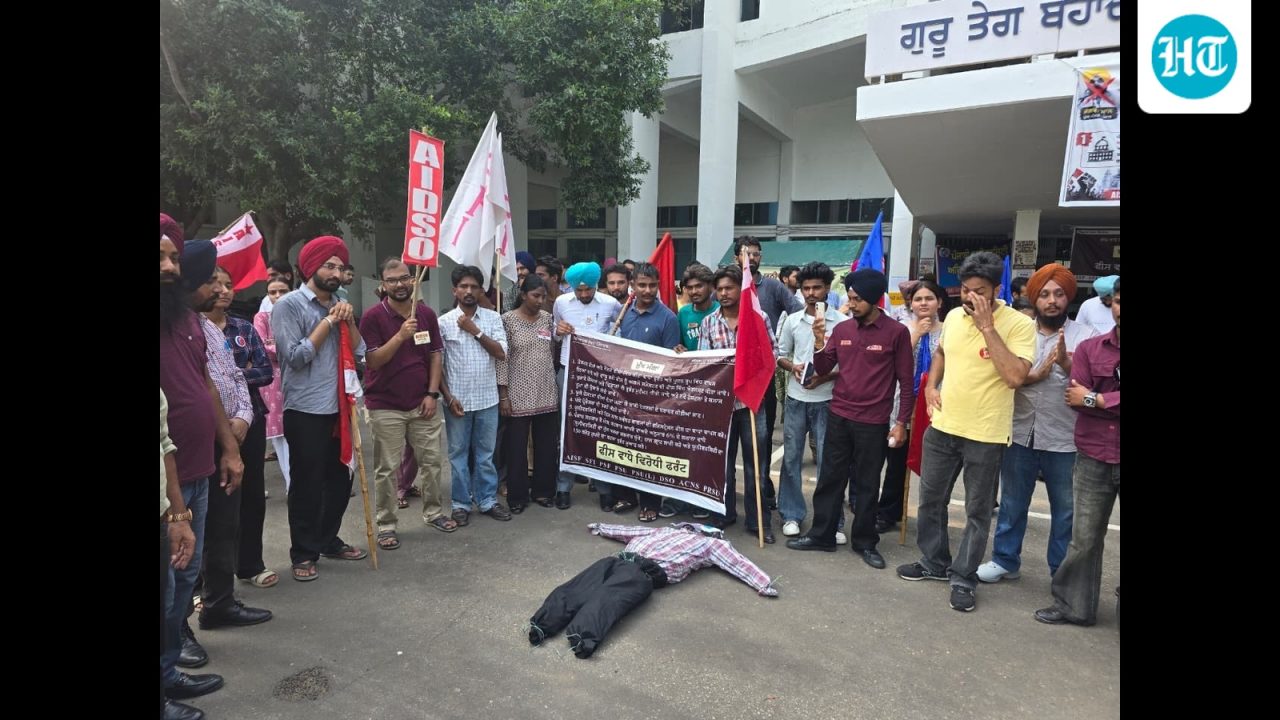
The standoff opened on August 12 when the administration unveiled what it framed as a necessary recalibration of its pricing. In reality, it constituted the first upward adjustment in five years. Average increases hovered near 17 percent, but the spread was uneven: certain course fees surged as high as 657 percent, while hostel charges climbed between 30 and 42 percent. Students characterised the distribution as punitive for a large share of the enrolment.
Partial Rollback Rejected; Full Withdrawal Demanded
On August 18, after eight days of continuous agitation, the university offered a partial rollback. Organised student groups, coordinating under the Fee Hike Opposition Front, dismissed the gesture as inadequate and insisted on an unconditional, complete withdrawal. They maintained an indefinite sit-in outside the Vice-Chancellor’s office until the full reversal was secured.
Wider Fiscal Grievances and Institutional Debt
The agitation extended beyond the fee question. Students pressed the administration on deteriorating hostel infrastructure, a persistent shortage of accommodation beds, and recurring delays in salary disbursement to teaching staff. They urged the Punjab state government to write off the institution’s outstanding borrowing of roughly ₹150 crore, on which the university was reportedly servicing approximately ₹14 crore in annual interest. For a fully state-funded body, that debt load translates directly into pressure on operational budgets and, ultimately, on student-facing charges.
University officials had defended the original revision by noting that the fee schedule had remained essentially static for five years even as operational costs, staffing expenses, and infrastructure maintenance bills continued to climb. They characterised the proposed increase as a delayed correction rather than a sudden imposition.
Vice-Chancellor Jagdeep Singh, speaking after the Sunday meeting, grounded the rollback in what he called the institution’s long-standing commitment to accessible and affordable higher education.
“Student welfare and academic interests are the university’s highest priorities. Although the university is currently facing serious financial challenges, it remains committed to ensuring that no eligible student is deprived of quality higher education due to financial hardship,” said Singh.
Gurdas, one of the principal student leaders who had spearheaded the agitation, welcomed the decision but cautioned that the struggle was not over.
“This is a victory for students. Our fight was for affordable education and it will continue,” he said.
He added that the organised protest would not be formally called off until the university published an official notification confirming the rollback in writing, ensuring the reversal carried institutional weight rather than remaining a verbal assurance.
Institutional Profile and Administrative Update
Punjabi University, headquartered in Patiala, is a fully state-run institution that enrols more than 14,000 students across undergraduate, postgraduate, and doctoral programmes. Its academic portfolio spans humanities, social sciences, natural sciences, commerce, management, computer science, engineering, law, education, physical education, performing and fine arts, languages, and journalism and mass communication. The breadth of its offerings means that any fee adjustment touches a very large and economically diverse student population, many of whom come from rural Punjab and depend on state subsidies to remain enrolled.
In a separate administrative move announced the same Sunday, the university named Ajita Singh, a professor in the department of sports science, as its new registrar. Singh assumed the charge of the office succeeding the previous incumbent, a transition the administration described as routine.
Frequently Asked Questions
When did the fee-hike protest begin? Student agitation commenced on August 12, following the university’s announcement of the revised fee structure for the 2026-27 academic year.
What was the magnitude of the proposed increase? The average uplift across fee categories was close to 17 percent, though individual course fees rose as high as 657 percent and hostel charges climbed between 30 and 42 percent.
Has the rollback been confirmed in writing? As of the Sunday announcement, the reversal was communicated verbally. Student leaders stated they would await an official written notification before formally concluding the protest.
Who was appointed as the new registrar? Ajita Singh, a professor in the department of sports science, was named registrar in a separate administrative move announced the same Sunday.
What is the university’s outstanding debt? The institution carries roughly ₹150 crore in borrowing, on which it reportedly services approximately ₹14 crore in interest each year.