
Humanoid Robots Just Outran Usain Bolt — and the Industry Is Moving Faster Than Most Economies Can Absorb
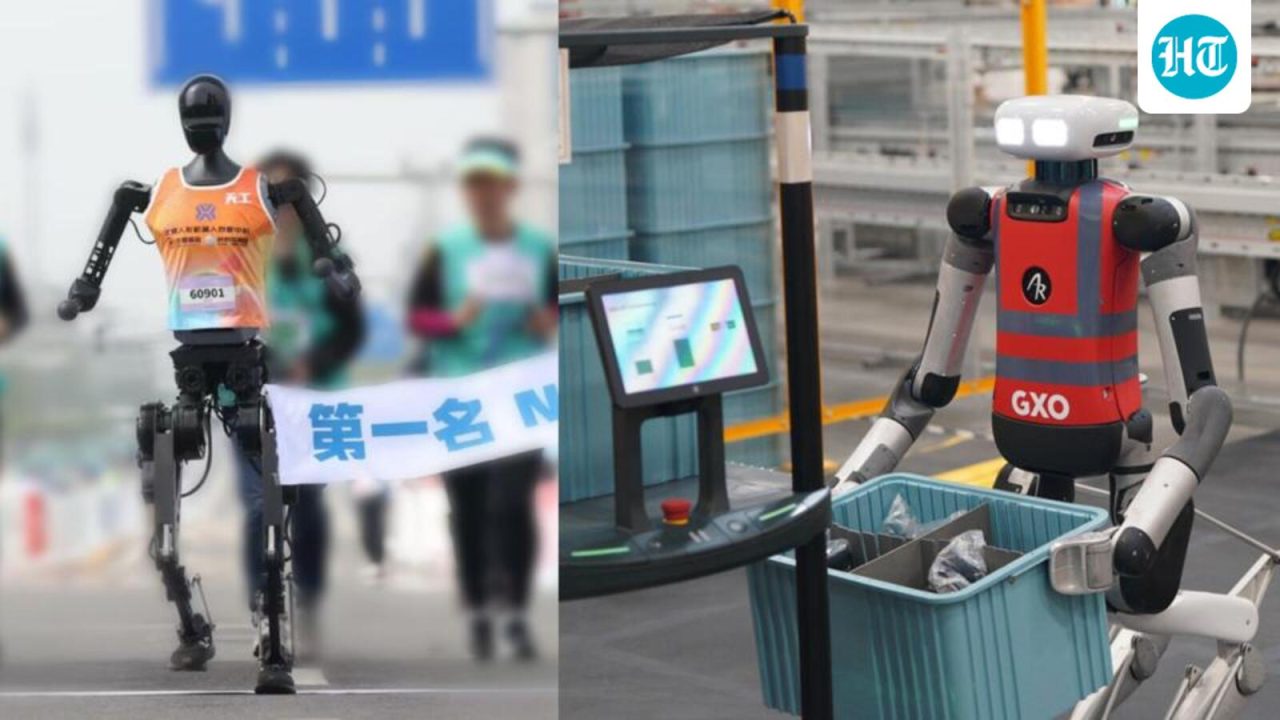
Indiadailyupdate.com – A machine built in China sprinted 100 metres in 8.64 seconds during the World Humanoid Robot Games held in Beijing earlier this month. For perspective, the fastest human ever recorded — Usain Bolt — cleared the same distance in 9.58 seconds. The robot in question, designated Tiangong Ultra, was engineered by X-Humanoid, a Chinese robotics firm. The margin over the human benchmark is not trivial, and it arrived not in a laboratory demo but in front of spectators at a multi-event competition.
The athletic showcase did not stop at sprinting. A separate X-Humanoid unit cleared 2.88 metres in a standing high jump. Purists will note that this cannot be formally compared with the 2.45-metre world record set by Cuba’s Javier Sotomayor in 1993, because Sotomayor achieved his mark using the Fosbury Flop running approach rather than a static take-off. Still, the raw clearance distance underscores how quickly actuator torque and balance-control algorithms have advanced.
From Lab Curiosity to Commercial Pipeline
The Beijing games were not isolated stunts. They sat inside a broader acceleration curve. The event itself has quadrupled in scale over the past twelve months. Unitree, another Chinese robotics manufacturer, saw its initial public offering surge more than 600 percent on listing day in August. Research firm Smart Analytics Global (SAG) reports that humanoid-robot shipments jumped 272 percent year on year, reaching 19,100 units in the first half of 2026. Crucially, industrial and commercial deployments now account for over 70 percent of total industry volume — a shift from research prototypes toward revenue-generating machines.
SAG projects global shipments will approach 60,000 units by the end of 2026, nearly tripling the prior year’s figure, with sector revenue landing near US$1.6 billion. The software layer — perception, planning, task orchestration — is where the next competitive frontier lies, now that dense batteries and high-torque actuators have largely solved the hardware bottleneck.
The Stumbles That Tell the Real Story
Not every robot crossed the finish line intact. A unit built by smartphone maker Honor shed a leg mid-sprint. Others tripped, toppled, or lost equilibrium. One machine accelerated straight into a wall at considerable speed and rebounded. Organisers, in a gesture that was equal parts logistical and theatrical, wheeled damaged units away on stretchers. Two years ago, none of these events — track races, football, gymnastics, table tennis — would have been possible at all, let alone attempted autonomously. The failures are as informative as the successes: they mark the boundary of what current control stacks can still handle.
China’s Quadruped Dominance
Stepping back from the spectacle, the supply-chain picture is stark. SAG data for the first half of 2026 shows Chinese brands commanding roughly 93 percent of global quadruped-robot shipments. Unitree alone holds a 52 percent share. Boston Dynamics, ANYbotics, and Ghost Robotics each register approximately 1 percent, and all non-Chinese robotics firms combined account for just 7 percent of the market.
Linda Sui, Founder and Principal Analyst at Smart Analytics Global, frames the gap not as a foregone conclusion but as a segmentation of strategy:
“Chinese vendors are pushing quadruped robots toward more affordable and higher-volume applications, while Western vendors remain concentrated in specialised industrial and defence markets where significantly higher ASPs (average selling price) can be supported.”
Western and Korean Counter-Moves
South Korea’s largest electronics conglomerate, Samsung, created a dedicated Robotics eXperience (RX) division and backed the initiative with a 19-trillion-won investment — roughly US$14 billion — announced in July. LG Electronics and Nvidia confirmed, a few weeks ago, joint development of a next-generation humanoid robot. The machine will run on Nvidia’s Jetson Thor processors and employ the Isaac GR00T foundation model as its cognitive backbone, with a public debut scheduled for the first quarter of 2027.
Boston Dynamics, now a subsidiary of Hyundai, unveiled a production-ready version of its Atlas platform at CES in January. Every 2026 unit leaving the factory has already been allocated: some to Hyundai’s own Robotics Metaplant Application Center, others to Google DeepMind, which is integrating its Gemini Robotics models onto the Atlas hardware.
The Labour Question Arrives Early
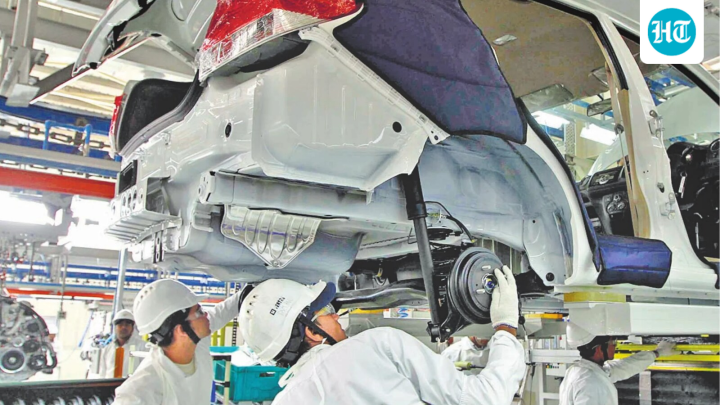
The economic ripple effects are no longer hypothetical. In July, the Korean Metal Workers’ Union staged a walkout at Hyundai’s Ulsan plant — the company’s first full strike in a decade. The grievance was not the familiar catalogue of wage increments, bonus structures, or retirement-age adjustments. For the first time, the union’s central demand was job security against physical AI and robotics. Workers are asking, in plain terms, how many of their roles will be absorbed by machines like the ones sprinting in Beijing.
The question is no longer whether humanoid robots can run, jump, or play table tennis. They can. The question now is how quickly factories, warehouses, and service environments will redeploy them, how fast the software layer matures to handle open-world tasks rather than pre-scripted routines, and whether labour markets in every region will adjust before displacement outpaces retraining. The robots have spoken. The policy conversation is only beginning.
Related Reading
Frequently Asked Questions
What is What the robots are telling us?
What the robots are telling us is the main topic of this guide. The article explains the context, practical details, and next steps readers should understand.
Why does What the robots are telling us matter?
What the robots are telling us matters because readers are looking for a useful answer, not just a short summary. Good content should match search intent and help them decide what to do next.