
India Urges Restraint as Global Conflicts Deepen Economic Strain
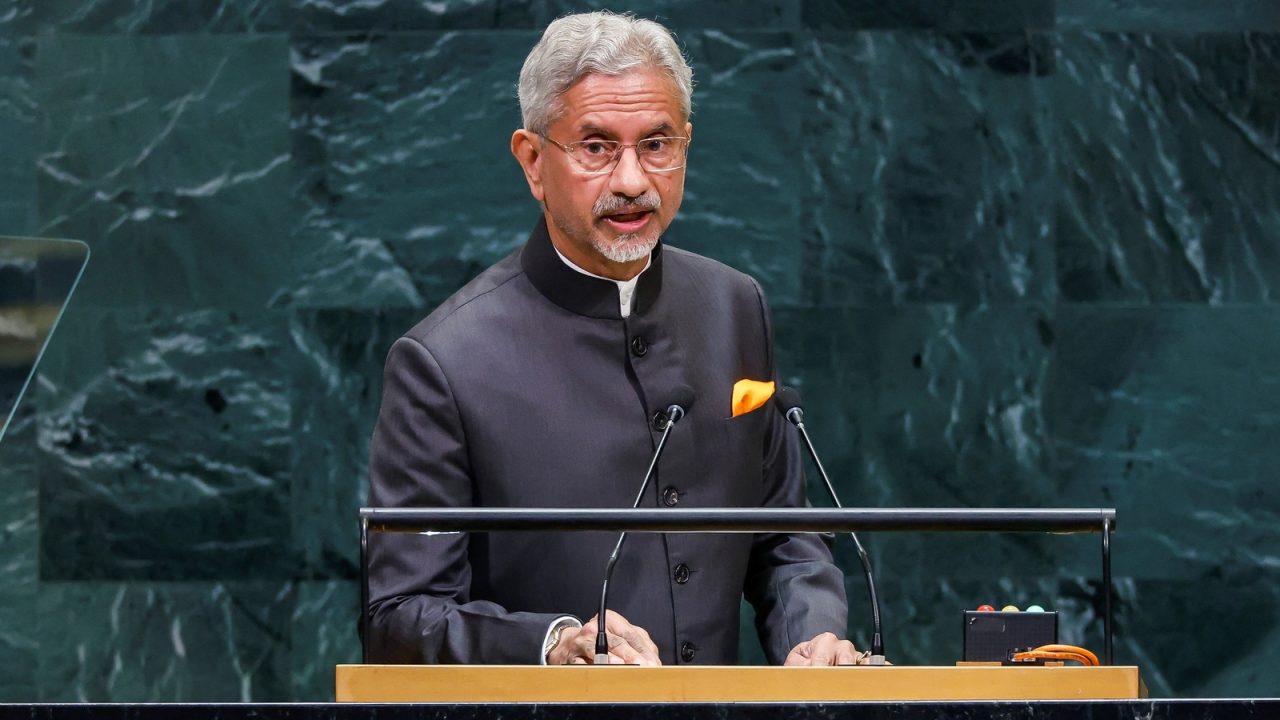
Indiadailyupdate.com – External affairs minister S Jaishankar has warned that wars and escalating regional tensions are imposing serious costs on countries that have little influence over the conflicts themselves. Speaking at the United Nations General Assembly, he said the consequences of violence are reaching far beyond the immediate battle zones, affecting trade, energy supplies, food security and civilian welfare across the world.
“Countries far from conflicts are being penalised for no fault of theirs. Those most impacted often have the least say.”
Jaishankar urged the international community to confront the realities created by prolonged conflict, particularly for developing nations and import-dependent economies. Disruptions to shipping routes, rising uncertainty around energy supplies and pressure on food distribution can have effects well beyond the countries directly involved in hostilities.
Concern over growing instability in the Gulf
Addressing the situation in West Asia, Jaishankar said the region was facing another difficult period because of conflict in the Gulf. He noted that the latest violence was worsening conditions in an area already affected by longstanding instability.
“This year, we are witnessing a conflict in the Gulf, one that is exacerbating an already difficult situation. We remain deeply concerned over continuing hostilities.”
India has consistently stressed the need for dialogue, restraint and the protection of civilians in the region. The Middle East is significant to India for its close people-to-people links, trade relationships and role in global energy markets. Any escalation there can affect the movement of goods and fuel across international routes, with implications for consumers and businesses far from the conflict.
Jaishankar also raised alarm over attacks on commercial vessels and seafarers amid strikes in the Strait of Hormuz. The waterway is among the world’s most important maritime passages for energy shipments and other trade. Threats to ships using international waters can create wider concerns over the safety of crews, the free movement of commerce and the reliability of supply chains.
“India calls upon all parties to exercise restraint, de-escalate tensions, ensure protection of civilians, and uninterrupted flow of energy and commerce.”
He described attacks on vessels travelling through international waterways as unacceptable. His remarks placed particular emphasis on the human dimension of maritime insecurity, with seafarers facing direct risk when tensions spill into major shipping corridors.
Ukraine war remains a major global concern
Jaishankar also pointed to the continuing conflict in Ukraine, which he said had entered its fifth year. He argued that the war remains a pressing international concern and reiterated India’s support for efforts aimed at achieving peace.
Invoking an earlier statement by Prime Minister Narendra Modi, the minister said protracted warfare must make way for a resolution.
“The conflict in Ukraine, now in its fifth year, is equally concerning. As Prime Minister Narendra Modi stated, endless war must give way now to an end to war. India supports ongoing initiatives to bring peace.”
The minister said that even while diplomatic initiatives continue, governments must address immediate risks to maritime personnel and the supply of essential goods. Food grains, energy resources and commercial shipments are all vulnerable when war affects transport networks, ports and major sea lanes.
For countries that rely on imported fuel, agricultural commodities or overseas trade, such disruptions can translate into higher costs and greater uncertainty. Jaishankar’s remarks highlighted India’s view that conflict-related burdens should not be allowed to fall disproportionately on nations that are neither participants in the fighting nor central to the decisions driving it.
Focus on food, energy and maritime security
India expressed its readiness to contribute to efforts that ease pressure on global food and energy security. Jaishankar said protecting maritime crews and maintaining dependable distribution routes for food and energy should be treated as urgent priorities.
The emphasis reflects the interconnected nature of today’s global economy. A conflict in one region can interrupt cargo traffic, unsettle commodity markets and make it harder for households and businesses elsewhere to plan for essential needs. Ensuring that ships can travel safely and that supplies continue to move is therefore not only a commercial issue, but also one connected to livelihoods and broader stability.
On the continuing tensions in West Asia, Jaishankar reaffirmed India’s position that a political settlement remains necessary for lasting peace. He said durable stability in the Middle East requires a two-state solution.
“We strongly believe that a durable and lasting peace requires a two-state solution.”
His address brought together India’s concerns over regional violence, the Ukraine conflict and the wider effects of insecurity on international trade and humanitarian needs. The central message was that peace efforts must be matched by practical steps to protect civilians, seafarers and the uninterrupted movement of food, grain and energy.
As conflicts continue to shape global economic conditions, India’s call at the UNGA focused on de-escalation and shared responsibility. Countries outside the conflict zones, Jaishankar argued, should not be left to absorb the consequences of instability that they had no role in creating.
Related Reading
Frequently Asked Questions
What is Countries far from conflicts being penalised?
Countries far from conflicts being penalised is the main topic of this guide. The article explains the context, practical details, and next steps readers should understand.
Why does Countries far from conflicts being penalised matter?
Countries far from conflicts being penalised matters because readers are looking for a useful answer, not just a short summary. Good content should match search intent and help them decide what to do next.