
Indian Boxing Reaches a New Asian High
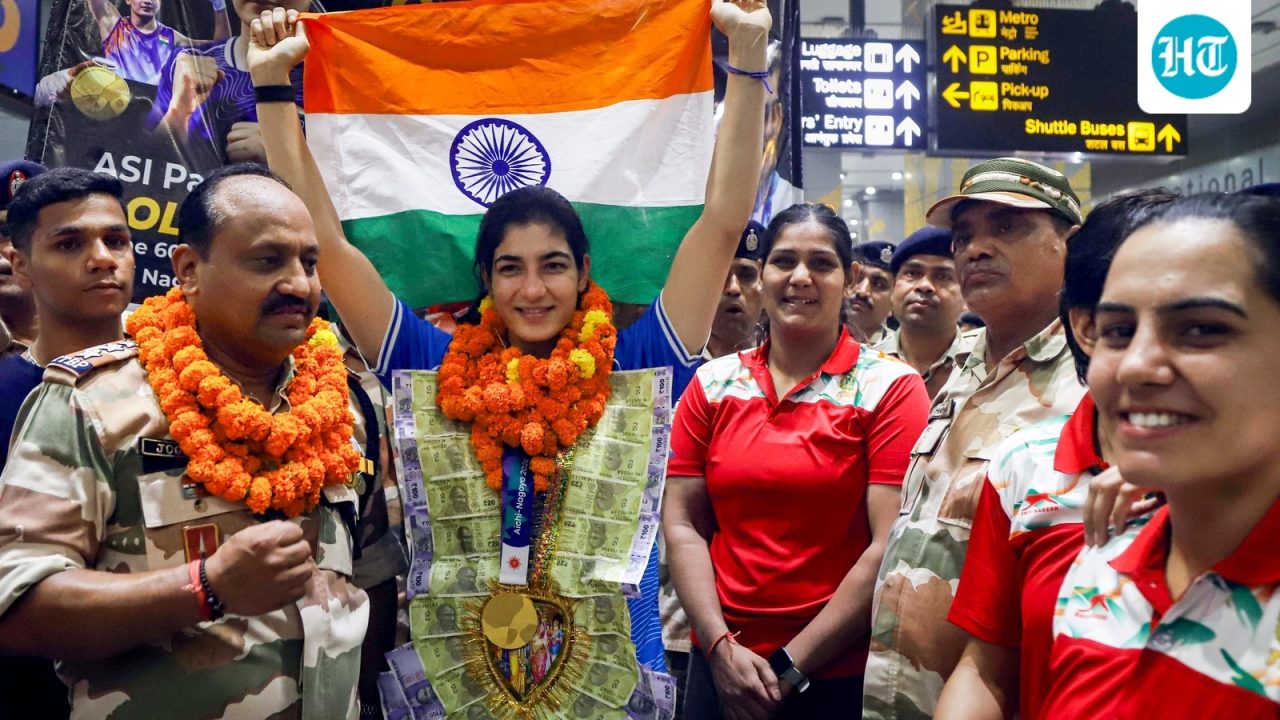
Indiadailyupdate.com – India’s boxing contingent produced its strongest Asian Games performance yet in Japan, returning with six medals and finishing at the top of the sport’s medal standings for the first time. Three gold medals and three bronze medals underscored a rise that has been gathering pace across major international competitions.
Lovlina Borgohain claimed gold in the 75kg division, while Parveen Hooda won the 65kg title and Ankush Panghal took the 80kg crown. The bronze medals came through Kapil Pokhariya in 90kg, Narender Berwal in the over-90kg class and Priya Ghanghas in 60kg.
The result represents a striking shift from the previous Asian Games in Hangzhou in 2023, where India finished ninth in boxing with one silver and three bronze medals. The latest campaign was not simply a one-off success; it followed a series of increasingly convincing performances by Indian boxers across the season.
Results Pointed to a Broader Rise
India collected 16 medals at this year’s Asian Championships, the highest total among competing teams. Kazakhstan finished ahead on gold-medal count despite winning 13 medals overall. At the 2025 World Championships, India placed third with four medals: two gold, one silver and one bronze. Kazakhstan led that event with 10 medals, including seven gold, while Uzbekistan won 11 medals with six titles.
The Commonwealth Games in July and August offered another sign of depth. India topped the boxing tally with seven gold medals and three silver medals, its best return at the event. That outcome required some perspective because major Asian boxing nations including Kazakhstan, Uzbekistan and China do not compete at the Commonwealth Games. The Asian Games therefore carried greater weight as a test of India’s standing against leading continental rivals.
India’s medal spread in Japan also showed that success was not limited to familiar names or lighter divisions. Lovlina’s podium finish was widely within expectations after her silver-medal performance in Hangzhou, but the heavyweight results added an important dimension to the team’s achievement.
“We expected these many medals but from different weight categories,” national coach CA Kuttappa said. “Ankush has been a revelation. Narender is a medallist from the last Asiad and Kapil has a lot of potential.”
Ankush Panghal’s Move Pays Off
Panghal’s ascent at 80kg has been closely linked to a calculated decision over weight category. As recently as last year, he competed at 70kg and lost the Inter-Services final to Hitesh Gulia. He had considered moving to 75kg, which is not an Olympic division. However, his usual maintenance weight of 82-83kg made 80kg a more suitable long-term fit.
The decision allowed him to compete in an Olympic weight class without forcing an excessive cut. Kuttappa believes a higher maintenance level could further improve the boxer’s impact in the ring.
“We would want his maintenance weight to be around 85kg. That will add a lot to his power. He has strong basics and a very good counter-attacking game,” Kuttappa said.
For a boxer stepping into a heavier division, physical development must be balanced with timing, movement and defensive awareness. Panghal’s gold suggests India’s coaching staff identified a division where his natural frame and counter-attacking strengths could be used more effectively.
Sports Science Becomes Part of the Plan
India’s progress has also been supported by a greater use of performance technology. The push to modernise training systems gathered momentum after the Tokyo Olympics in 2021. By the end of 2023, the Boxing Federation of India had acquired equipment intended to measure, monitor and analyse athletes’ physical condition.
The investment, valued at ₹2.5 crore, included GymAware velocity trackers for strength and physical-progress monitoring, Firstbeat heart-rate systems and Force Plates for jump testing. Such tools can give coaches a clearer view of how an athlete is coping with training rather than relying only on visual observations during sparring or conditioning sessions.
Boxers have also used Whoop bands to track resting heart rate, sleep and other recovery measures. These readings help the support staff assess whether a boxer is adapting positively to workloads and receiving adequate rest. A fall in resting heart rate can indicate that recovery is progressing well, allowing coaches to better plan an athlete’s peak for competition.
Parveen’s preparation offered a practical example of how data can influence daily training. Her resting heart rate fell by about 10% from its baseline. When considered alongside sleep patterns and other recovery data, the reduction gave the team added assurance that her body was responding well to the programme.
Jump assessments also highlighted an area for improvement: the speed of her first movement. That information shaped more targeted work on rapid initiation and explosive power. Rather than treating sports science as an abstract addition to training, the process connected measurements to specific technical and physical objectives.
“Such sophisticated equipment is a bit of a novelty in our sport. Only the USA and China were using it before us, and the idea took shape after a training trip to USA in 2023,” a BFI official said.
International Sparring Adds Competitive Edge
The final stage of the Asian Games build-up brought overseas boxers to the National Institute of Sports in Patiala. The Dominican Republic sent seven women and three men, while Iran provided one boxer each in the over-90kg, 55kg and 60kg divisions.
The sessions gave Indian athletes exposure to contrasting styles shortly before the tournament. Dominican boxers offered technical challenges, while the Iranian approach resembled the style often associated with boxers from Uzbekistan and Kazakhstan. With Olympic medallists among the visiting group, the sparring provided a demanding setting for Indian athletes to test their preparation.
“It was a real gamechanger. There were a few Olympic medallists among them and our boxers learned a lot while sparring with them. The Dominicans are very good technical boxers, while the Iranians’ style is similar to that of the Uzbeks and Kazakhs. It was a wholesome experience. In Japan, North Korea showed interest in coming to India and training with us,” Kuttappa said.
India’s emergence from world No. 44 a decade ago to the leading boxing nation at the Asian Games reflects more than a single medal haul. Better weight planning, data-led preparation, focused recovery and stronger international training opportunities have combined to give the programme greater depth. The next challenge will be sustaining those systems as Indian boxers look to convert continental momentum into regular success on the world stage.
Related Reading
Frequently Asked Questions
What is World No 44 to Asia s best?
World No 44 to Asia s best is the main topic of this guide. The article explains the context, practical details, and next steps readers should understand.
Why does World No 44 to Asia s best matter?
World No 44 to Asia s best matters because readers are looking for a useful answer, not just a short summary. Good content should match search intent and help them decide what to do next.