
India’s Wastewater Challenge Needs More Than Bigger Budgets
Indiadailyupdate.com – India’s sanitation agenda has reached a point where building toilets is no longer enough. The harder task is ensuring that wastewater and faecal sludge are collected, treated and, wherever practical, put back to use instead of entering drains, rivers, lakes or vacant land.
The Swachh Bharat Mission, which completed 12 years earlier this month, recognised this transition after its initial emphasis on household toilets. Its 2018 Open-Defecation-Free Plus Plus framework required urban areas to prevent untreated sewage and faecal sludge from being released into the environment. A year later, the Water+ protocol raised expectations further: wastewater from homes and commercial establishments should be treated and reused as far as possible.
Yet financial support has not always aligned with those ambitions. Under the mission, used-water management funding is available only to towns with populations below one lakh. Bigger urban centres have depended largely on programmes such as AMRUT and Namami Gange. That leaves a particularly important group of growing cities facing major infrastructure pressures with uneven support.
A large new opportunity
The 16th Finance Commission has attempted to narrow this gap through a Special Infrastructure Grant of ₹56,100 crore for 22 cities with populations ranging from one million to four million. The money is intended for wastewater and stormwater systems.
Once the required 40% contribution from states and urban local governments is included, the potential investment rises to about ₹93,000 crore across five years. Cities with more than 1.5 million residents could receive roughly ₹5,000 crore each, while those below that threshold may receive around ₹3,500 crore. The scale is striking when compared with AMRUT allocations of roughly ₹300 crore to ₹500 crore for similar work in these cities.
Equally significant is the condition attached to the grant. Cities must prepare integrated wastewater-management plans before they can access it. This is an acknowledgement that isolated sewage-treatment plants, disconnected drainage projects and small network extensions cannot solve an urban water problem on their own.
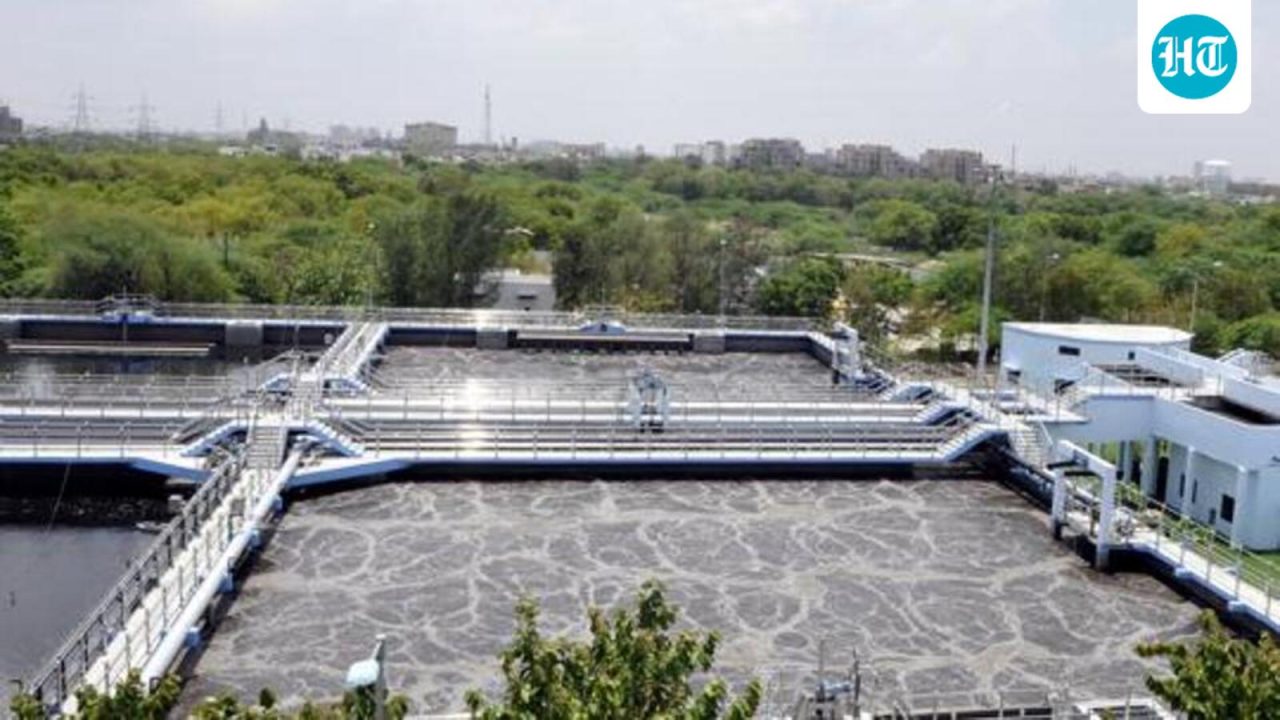
The need is clear. Despite years of public investment, Indian cities still release nearly 72% of their sewage without treatment. Stormwater networks have also received far less attention than they require. In rapidly growing cities, poor drainage can worsen flooding, while inadequate sewerage allows polluted flows to mix with water bodies and neighbourhood drains.
Why previous investments have struggled
The choice of 22 fast-expanding cities is sensible. Migration and urban growth have increased demand faster than essential services can be expanded, creating a risk that these places will repeat the infrastructure shortfalls long associated with India’s largest metropolitan areas.
However, a larger allocation alone will not guarantee better outcomes. Several selected cities have already received substantial wastewater funding, with mixed results. Pune’s ₹990 crore Mula-Mutha Pollution Abatement Project was sanctioned in 2016 but was only about 70% complete by late 2024. In Patna, two projects among 11 Namami Gange packages approved between 2014 and 2017 remained unfinished more than eight years later.
Ludhiana’s Buddha Nullah project went through six missed deadlines before it was completed. Even after that completion in 2024, the water was acknowledged to remain unsuitable for irrigation because industrial effluents were still entering the system untreated. In Faridabad, sewage-treatment plant upgrades begun in 2019-20 missed four deadlines. The city needs about 500 MLD of treatment capacity, while the projects underway address only about one-third of that requirement.
These examples point to three familiar weaknesses. The first is delay before construction starts. Detailed project reports, approvals and contracting can consume years. Pune’s work orders, for instance, came six years after the project began. In Patna, treatment plants have moved ahead while sewer networks and household connections continue to lag, reducing the usefulness of completed capacity.
The second weakness is incomplete project design. A scheme may be declared finished while important pollution sources remain outside its scope. The third is inadequate sizing. Treatment plants that cannot meet present or projected demand may create impressive assets on paper without delivering a full public service.
Build for service, not for paperwork
The new grant should be treated as an opportunity to correct these problems before they become embedded in another round of projects. Wastewater and stormwater infrastructure generally needs seven to 10 years for planning, construction and stabilisation. A five-year Finance Commission period should therefore not become an inflexible deadline that encourages cities to rush poorly prepared proposals.
Funds need to remain available beyond the cycle where a credible project requires more time. At the same time, states and urban local governments should avoid submitting weak plans simply to secure allocations. Thin detailed project reports and failure to account for climate resilience at the start often lead to scope revisions, delays and escalating costs later.
Financial releases should also be linked to real service outcomes. A functioning system means sewage reaches treatment facilities, treated water meets required standards, drainage works as intended, and the assets remain operational after inauguration. Splitting these functions into disconnected contracts can produce facilities that appear complete but perform badly in practice.
Contracts should make implementing agencies responsible for both construction and sustained operation, with payments connected to actual performance. Build-and-exit arrangements should be the exception. Cities also need to settle early how users will contribute toward ongoing services, because plants, networks and pumping stations require continuing expenditure long after capital grants have been spent.
Give cities ownership and capacity
Urban local governments must be central to this effort. Thirty-three years after the 74th Constitutional Amendment, many cities still receive assets built by parastatal agencies rather than acting as their legal owners and long-term managers. This grant offers a rare opening to change that arrangement.
Audit compendiums from the Comptroller and Auditor General show that urban local governments spend only about 61% of the funds available to them. Improving implementation capacity, procurement capability and operational responsibility is therefore as important as approving new infrastructure.
The policy objective is straightforward: wastewater should disappear from open drains and water bodies, while public funding should translate into durable services. The success of this unusually large allocation will depend less on how quickly money is announced than on whether cities can plan complete systems, build them to the right scale and operate them for years to come.
Related Reading
Frequently Asked Questions
What is Waste water not funding should go down?
Waste water not funding should go down is the main topic of this guide. The article explains the context, practical details, and next steps readers should understand.
Why does Waste water not funding should go down matter?
Waste water not funding should go down matters because readers are looking for a useful answer, not just a short summary. Good content should match search intent and help them decide what to do next.