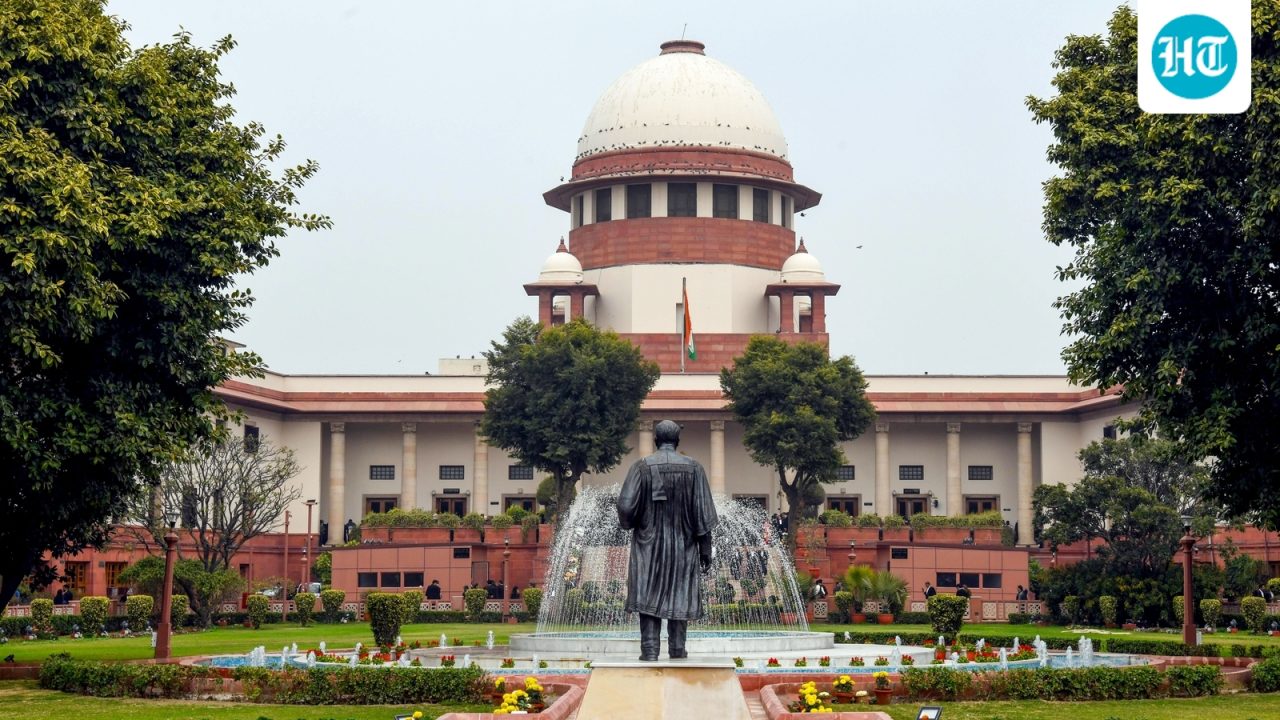

Supreme Court presses for stronger bank accountability in digital arrest fraud cases
Indiadailyupdate.com – The Supreme Court has signalled that efforts to tackle “digital arrest” scams must go beyond public warnings and banking advisories, calling for clear accountability when financial institutions fail to prevent suspicious transfers. The court said bank employees found to have worked with fraudsters should face prosecution, while customers should receive full and suitable compensation where a bank’s lapse enabled the crime.
A bench led by Chief Justice of India Surya Kant, with Justices Joymalya Bagchi and V Mohana, examined the growing financial damage caused by fraudsters who impersonate police officers or officials from central agencies. In these scams, victims are often kept on video calls, intimidated with false claims of criminal cases or arrest, and pressured into moving money from their accounts.
“Banks must be held accountable. If there is no liability placed under the proposed guidelines, we will ensure it,” the bench said.
The court stressed that the Reserve Bank of India should not merely issue broad instructions. It said the banking regulator must ensure those standards are enforced and should impose strict liability where institutions fail to discharge their responsibilities.
Compensation must match the loss where bank failure is established
The court expressed concern over the limited relief available under new RBI compensation rules for electronic banking fraud. Those rules, scheduled to take effect in January, provide compensation of no more than ₹25,000 and apply only where losses are up to ₹50,000.
For victims of digital arrest scams, the losses can be far greater. A status report placed before the court by the Indian Cybercrime Coordination Centre and the Ministry of Home Affairs recorded 21,928 complaints involving more than ₹647 crore on the National Cybercrime Reporting Portal during the first eight months of the year.
“The regulatory measures proposed by RBI must mandate for financial institutions to indemnify digital arrest or cyber fraud victims for providing suitable compensation not less than the amount lost by the customer on being found that the fraud has taken place as a result of failure of the financial institution in the commission of the act or incident,” the bench said.
The judges noted the imbalance between banks and defrauded account holders. Financial institutions have statutory routes to recover their own dues, including remedies under the Securitisation and Reconstruction of Financial Assets and Enforcement of Security Interest Act, 2002, and the Insolvency and Bankruptcy Code. Customers who lose their savings through a fraud, the court observed, do not have comparable options.
“Thousands of crores are being looted and still you do not have strong measures in place. This money is being lost to the economy. Where is the accountability clause in your regulations so that when a fraud takes place, compensation can be given to victims besides prosecuting the bank officials who are found to be involved,” the court said.
KYC rules and suspicious-transaction safeguards under scrutiny
The RBI told the court that it is finalising draft Know Your Customer guidelines dealing with banks’ due-diligence obligations. The regulator expects to notify the framework by November 30. The bench said it wanted to review the proposed document before it is finalised and would consider further directions afterward.
One central question is whether banks are doing enough to identify transactions that depart sharply from an account holder’s usual banking pattern. The court suggested that systems should quickly flag unusually large withdrawals or transfers, particularly in personal accounts belonging to senior citizens.
“We can understand companies having crores of rupees of transactions but for accounts of private individuals who are senior citizens, if so much of the amount is being withdrawn, immediately the bank should be alerted and the transaction withheld. The nearest police station can be asked to reach the person who is the account holder to verify the transaction,” the bench said.
Such safeguards could matter because digital arrest scams rely heavily on urgency and fear. Victims may be told they are under surveillance, implicated in a crime, or required to transfer funds for “verification”. The fraud is designed to discourage them from speaking to relatives, bank staff, or local police before completing a transaction.
The court also referred to disputes involving an alleged builder-bank nexus. It noted that RBI master circulars govern lending practices, yet homebuyers affected by subvention schemes have sometimes been left without an effective remedy. The bench said strict liability and a mechanism for fixing responsibility in case of breach were necessary.
Government agencies preparing a standard procedure
Attorney General R. Venkataramani, appearing for the Centre, told the court that an inter-departmental committee and the Indian Cybercrime Coordination Centre were considering the issue from multiple angles. The Ministry of Home Affairs is preparing a standard operating procedure that is expected to address bank liability.
Venkataramani told the court that the number of digital arrest fraud cases had declined over time. Figures from the I4C status report showed 123,672 cases in 2024, 58,239 in 2025, and 21,928 cases up to September 1 this year.
Senior advocate N. S. Nappinai, assisting the court as amicus curiae, maintained that the frauds remain a serious concern and that bank liability is essential. She said educated people were among the principal targets.
The bench questioned why such scams continue despite awareness campaigns across social media and other public channels. Its observations underline a wider concern: public education is important, but it cannot be the only shield against sophisticated fraud. Banks, regulators, law-enforcement agencies and digital platforms each have a role in stopping a transfer before a victim’s money disappears.
The court’s examination of the draft KYC rules may shape whether future banking safeguards include stronger transaction monitoring, more meaningful compensation, and legal consequences for officials who knowingly assist fraud networks. For customers, the central issue is whether responsibility will shift from warning victims after the event to preventing suspicious transactions when they are most vulnerable.
Related Reading
Frequently Asked Questions
What is Supreme Court seeks bank liability for digital?
Supreme Court seeks bank liability for digital is the main topic of this guide. The article explains the context, practical details, and next steps readers should understand.
Why does Supreme Court seeks bank liability for digital matter?
Supreme Court seeks bank liability for digital matters because readers are looking for a useful answer, not just a short summary. Good content should match search intent and help them decide what to do next.