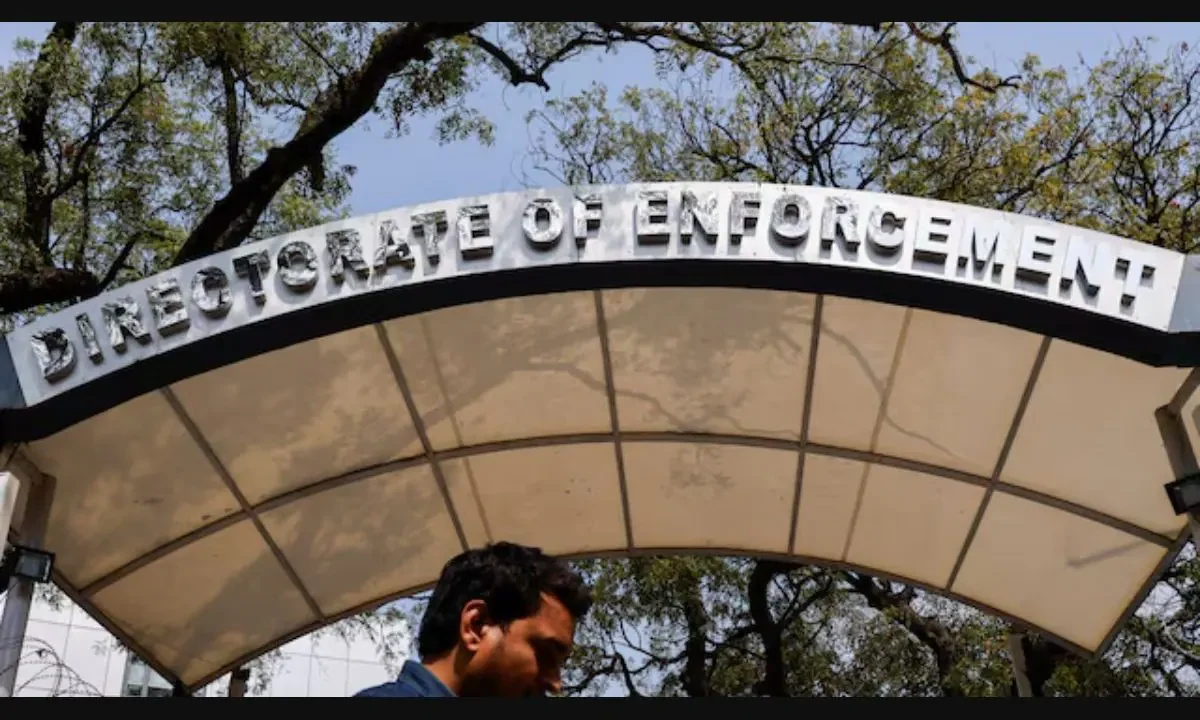

ED Unveils ₹303-Crore Cross-Border Cyber Fraud Scheme; 10 Suspects Detained
Indiadailyupdate.com – The Enforcement Directorate (ED) has revealed a transnational cyber fraud operation that siphoned over ₹303 crore through a complex system of mule bank accounts, shell corporations, international fintech platforms, and cryptocurrency. As part of the investigation, 10 individuals were arrested, and a significant amount of cash and digital assets were seized or frozen.
Organized Network Exploited Fake Investment Schemes
The ED’s probe identified a well-coordinated network that defrauded Indian citizens via deceptive investment programs, part-time job offers, task-based scams, and online gaming platforms. The criminals allegedly used these schemes to lure victims, offering high returns and small initial payouts to build trust. Once larger sums were invested, victims were reportedly pressured to cover taxes, verification fees, and security deposits before being cut off from further communication.
Investigators traced the fraudulent proceeds to 216 mule accounts, which were used to launder approximately ₹303.24 crore. During the investigation, additional funds of ₹571.65 crore were discovered being funneled into the system, suggesting the network remained active even after detection. Over 10,000 accounts tied to the UAE-based fintech platform PYYPL were scrutinized, with intelligence pointing to ₹641 crore being moved through the platform using Indian debit cards.
The case was launched in March 2024 under the Prevention of Money Laundering Act (PMLA) based on two CBI FIRs. The Financial Intelligence Unit-India (FIU-IND) later provided critical insights, revealing that nearly ₹900.42 crore flowed through 17 IndusInd Bank accounts linked to entities engaged in counterfeit e-commerce and betting activities.
“This technological setup allowed funds to be transferred instantly upon receipt, greatly minimizing the chances of recovery, debit freezes, or law enforcement interference,” the ED stated.
A major breakthrough came when the ED exposed how foreign operators remotely controlled Indian bank accounts. They reportedly shared login details via Telegram, while Zoho emails and SMS-forwarding apps facilitated real-time OTP transmission, enabling transactions without physical possession of the registered devices.
Money Laundering Through Shell Entities and Cryptocurrency
The investigation showed that illicit funds were routed through shell companies using fabricated invoices and circular transactions. These funds were then channeled into overseas fintech platforms and converted into cryptocurrency via exchanges like Binance, GetBit, and Carretx. The digital assets were subsequently moved to private wallets controlled by foreign beneficiaries.
During searches at 14 locations across Delhi, Gurugram, Rajasthan, Gujarat, Telangana, Maharashtra, and West Bengal, authorities seized ₹47 lakh in cash and froze around 1,60,339 USDT, 118.73 SOL, and 563 ETH. Mobile phones, laptops, and financial records were also recovered. The ED has now attached bank balances exceeding ₹8.69 crore and increased the number of accused from 18 to 45, including entities linked to the scheme.
Investigators noted that some suspects attempted to erase evidence by deleting Telegram chats, WhatsApp messages, and cryptocurrency transaction logs once the probe began. The agency describes the operation as a highly structured, technologically advanced syndicate that spanned multiple countries, with efforts ongoing to locate more foreign operatives and assets tied to the network.