
Bidadi to Bengaluru: Kumaraswamy Challenges Shivakumar on HMT Land Deals
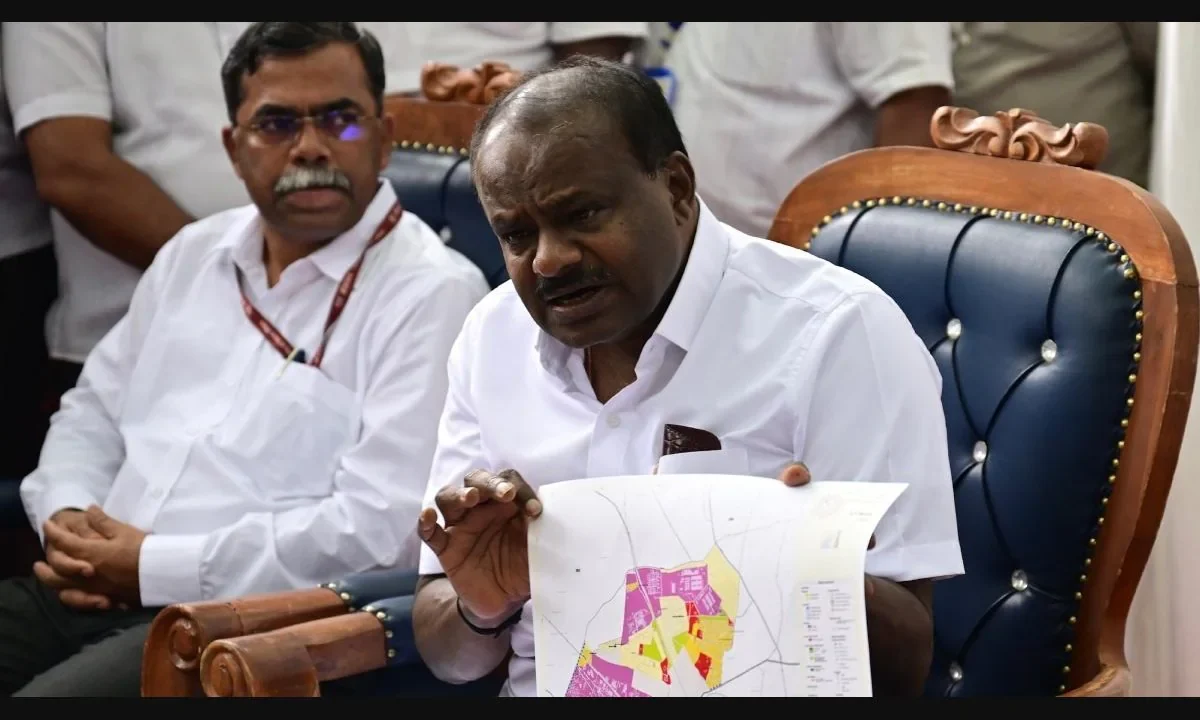
Indiadailyupdate.com – In a sharp political confrontation, H.D. Kumaraswamy, Union Heavy Industries Minister, shifted the focus of the ongoing debate from Bidadi to Bengaluru, questioning Chief Minister D.K. Shivakumar about the HMT land transactions. During a public inspection at the former HMT campus in north Bengaluru, Kumaraswamy highlighted the controversy surrounding the sale of public sector land, which he argued was central to the current dispute. The minister’s critique came after Shivakumar accused Kumaraswamy of overambitious development plans in Bidadi, a township project that has been a focal point of recent tensions. Kumaraswamy, however, used the opportunity to draw attention to the historical land deals that have impacted Karnataka’s economic landscape.
A Shift in Focus: From Bidadi to HMT Land Controversy
Kumaraswamy’s rebuttal was rooted in the idea that the state government’s handling of land was a critical issue. He pointed to the transfer of 175 acres of HMT land to private entities during Shivakumar’s tenure as Urban Development Minister under the S.M. Krishna administration, a period Kumaraswamy described as marked by opacity. “When I sought to revive HMT, the government suddenly claimed the land was under the Forest Department’s control,” he stated, emphasizing the lack of transparency in the process. This accusation framed the dispute as a broader critique of land acquisition policies and their impact on public sector assets.
“This factory was once a cornerstone of Karnataka’s industrial pride. Today, it’s just a relic of the past, used for film shoots to sustain its dwindling workforce,” Kumaraswamy remarked during the visit.
The minister’s remarks underscored the emotional and economic stakes of the HMT legacy. With nearly 25,000 employees once thriving in the factory, the current workforce has dwindled to just 150, a stark decline that has sparked public discontent. Kumaraswamy also cited the ₹590 crore debt owed to former workers, arguing that the state’s failure to address this owed to a lack of accountability in land management.
Residents and Critics Raise Concerns Over Land Use
Residents living in apartment complexes constructed on former HMT land added their voices to the debate. They presented petitions to Kumaraswamy, demanding clarity on the legal status of the properties. “If this land was classified as forest land, who authorized its development? Who bears responsibility for these decisions?” they questioned. This public pressure highlighted the growing rift between the state government and Kumaraswamy, who accused the Congress-led administration of obstructing his efforts to revive HMT. The minister’s presence at the site, however, also signaled his commitment to addressing the issue.
During the visit, Kumaraswamy reiterated his stance that the state government should provide khatas (ownership certificates) for the properties built on HMT land. He pointed to the contradiction in Shivakumar’s argument, noting that the chief minister had previously praised the Bidadi Knowledge City as a symbol of progress. “If Bidadi is the future, why is the past being forgotten? Why are the employees of HMT still struggling for basic rights?” Kumaraswamy challenged, linking the two projects to illustrate the broader theme of development versus accountability.
Political Rivalry Intensifies: Land as a Battleground
The debate over HMT land has intensified the political rivalry between Kumaraswamy and Shivakumar, with each accusing the other of mismanagement. Kumaraswamy’s focus on the land issue during his visit to Bengaluru was strategic, as it allowed him to divert attention from Bidadi and position himself as a defender of public sector interests. His arguments have drawn support from opposition parties, who have criticized the state government’s opaque land policies. Meanwhile, Shivakumar’s defense of Bidadi as a flagship project has been met with skepticism, as critics argue that the project’s success is overshadowed by unresolved HMT disputes.
As the conflict escalates, the HMT land controversy has become a symbol of the larger debate over economic development and worker welfare. Kumaraswamy’s campaign to reclaim the land and ensure its proper use has resonated with those who view the factory’s decline as a failure of state policy. The minister’s presence at the site, coupled with the inclusion of a joint secretary from the Union Heavy Industries Ministry, signaled a coordinated effort to investigate the matter thoroughly. With public scrutiny mounting, the state government faces pressure to address the concerns raised by Kumaraswamy and the affected communities.