Miscommunication Causes Chaos, But Lathi Charge Fails to Deter Young Protesters
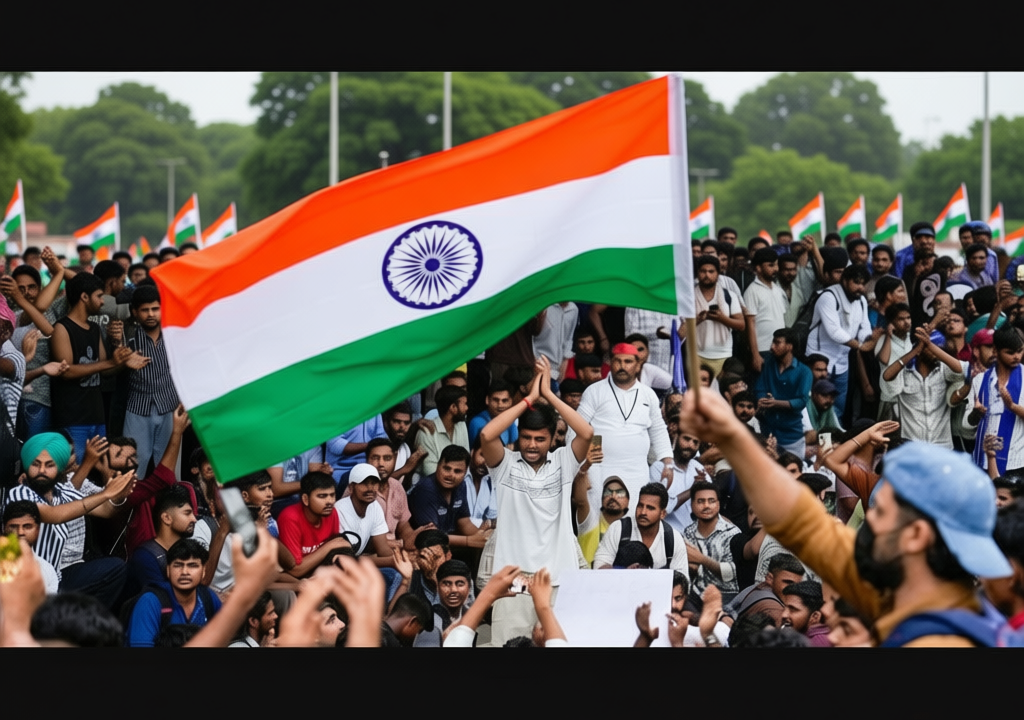
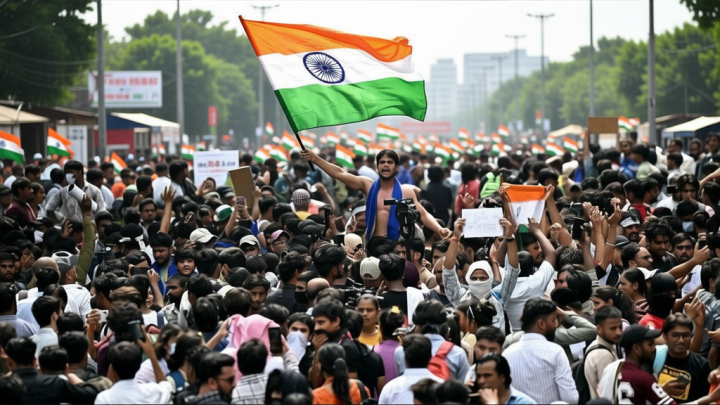
Indiadailyupdate.com – On the first day of the Monsoon Session of the Indian Parliament, the Sansad Chalo march turned into a symbol of youthful defiance as miscommunication between organizers and participants led to confusion and disorder. Despite the Cockroach Janta Party’s (CJP) efforts to coordinate the protest at Jantar Mantar, the lack of clear instructions split the crowd, creating a logistical nightmare for both demonstrators and authorities. The central demand—resignation of Union Education Minister Dharmendra Pradhan—remained strong, but the disarray highlighted the challenges of mobilizing large groups without effective communication. As the march progressed, the presence of a young man in a Gandhi-inspired costume, holding the Tricolour and a placard promoting non-violence, became a poignant reminder of the protest’s ideological roots.
The Roots of the Protest and Its Impact
Organized by the CJP, the protest gained momentum after Sonam Wangchuk, a prominent figure in the movement, endorsed the cause. Participants from diverse states, including West Bengal, Bihar, Uttar Pradesh, Haryana, and Chhattisgarh, converged on the site, bringing with them a mix of hopes and frustrations. The morning drizzle, while initially dampening turnout, couldn’t quell the spirit of the demonstrators, who chanted patriotic slogans like “Inquilab Zindabad” and “Bharat Mata ki Jai.” Songs such as “Chakde India” and “Jai Ho” echoed through the crowd, blending cultural resonance with political resolve. However, the confusion from miscommunication persisted, creating two distinct groups—one waiting at Sansad Marg and the other behind the stage—while the police struggled to manage the situation with barricades and communication jammers.
“Follow Gandhi,” he asserted from the stage at Jantar Mantar.
Amid the chaos, actor Prakash Raj joined the protesters, waving enthusiastically in a white t-shirt and black pants. His presence underscored the intersection of art and activism, as he became a visible figure in the movement. Manish Sisodia, the former Delhi deputy chief minister, and Yogendra Yadav, a noted social reformer, had to navigate through volunteers to reach the platform, illustrating the disorder that had taken hold. The stage featured Sonam Wangchuk’s belongings—his mattress, pillow, sketch, and framed images of Gandhi and Ambedkar—symbolizing the unity of ideals and the protest’s broader political significance.
Resilience in the Face of Lathi Charges
As the protest escalated, the police resorted to lathi charges to restore order, striking regardless of age or gender. This physical intervention, while disruptive, failed to break the demonstrators’ spirits. Many clung to their cause, holding copies of the Constitution, Gandhi’s autobiography, and books on caste annihilation, reinforcing their commitment to justice. The rain, which had initially threatened to dampen the momentum, now served as a backdrop to the unyielding resolve of the youth. Despite the lathi charge, the crowd remained steadfast, forming a human chain that stretched across Jantar Mantar, a visual testament to their collective strength.
The impact on traffic was immediate and dramatic. Connaught Place, a bustling hub of commerce and connectivity, became a battleground as the protest halted movement in multiple directions. Vehicles ground to a standstill, and pedestrians navigated through the sea of protesters, turning the city’s arteries into symbols of resistance. The protest’s reach extended beyond the immediate vicinity, with social media platforms amplifying the voices of those affected. Hashtags like #SansadChalo and #LathiCharge trended, drawing national attention to the government’s handling of the situation. Yet, the miscommunication that had sparked the initial confusion continued to shape the protest’s dynamics, with some groups remaining organized while others drifted into disarray.
As the afternoon progressed, the police made a final attempt to disperse the crowd by urging protesters to sit down and stay within the premises. However, the young demonstrators, undeterred by the lathi charge, stood firm, their chants reverberating through the rain-soaked streets. The protest, though marred by miscommunication, demonstrated a powerful blend of ideology and action, with participants embodying the resilience of a generation determined to challenge the status quo. The event’s legacy, even in its chaotic form, would linger as a reminder of the enduring spirit of youth-led movements in India.