Bengaluru s Voter Apathy Surfaces Again During Electoral Roll Revision Process
Indiadailyupdate.com – Bengaluru s voter apathy surfaces once more as the city grapples with significant challenges during the Special Intensive Revision (SIR) exercise. The capital’s ongoing struggle with electoral engagement has become increasingly apparent, with Greater Bengaluru emerging as the least efficient region for transforming completed paperwork into digital records. This persistent pattern of disengagement reflects a broader trend that has characterized the city’s relationship with democratic participation for years.
Digitization Challenges Reveal Deep-Rooted Voter Disconnection
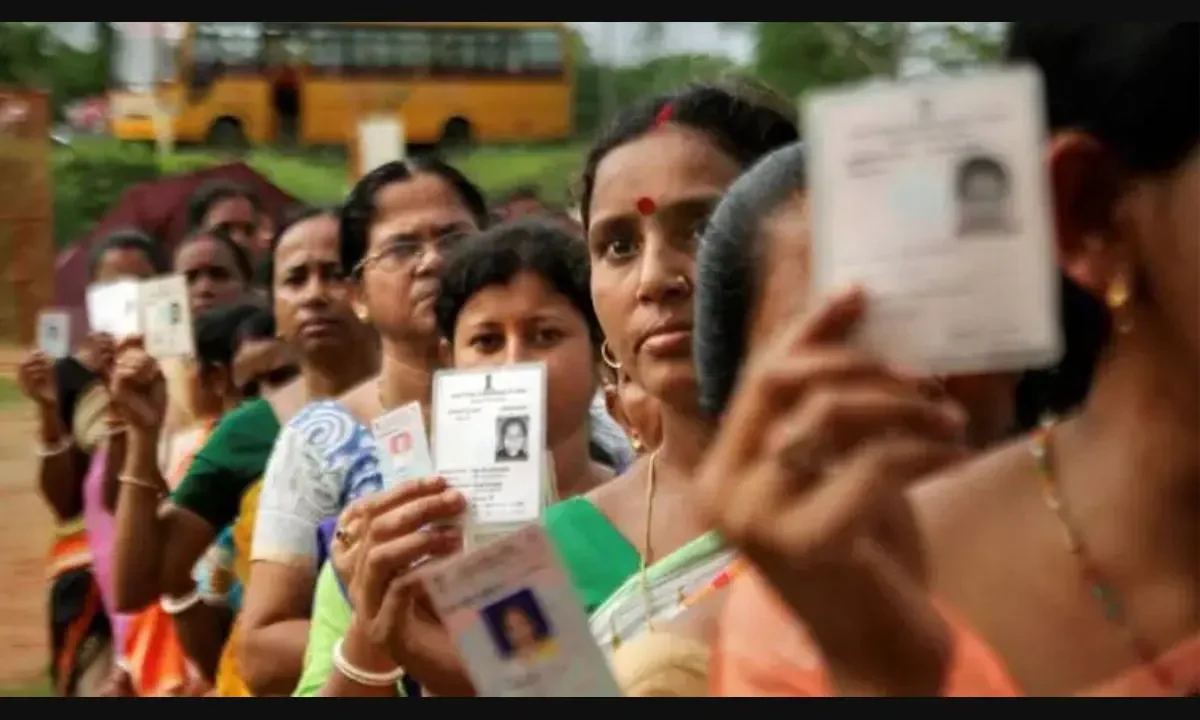
According to Chief Electoral Officer Anbukumar, nearly every voter within Greater Bengaluru—accounting for 99.7% of the 1.03 crore population—has now received their enumeration paperwork. However, the conversion rate tells a different story. Only approximately 30% of returned documents have been successfully digitized, a figure that stands in stark contrast to the state-wide average of 66.35%. This substantial gap highlights the unique challenges facing Bengaluru’s electoral administration.
The sluggish pace becomes even more remarkable when considering Karnataka’s overall progress. By July 22, election authorities had distributed 99.89% of the 5.5 crore printed forms across the state, leaving merely 61,000 individuals still awaiting their copies. Meanwhile, roughly 1.4 crore voters throughout Karnataka continue to submit their completed forms before the enumeration window closes.
ASDDO Cases Create Verification Bottlenecks
Officials have identified an exceptional volume of ASDDO cases—encompassing Absent, Shifted, Dead, Duplicate, and Other categories—as a primary factor behind Bengaluru’s underperformance. The city alone harbors 44.84 lakh such cases, requiring substantially more time for verification compared to other districts in Karnataka. This high volume of complex cases has created significant bottlenecks in the digitization process.
Bengaluru South MP Tejasvi Surya brought attention to specific instances of this problem, claiming that approximately 13,000 residents in Bommanahalli were incorrectly marked as permanently relocated without adequate ground-level investigation. In response, Anbukumar explained that mahazars were held for every ASDDO situation. He detailed that Booth Level Officers collect confirming signatures from neighbors, Booth Level Agents, or supervisory personnel to validate their conclusions.
Community Complaints and Administrative Solutions
Complaints from Varthur and Mahadevapura neighborhoods have also surfaced, with multiple voters noting absent part numbers on their enumeration documents. The combination of a highly mobile workforce, regular relocations, gated residential complexes, and a substantial migrant community has made the revision process considerably more complex than in other Karnataka regions. These factors contribute to the ongoing manifestation of Bengaluru s voter apathy surfaces during electoral activities.
Anbukumar emphasized that this stage serves dual purposes beyond mere expansion of coverage.
“Quality check is vital in this phase,”
he stated, encouraging political organizations to review the ASDDO voter list carefully and flag inaccuracies immediately rather than postponing concerns until the formal claims and objections period.
To speed up operations, representatives designated as BLA-2 from various political parties now possess the authority to deliver completed and signed enumeration forms directly to Booth Level Officers. Additionally, special weekend campaigns have been launched to boost digitization performance and address the backlog of pending entries.
Documentation Clarifications for Affected Voters
The CEO reassured citizens who missed form submission due to relocation that no cause for concern exists. Following the publication of draft electoral rolls on August 8, affected individuals may request inclusion at their updated address through Form 6, available both online and through offline channels. This provision ensures that voters who have moved within the city can still participate in the electoral process.
Another matter receiving considerable attention involves Permanent Residence Certificates. Although these certificates have sparked political controversy within Karnataka, Electoral Registration Officers will evaluate them exclusively during the claims and objections phase after formal notices have been issued. The ultimate authority to accept or reject any supporting document remains with the Electoral Registration Officer, ensuring consistency in the verification process.
With slightly more than fourteen days remaining before the enumeration concludes, Bengaluru’s statistics indicate that India’s largest metropolitan center maintains its characteristic disregard for electoral procedures. This pattern has been consistently evident on election day as well, reinforcing the narrative that Bengaluru s voter apathy surfaces during critical democratic moments. The city’s challenges during the SIR exercise serve as a microcosm of its broader electoral engagement issues.