Constitutional Rights and Public Order: Defining the Boundaries of Protest
The Foundation of Democratic Expression
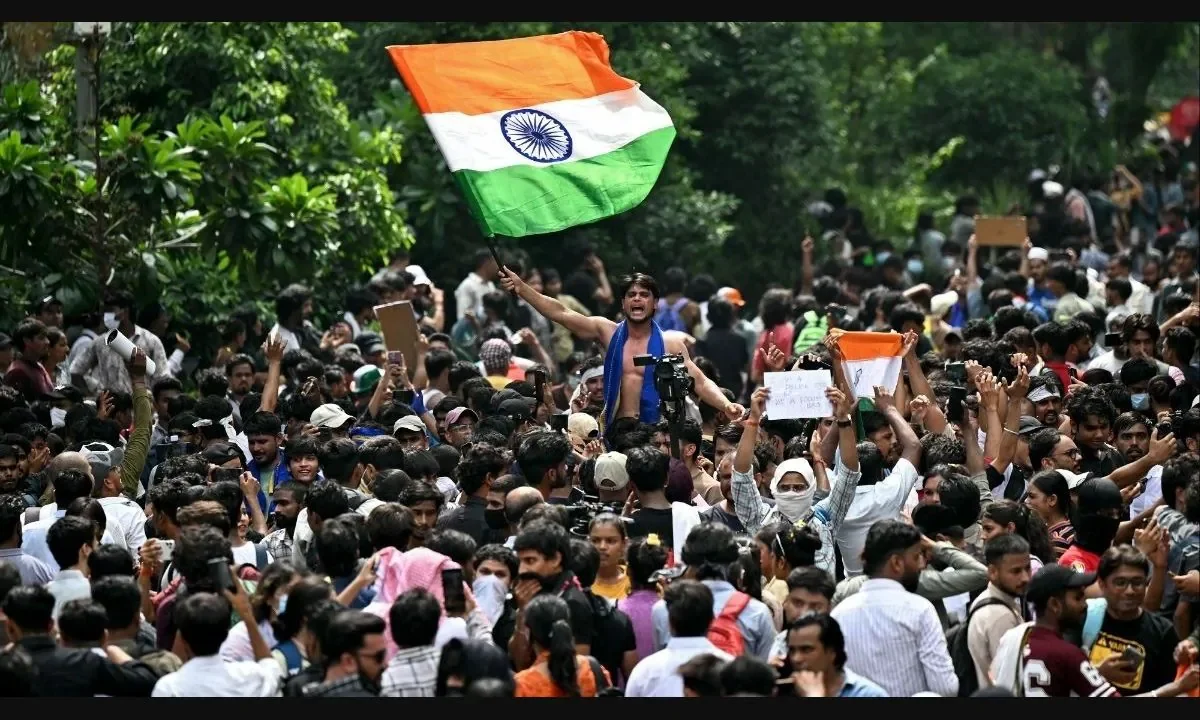
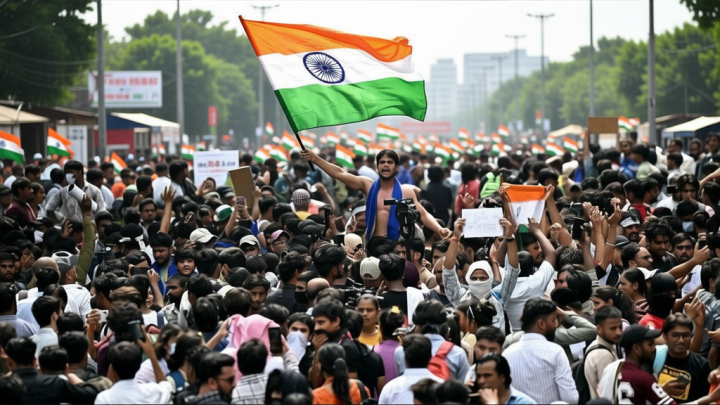
Indiadailyupdate.com – Within any thriving democratic society, demonstrations are an unavoidable reality. They serve as a barometer for public mood, offer channels for disagreement, and signal to leaders that their authority derives from the governed. Citizens possess constitutional authority to voice opinions across numerous domains—from workplace conditions and schooling to agricultural welfare, ecological matters, and governmental policies.
The Indian Constitution enshrines this liberty through specific provisions. Articles 19(1)(a) and 19(1)(b) secure the freedom to speak and express oneself, alongside the right to gather peacefully without weapons. These are not simply legal technicalities; they represent the core of civic engagement. The framers of the Constitution envisioned an active citizenry, not passive observers. They anticipated ongoing discussion, constructive criticism, and nonviolent opposition as vital elements of effective governance.
Understanding Public Order
Yet these liberties carry limitations. Articles 19(2) and 19(3) explicitly authorize the government to place reasonable constraints when necessary for maintaining public order, protecting sovereignty, ensuring state security, and advancing other legitimate constitutional aims. The legal framework establishes that while protest rights exist, their implementation must align with established law.
The concept of “public order” frequently suffers from misinterpretation. It extends beyond mere inconvenience. A demonstration might create traffic delays, demand additional police deployment, or cause short-term disruptions without genuinely endangering public order. True threats to public order emerge when situations present actual dangers to community peace, safety, or tranquility.
Actions that cross this threshold include violence, damage to public assets, blocking emergency response routes, extended occupation of thoroughfares, and conduct that generates hostility or fear. Such behaviors move beyond constitutional protection and trigger legal accountability.
The Police Mandate
Maintaining equilibrium between competing interests falls largely to law enforcement agencies. The conventional view that police merely disperse crowds or enforce bans represents an incomplete understanding. Their constitutional duty encompasses two complementary objectives: enabling lawful, peaceful demonstrations while preserving public order simultaneously.
This dual responsibility requires professionalism, measured responses, and sound decision-making. Effective policing demands advance preparation. Authorities should consult with organizers, evaluate expected participation levels, select appropriate locations, manage traffic patterns, and guarantee that emergency services continue functioning normally.
Communication often proves superior to confrontation. The goal should never involve crushing legitimate dissent but rather achieving harmony among competing rights.
Participant Obligations and Judicial Precedent
Constitutional entitlements come with corresponding responsibilities. Demonstrators must keep their actions peaceful, follow legitimate directives from authorized bodies, and respect the rights of fellow citizens. Once a protest transforms into a mechanism for violence, intimidation, property destruction, or coercion, it forfeits constitutional safeguarding.
Indian courts have consistently upheld this principle. Judicial decisions confirm that while peaceful demonstration remains a fundamental right, public thoroughfares and spaces cannot be monopolized indefinitely in ways that disrupt ordinary life. The judiciary has stressed that one person’s exercise of rights must not eliminate the equal rights of others to travel freely, practice their professions, reach medical facilities and schools, and live without fear or disturbance.
Constitutional rights carry corresponding duties. Those exercising the right to protest must ensure that demonstrations remain peaceful, comply with lawful directions issued by competent authorities and do not interfere with the rights of others.
Modern Challenges
Recent years have shown how rapidly peaceful gatherings can deteriorate. Digital platforms, false information, and inflammatory statements frequently convert local concerns into widespread law and order situations. In these circumstances, police must respond with both firmness and fairness, balancing the need to maintain order while respecting democratic freedoms.
The challenge lies not in choosing between protest rights and public order, but in recognizing that both serve essential democratic purposes. When exercised responsibly by all parties—citizens, organizers, law enforcement, and the judiciary—these principles work together to strengthen rather than weaken democratic governance.