My Hands Are Everything: An Artist’s Fight for Justice
Indiadailyupdate.com – “My hands are everything,” declares Prashant Singh, an artist whose career hinges on his ability to create. The July 20 confrontation at Delhi’s Jantar Mantar left the 26-year-old with more than bruises. Eleven days after the police crackdown, drawing still causes sharp pain in his right hand, where metallic pellets from the protest remain embedded.
“My hands are everything to me. I’m an artist,” he says quietly, looking at the scars that now cover his right hand.
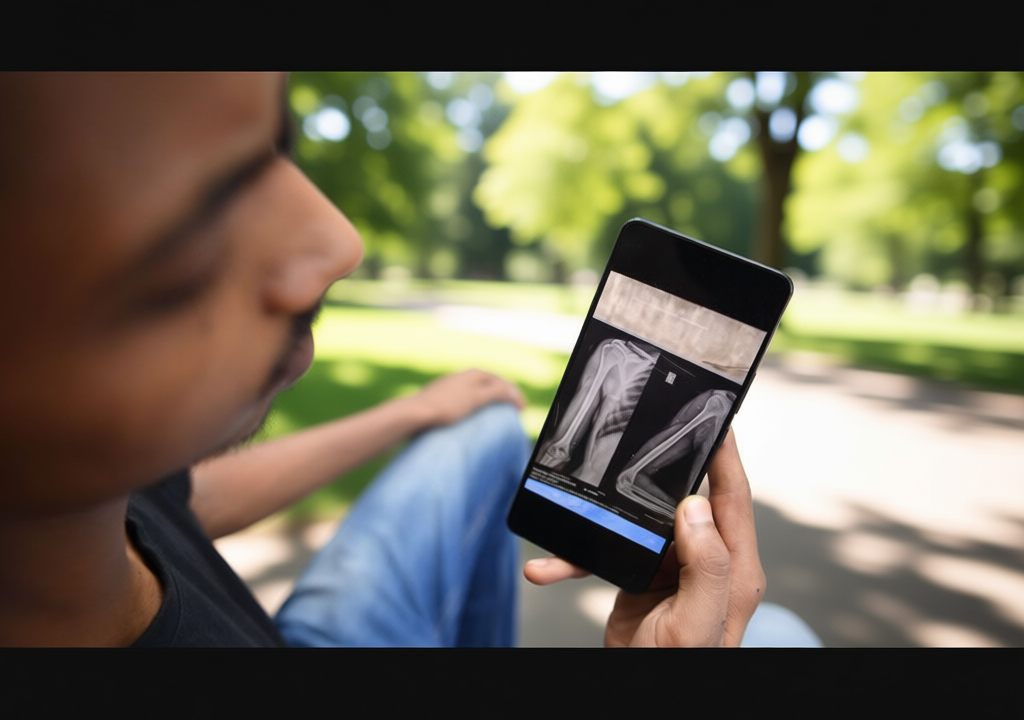
Medical professionals extracted several metallic pellets from his hand following the incident, yet nine to ten continue to remain embedded within his body. According to Singh, those situated deeper in the tissue cannot be extracted without risking additional injury. He explained that surgeons cautioned him about potential complications from further operations.
Deep Roots in the Student Movement
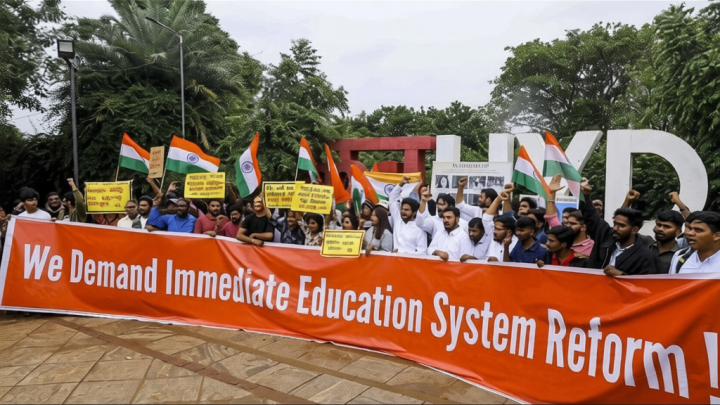
Singh’s involvement in the Jantar Mantar demonstrations runs deeper than mere solidarity. Since June, he has been actively participating in the student movement. His initial appearance came during a one-day demonstration on June 6, and he returned when the Cockroach Janta Party announced an indefinite protest on June 20.
The cause resonated personally. His younger sibling had dedicated two years to preparing for the NEET examination. Additionally, Singh himself had taken examinations organized by the National Testing Agency (NTA) and felt profoundly troubled by reported irregularities in the testing process.
During the demonstrations, Singh frequently captured the movement through his artwork. His sketches depicted security barricades, students forming queues, volunteers assisting, the main protest stage, and demonstrators singing while beating drums.
Confrontation and Aftermath
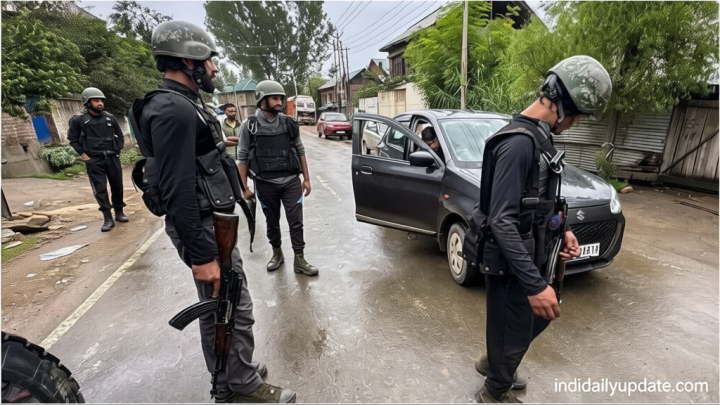
On July 20, Singh positioned himself near the front barricades as police forces advanced. According to his account, authorities initially deployed lathi charges and tear gas before subsequently firing pellet guns at the crowd.
“They attacked us without any warning,” he alleged.
Initially, Singh did not notice the injury. Only when he rolled up his sleeves did he discover blood and realize that pellets had penetrated his skin. Friends immediately transported him to Lady Hardinge Medical College, where he received initial treatment and was discharged on the same day.
Subsequent medical consultations took place at Lok Nayak Hospital on July 28 and Holy Family Hospital on July 29. Doctors continue evaluating whether any of the remaining pellets can be safely extracted. Singh noted that while the pain has diminished, normal hand function remains limited.
“The pain has reduced, but I still cannot use my hand normally,” he said.
Legal Action and Personal Recovery
Reflecting on the events, Singh questioned the disproportionate response. He pointed out that protesters carried only pens and paper while police wielded pellet guns.
“We were only carrying pens and paper. They had pellet guns,” he said. “Are we terrorists?”
Beyond his personal recovery, Singh has joined other petitioners in challenging the use of pellet guns against civilians. Together with Sheikh Irshad Mansoor, he filed a public interest litigation before the Supreme Court demanding a comprehensive ban on metallic pellet guns during peaceful demonstrations.
The legal challenge emerged amid heightened examination of police conduct during the July 20 crackdown. On July 30, while hearing the petition, the Supreme Court noted that pellet gun deployment is only acceptable under “exceptional circumstances” according to police regulations. The court requested the Delhi Police’s standard operating procedure for pellet gun usage and directed the Delhi government to guarantee proper medical care for injured protesters.
For Singh, however, the courtroom battles represent only part of his struggle. The most profound injury remains personal and immediate.
He still cannot hold a pencil the way he once did. And for an artist, he says, that is the deepest wound.