
‘Jump or die’: How a 32-year-old man escaped the deadly Lucknow fire
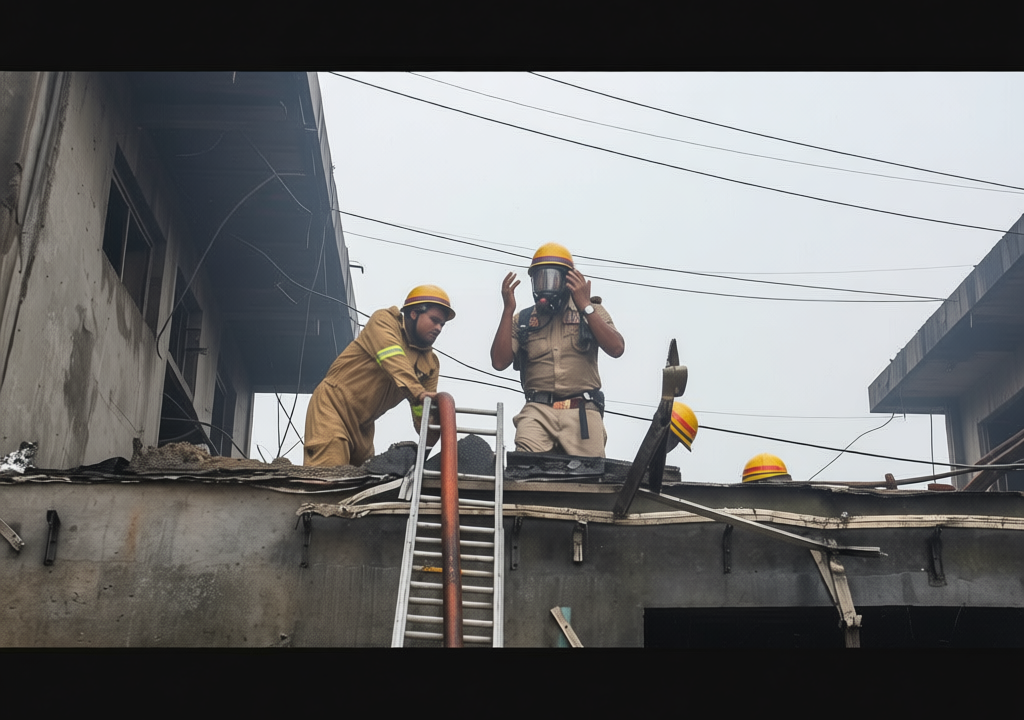
Indiadailyupdate.com – On June 23, 2026, a fire that quickly escalated into a catastrophic disaster in Lucknow’s Aliganj district forced a harrowing decision for Mohd Aasif, a 32-year-old employee trapped in a commercial building. As the flames consumed the structure, the phrase “Jump or die” became a chilling mantra for those inside, highlighting the desperate urgency of the situation. The incident, which claimed 15 lives and left multiple others injured, unfolded in a matter of minutes, leaving survivors like Aasif to recount their experiences with a mix of trauma and relief.
The Tragic Timeline of the Fire
The fire erupted around 2 pm on a seemingly ordinary Monday, catching workers at an animation center off guard during their lunch break. “We were unaware of the danger until the smoke started to rise,” Aasif recalled to PTI. Initially mistaken for a minor electrical fault, the fire rapidly spiraled out of control, engulfing the three-storey building. As panic set in, the biometric lock on the door malfunctioned due to a power outage, trapping dozens inside. “It was like a nightmare—everyone was running, but there was no clear direction,” he said, emphasizing the confusion that followed.
“We assumed the fire was manageable, but the staircase became a death trap,” Aasif explained. Smoke and heat rose rapidly, blocking visibility and forcing people to retreat. “Even those a few feet apart couldn’t see each other,” he added, describing the claustrophobic conditions. The lack of immediate exits and the building’s design exacerbated the crisis, with the roof exit blocked by a door and a narrow channel, preventing a quick escape for many.
Aasif’s Life-Saving Choice
With the staircase impassable, Aasif made a split-second decision that would define his survival. “I smashed a glass window to create an exit, but the flames were already spreading,” he said. Covering his face with a wet towel, he leaped from the second floor, landing safely on the ground. “It felt like falling into a pit of fire, but I had no other option,” he recounted. His colleague, Jayant Gupta, followed suit but sustained severe injuries after landing on an iron railing, underscoring the peril of the situation.
“I saw an electric wire hanging near the front, but I didn’t know if it was live or not,” Aasif shared. The wire, melting from the intense heat, added to the danger as he descended. While his leap saved his life, it also revealed the lack of proper safety measures in the building, such as functional fire alarms and accessible emergency exits. “There was no working alarm, and the equipment was either missing or hard to reach,” he noted, critiquing the building’s safety protocols.
Lessons from the Disaster
The incident has sparked renewed calls for stricter fire safety regulations in Lucknow’s commercial areas. Aasif pointed to the building’s design as a critical factor in the tragedy. “The staircase acted like a chimney, pulling smoke upward faster than we could escape,” he said. Experts agree that the lack of adequate ventilation and evacuation routes contributed to the chaos. “This building’s layout made it nearly impossible to retreat once the fire started,” a local fire official remarked, highlighting the need for compliance with safety standards.
Despite the severity of the fire, Aasif remains grateful for his survival. “I’m okay now, though I suffered serious injuries,” he said. His story, however, serves as a stark reminder of the risks faced in poorly designed structures. Authorities are currently investigating the fire’s origin, which is believed to have started in the pet shop and clinic on the ground floor. “Over 20 people were inside at the time, but no one could confirm the exact source of the blaze,” Aasif stated, adding that the fire’s spread was rapid and unpredictable.
The tragedy has also prompted discussions about emergency preparedness. “If the biometric lock had failed earlier, we might have lost more lives,” Aasif said. He emphasized the importance of regular safety drills and backup systems for exits. “People should know what to do in a crisis, not just react in panic,” he added. As the community mourns the loss of lives, the incident underscores the fragility of safety in urban environments and the critical role of quick decisions in survival.