If Not a Passport Then What Proves Indian Citizenship? MEA Clarifies Role, Sparks Debate
MEA’s Clarification on Passport Functionality
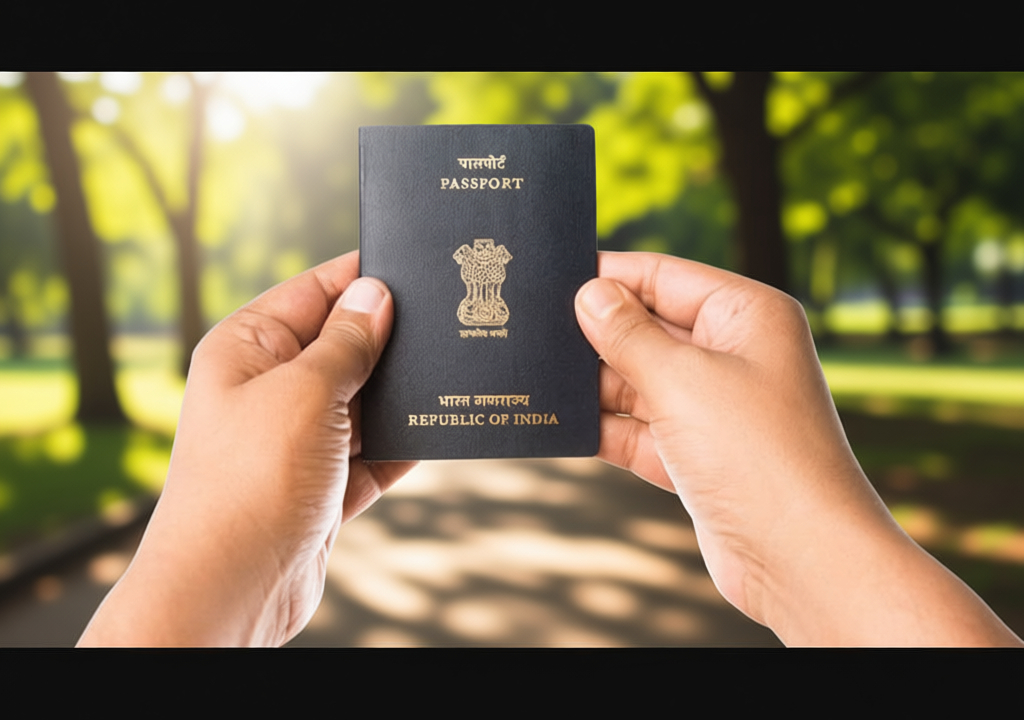
Indiadailyupdate.com – The Ministry of External Affairs (MEA) recently emphasized that an Indian passport is primarily a travel document, not an absolute proof of citizenship. This statement was made during the 14th Passport Seva Divas, an initiative to promote passport services and streamline procedures. While passports are issued exclusively to Indian citizens, the MEA clarified that their main role is to facilitate international travel and confirm the holder’s identity abroad. The remark has reignited discussions about the legal definition of citizenship in India, with critics questioning whether the passport’s status as a citizenship document is being redefined.
India’s lack of a unified national identity document has long been a point of contention. The government has consistently stated that the PAN card and voter ID card are not conclusive evidence of citizenship. The voter ID card, for instance, serves as proof of electoral participation and residence but does not automatically verify citizenship status. Similarly, the Aadhaar card, though widely used for identification, is also not recognized as definitive proof of citizenship by the Supreme Court. This gap in documentation has led to uncertainty, particularly for individuals whose citizenship status is under scrutiny, such as those affected by the National Register of Citizens (NRC) initiative.
The Legal Framework and National Register of Citizens
The MEA’s clarification aligns with India’s existing legal framework, which distinguishes between identity documents and citizenship proofs. The National Register of Citizens, a government project aimed at compiling a comprehensive list of Indian citizens, has been proposed as the ultimate authority for citizenship verification. However, its implementation has sparked controversy, particularly in states like Assam, where it has been used to identify undocumented residents. Former diplomat Veena Sikri highlighted that the MEA’s stance is consistent with the NRC’s role, reinforcing the idea that citizenship status requires separate validation beyond just possessing an identity card.
Despite this, the MEA’s recent remarks have drawn scrutiny. Critics argue that if a passport is not a definitive proof of citizenship, how can the government be certain that it is only issued to citizens? This question has led to debates about the verification process for passport applicants. Some experts suggest that the MEA’s position could be interpreted as downplaying the importance of passports in confirming citizenship, which might complicate matters for individuals relying on them for legal recognition abroad. The clarification also raises questions about how other nations perceive Indian passports, given the growing emphasis on identity verification in global diplomacy.
Global Variations in Passport Recognition
India’s approach to passports contrasts with several countries that consider them definitive proof of citizenship. In the United States, for example, a passport is not only a travel document but also a legal instrument that confirms the holder’s nationality. Similarly, the United Kingdom and Canada use passports as key identifiers for citizenship status. However, in countries like Germany, France, and South Korea, passports are often viewed as travel documents that complement, but do not replace, other forms of citizenship verification. This divergence in practices highlights the need for India to clarify its own standards and address concerns about the reliability of its documentation system.
The debate over passport validity extends to international agreements and legal frameworks. For instance, in the context of diplomatic relations, many countries rely on passports to authenticate the nationality of individuals visiting or residing in their nation. If India’s passport is not considered a citizenship proof, it could impact how Indian citizens are recognized in foreign jurisdictions. Additionally, the clarification has raised questions about the role of the MEA in maintaining the integrity of India’s passport system. Critics suggest that without a clear national document, the country risks confusion both domestically and internationally.
Public Reaction and Policy Implications
The MEA’s announcement has sparked a wave of public reactions, with opposition leaders and activists calling for greater transparency. Shiv Sena (UBT) leader Aaditya Thackeray questioned the logic, asking,
“Does our country issue passports as travel documents to non-Indians as well? Wouldn’t this clarification sow uncertainty in other nations’ perceptions about whether non-citizens receive Indian passports for travel?”
His concerns reflect broader anxieties about how the government defines citizenship and whether passports are being used as a tool for verification. Screenwriter Javed Akhtar also weighed in, arguing that the MEA’s stance could lead to inconsistencies in how citizenship is validated for different groups of people.
As the discussion continues, the implications for policy and governance are significant. The absence of a single, authoritative document to prove citizenship may complicate processes such as voter registration, electoral participation, and access to government services. Furthermore, it could affect how Indian citizens are perceived in global contexts, particularly in cases involving diplomatic or legal disputes. While the MEA’s clarification aims to align with legal definitions, it has also prompted calls for a more robust system that ensures clarity for both citizens and international partners. The debate underscores the importance of revisiting India’s approach to identity and citizenship documentation in an increasingly interconnected world.