Where Is Manipur CM Amit? Amit Shah’s Meeting with Naga MLAs Sparks Leadership Debate
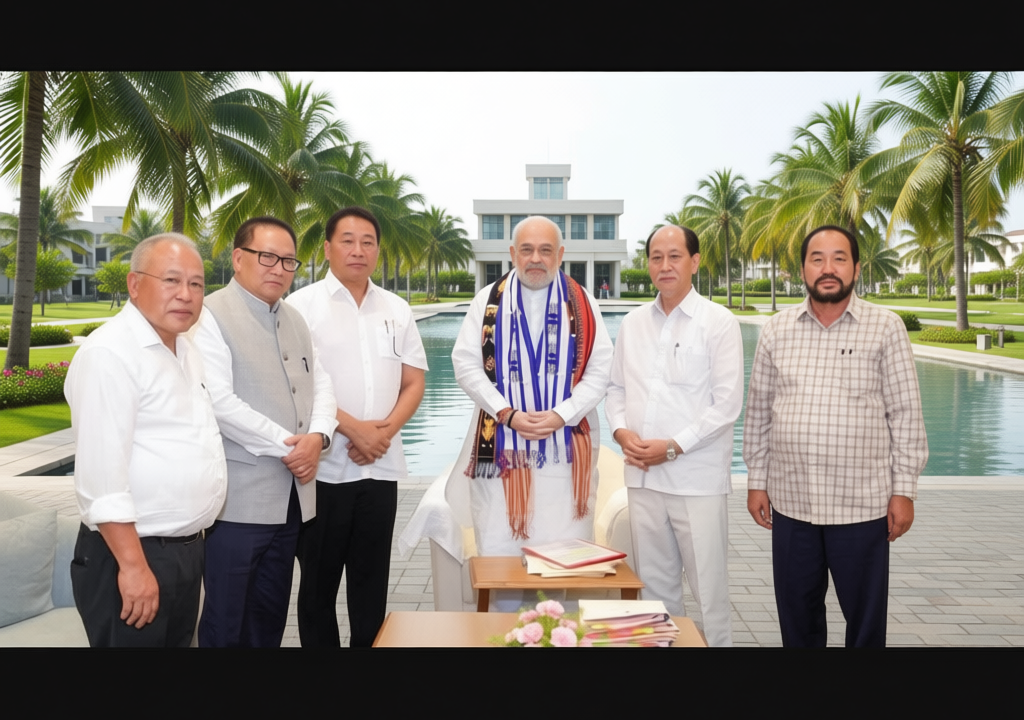
Indiadailyupdate.com – The sudden absence of Manipur’s Chief Minister Yumnam Khemchand Singh from a high-profile meeting with Union Home Minister Amit Shah has raised eyebrows among political analysts and state leaders. The gathering, held in New Delhi, brought together MLAs from Manipur’s Naga community and Nagaland’s Chief Minister Neiphiu Rio. The question of Where is Manipur CM Amit has become a focal point, as the state’s chief minister was notably absent from the discussion, despite his critical role in representing Manipur’s interests. This absence has sparked speculation about the meeting’s purpose and the leadership dynamics at play.
Union Home Ministry Justifies Absence, But Doubts Remain
A press release issued by the Union Home Ministry stated that the meeting aimed to address security, development, and inter-state relations. However, the lack of clear explanation regarding why the Manipur CM was not present has led to skepticism. While Union Home Minister Amit Shah emphasized the importance of dialogue between central and state authorities, critics argue that the absence of Yumnam Khemchand Singh undermines his leadership. The question of Where is Manipur CM Amit now lingers as officials attempt to clarify the situation.
Manipur’s Deputy Chief Minister, Losii Dikho, claimed to have attended the meeting, but no official confirmation has been provided. This ambiguity has fueled debates about transparency and the clarity of state-level representation. Political observers suggest that the meeting might have been a strategic move to engage Nagaland’s leaders on shared issues, but the lack of the CM’s involvement has left many questioning the process.
Opposition Condemns Leadership Gap and Regional Tensions
Opposition leader K Meghachandra Singh voiced concerns over the meeting’s leadership structure, stating:
“If issues related to Manipur were addressed, it’s natural to wonder why the engagement wasn’t conducted under the CM’s leadership or with his direct involvement. How could a dialogue between Manipur’s Naga MLAs and the Union Home Minister occur without the CM’s presence?”
His remarks highlight the tension between the state’s governance and the central government’s approach to inter-state matters. The absence of Yumnam Khemchand Singh has been interpreted by some as a sign of weakened authority or internal coordination challenges.
Singh further criticized the decision, implying that the Manipur CM had allowed the meeting to proceed without his participation. He argued that the event demonstrated a lack of trust in the state’s leadership, suggesting that Dikho and the Naga MLAs acted independently. This has intensified discussions about the balance of power between the state government and regional groups, as well as the role of central ministers in influencing state-level decisions.
The meeting, though intended to foster collaboration, has drawn attention to Manipur’s political landscape. With the Where is Manipur CM Amit question dominating media discourse, stakeholders are calling for more clarity on the CM’s involvement and the rationale behind his absence. Analysts warn that such gaps in representation could affect the state’s ability to assert its interests in national forums.
Context of Naga MLAs in Manipur’s Politics
Manipur’s Naga MLAs have long played a significant role in shaping the state’s political agenda, particularly on issues like regional autonomy and security. Their participation in the meeting underscores the importance of these concerns in the broader Northeastern context. However, the absence of the state’s chief minister has raised questions about whether the Naga MLAs were acting as an independent group or as delegates under the CM’s guidance.
Some political analysts note that the Naga MLAs’ engagement with the central government could signal a shift in priorities or a desire for greater autonomy. Yet, the lack of clarity surrounding the CM’s absence has left Manipur’s residents and stakeholders uncertain about the meeting’s outcome. This uncertainty highlights the need for improved communication and representation in inter-state discussions, especially when critical issues are at stake.
As the debate continues, the Where is Manipur CM Amit question serves as a reminder of the importance of leadership visibility in times of political engagement. While the Union Home Minister’s meeting with Nagaland’s leaders has been widely reported, the absence of Manipur’s chief minister has added a layer of complexity to the narrative, prompting calls for a more transparent process in future consultations.
Implications for Manipur’s Governance and National Unity
The meeting has broader implications for Manipur’s governance and its relationship with the central government. With the Where is Manipur CM Amit issue at the forefront, there is a growing emphasis on how state leaders are perceived in national dialogues. Critics argue that the CM’s absence could weaken Manipur’s bargaining power in discussions that affect its development and security.
Meanwhile, supporters of the meeting suggest that it was a necessary step to address regional challenges, particularly given the ongoing security concerns in the Northeast. They highlight that the central government often seeks input from local leaders to ensure policies reflect regional needs. However, the controversy surrounding the CM’s absence has sparked a deeper examination of leadership responsibilities and the effectiveness of state governance.
As the situation unfolds, the question of Where is Manipur CM Amit remains a symbol of the larger debate over political representation and decision-making. The meeting may serve as a catalyst for reforms in how Manipur engages with the Union government, ensuring that the state’s voice is not only heard but also led by its rightful authority.