Will the UCC Bill trigger the first major clash within TMC’s leadership?
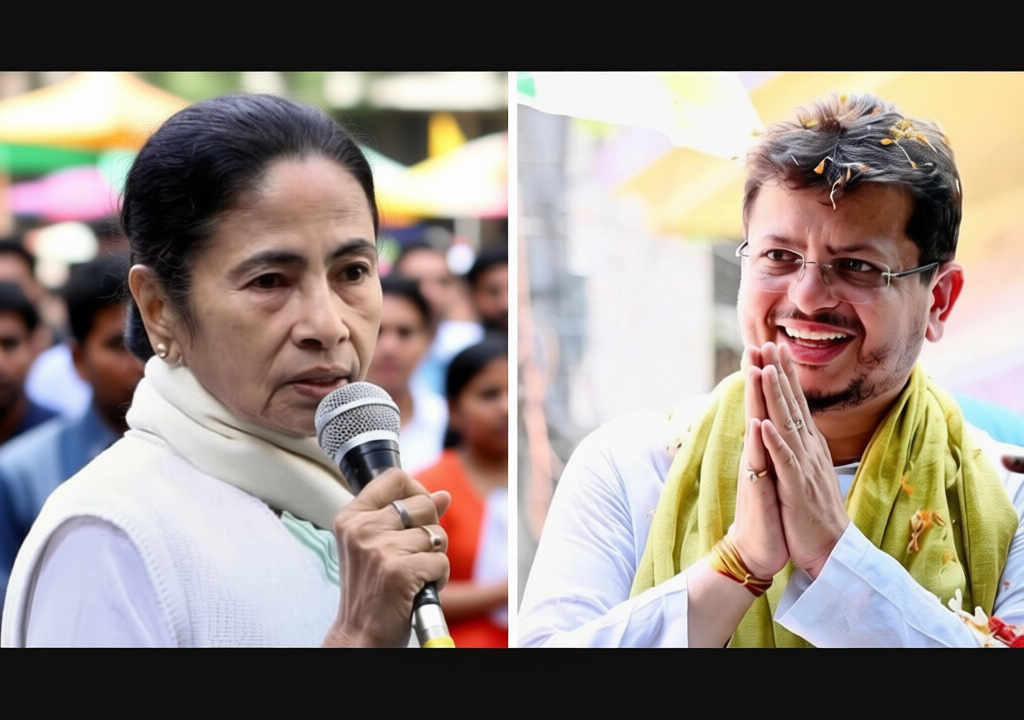
Indiadailyupdate.com – Will the UCC Bill trigger a significant rift between rival factions within the Trinamool Congress (TMC) as the West Bengal Assembly prepares to debate the Uniform Civil Code (UCC) legislation? The proposed law, which aims to harmonize personal laws across religions, has become a focal point of political tension. By unifying marriage, divorce, inheritance, and adoption laws under a single framework, the UCC is positioned as a cornerstone of the BJP’s governance agenda. However, its introduction has already set the stage for internal conflict within the TMC, with the party’s leadership split between supporters and critics of the bill. The upcoming debate on Monday is expected to highlight these divisions, as the two factions led by former chief minister Mamata Banerjee and Leader of the Opposition Ritabrata Banerjee take opposing stances on the measure.
The UCC Debate as a Political Turning Point
Will the UCC Bill trigger a deeper ideological split within the TMC, exposing fault lines that have been simmering since the party’s electoral setbacks? The legislation, which has been a key demand of the BJP, is being pushed in the West Bengal Assembly despite opposition from the TMC. The debate is not just about legal reform but also about political strategy, as both factions seek to leverage the issue for their own gains. Mamata Banerjee’s faction, known as the Kalighat group, is likely to emphasize the bill’s constitutional merits and its potential to promote social cohesion. Meanwhile, Banerjee’s team may argue for a more cautious approach, calling for extensive public consultation before the law is enacted.
Leadership Split and Factional Dynamics
The TMC’s internal split has been exacerbated by recent electoral losses, which have reduced the party’s parliamentary seats to just 80. This decline has exposed longstanding tensions between the party’s central leadership and its opposition wing. The first fracture occurred when 58 MLAs supported Ritabrata Banerjee’s bid for opposition leadership, challenging the high command’s choice of Sovandeb Chattopadhyay. The rift later expanded to the Lok Sabha, where 20 of the TMC’s 28 MPs defected to the Nationalist Citizens Party of India (NCPI), aligning with the BJP-led National Democratic Alliance (NDA). As the UCC debate unfolds, these factional dynamics will play a critical role in shaping the party’s response and its ability to maintain unity.
“Wherever the BJP forms the government, the UCC will be implemented. However, when and how it will be introduced in West Bengal will be decided by the state government,” said BJP state president Samik Bhattacharya on Sunday. This statement underscores the BJP’s strategic push to institutionalize the UCC, while also highlighting the TMC’s control over the implementation timeline. The debate in the West Bengal Assembly is not merely a legislative exercise but a test of the party’s cohesion, with each faction vying to present itself as the stronger counter to the BJP’s agenda.
Broader Implications for Political Unity
Will the UCC Bill trigger a lasting impact on the TMC’s political trajectory, particularly in the context of upcoming elections? The legislation is seen as a potential flashpoint for the party’s unity, given its ability to mobilize religious and cultural sentiments. Critics argue that the UCC could be perceived as an encroachment on minority rights, particularly for Muslim, Hindu, and Christian communities. Supporters, on the other hand, believe it will promote gender equality and legal uniformity. The debate has already drawn attention to the TMC’s internal power struggles, with the Kalighat group accusing the BJP of using the law to advance its political dominance. Meanwhile, Banerjee’s faction is framing the UCC as a tool for social division, aiming to rally support among traditionalist voters.
Outside of West Bengal, the BJP has been actively promoting the UCC in states under its control. Uttarakhand became the first to enact the law in February 2024, followed by Gujarat in March 2026 and Assam in May 2026. In Maharashtra, a committee led by a retired High Court judge is being formed to study the UCC’s implementation before a final decision is made. These developments have set a precedent for the UCC’s nationwide adoption, but in West Bengal, the debate remains a litmus test for the TMC’s ability to manage internal dissent while presenting a united front against the BJP.
Will the UCC Bill trigger a shift in the political landscape of West Bengal, particularly in the TMC’s internal hierarchy? The legislation has become a symbol of the BJP’s ideological push, which seeks to eliminate religious personal laws and establish a secular legal framework. For the TMC, the challenge lies in balancing its traditionalist base with progressive elements. The Kalighat group, which has been a strong advocate for the UCC, argues that the bill is necessary for modernizing the state’s legal system and ensuring equal rights for all citizens. However, Banerjee’s team is likely to frame the UCC as a threat to cultural identity, using it to galvanize support among regional voters who are wary of federal overreach. The outcome of the debate could determine the party’s strength in the upcoming elections and its ability to consolidate power in the state.
Will the UCC Bill trigger a lasting ideological divide within the TMC, with long-term consequences for its governance? The party’s internal conflict has already spilled over into the Lok Sabha, where 20 MPs defected to the NCPI, signaling a deeper rift. This defection has weakened the TMC’s parliamentary presence, making the UCC debate a crucial moment for the party’s future. As the state government pushes for the bill’s passage, the TMC’s factions will need to navigate their differences carefully. The bill’s implementation could either strengthen the party’s resolve or accelerate its fragmentation, depending on how effectively its leaders can unify their messaging and address the concerns of their supporters.