OPINION | The Indus Waters Treaty Amid Climate and Conflict Pressures
Indiadailyupdate.com – The Indus Waters Treaty (IWT), signed in 1960, remains a cornerstone of India-Pakistan water diplomacy, particularly as climate change and geopolitical tensions intensify. This long-standing agreement, which allocated the Indus, Jhelum, and Chenab rivers to Pakistan and the Beas, Ravi, and Sutlej to India, has withstood decades of conflict, from the 1965 and 1971 wars to the ongoing Kashmir dispute. However, the recent assertion by India’s Jal Shakti Minister, C.R. Patil, that the Indus river flows to Pakistan could be fully halted by June 2028 has reignited fears of a breakdown. Pakistan’s Defence Minister, Khawaja Asif, warned of military action, while Climate Change Minister Musadik Malik vowed to “cut off those hands” attempting to control the rivers. This moment underscores the delicate balance between the IWT’s provisions and the escalating pressures of climate and conflict.
The Treaty’s Resilience and Emerging Challenges
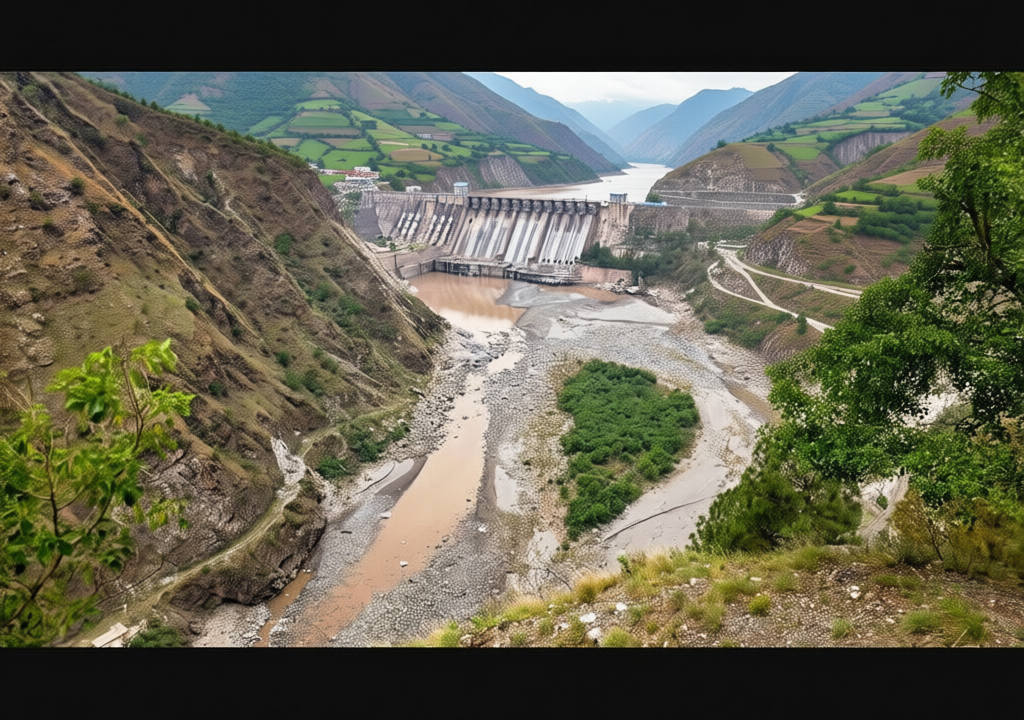
For over six decades, the IWT has provided a framework for resolving water disputes between the two nations. Its mechanism of alternating meetings between India and Pakistan, along with the arbitration process, has allowed for conflict resolution despite frequent border tensions. Yet, the last decade has seen a shift. Disputes over hydropower projects, such as the 330 MW Kishanganga and 850 MW Ratle, have become more contentious. These projects, which India claims comply with treaty rules, have been challenged by Pakistan as potential breaches. The 2019 Pulwama attack further disrupted cooperation, leading to irregular meetings and the 2022 session in New Delhi marking the treaty’s collapse into arbitration. The growing influence of climate change on water availability now adds another layer of complexity to this enduring negotiation.
Climate Change as a Catalyst for Conflict
As global temperatures rise, the Indus Waters Treaty faces new scrutiny. The Indus basin, already vulnerable to glacial melt and erratic monsoons, is experiencing heightened water scarcity. India’s emphasis on expanding its hydro projects to meet growing energy demands has drawn criticism from Pakistan, which argues that these developments threaten its water security. The treaty’s original focus on fixed river allocations is now being tested by shifting climatic patterns. With glaciers in the Himalayas retreating at an accelerated rate, the basin’s water supply is becoming less predictable, intensifying fears of resource competition. This environmental uncertainty has blurred the lines between traditional and non-traditional security issues, making the IWT a focal point for both climate and political tensions.
Recent data highlights the strain on the region’s water resources. The 2024 suspension of the Permanent Indus Commission by India, following a militant attack in Pahalgam, signals a growing willingness to prioritize military objectives over hydro diplomacy. Pakistan’s response, framing the move as an “act of war,” reveals the emotional and strategic weight of the IWT. While both nations have already breached the Simla Agreement, the IWT remains a symbol of their shared resilience. However, as climate-induced droughts and floods become more frequent, the treaty’s ability to adapt to these challenges is under question. The World Bank, which has mediated the agreement since its inception, now finds itself mediating between conflicting interpretations of its provisions.
The Role of International Arbitration
Attempts to internationalize the dispute have escalated, with Pakistan invoking Article IX of the IWT to demand arbitration. This provision, which allows for the appointment of a neutral expert or tribunal, has been used in the past but remains a potent tool in the current context. India’s stance, however, favors direct negotiations and commissioner-level discussions, arguing that international arbitration could lead to unilateral decisions. The simultaneous use of arbitration and neutral experts has created ambiguity, with Pakistan pushing for an ex parte ruling and India accusing Pakistan of extending the process to gain leverage. These diverging strategies reflect a deeper strategic divide: Pakistan seeks to frame the issue as a matter of sovereignty, while India positions it as a bilateral agreement requiring flexibility.
As the climate crisis deepens, the IWT’s relevance may be redefined. Glacial melt, reduced snowfall, and shifting rainfall patterns are altering the hydrological dynamics of the region, forcing both nations to reconsider their resource management strategies. While India argues that its projects enhance energy security and economic development, Pakistan contends that they undermine its agricultural and domestic water needs. The treaty’s original design, which assumed a fixed flow of water, now requires updates to address the realities of a changing climate. With the World Bank playing a critical role in mediating these disputes, the IWT’s future hinges on its ability to evolve without losing its foundational purpose as a peace mechanism.
“cut off those hands”
“act of war”