Pilots’ Union Presses India’s Crash-Probe Agency for Formal Action After Seventh A321 Tailstrike
Indiadailyupdate.com – The recurring problem of Airbus A321-family aircraft striking the runway with their tails during takeoff has moved from isolated mishap to structural concern in Indian civil aviation. The Airline Pilots’ Association of India (ALPA India) has formally called on the Aircraft Accident Investigation Bureau (AAIB) to publish binding safety recommendations addressing tailstrike prevention, simulator curriculum gaps, and aircraft design considerations. In a letter dated August 31, the pilots’ body framed the issue not as a series of individual flying errors but as a “systemic and institutional” failure embedded in training infrastructure and regulatory oversight.
“The pattern of recurrence demonstrates that the root cause of these events is systemic and institutional — not individual pilot failure,” ALPA India stated in its correspondence with the AAIB.
The Gorakhpur Incident and a Growing Ledger
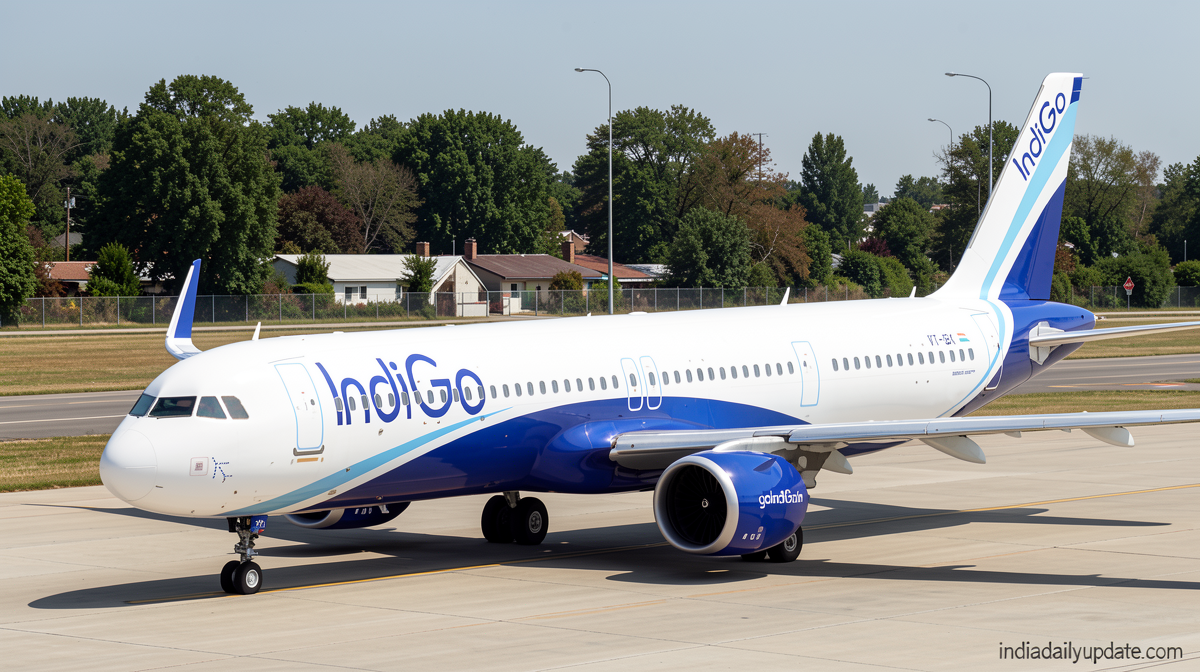
The latest trigger was a tailstrike event involving an IndiGo flight at Gorakhpur, a tier-2 airport in Uttar Pradesh. According to ALPA India, this marks the seventh confirmed tailstrike on an A321-family airframe registered in India since 2020, and the second such occurrence at a tier-2 airport within calendar year 2026. The aircraft was grounded and the flight crew de-rostered while the AAIB opened its investigation.
However, people familiar with the matter indicated that the airframe had already returned to commercial service after completing a ferry flight from Gorakhpur to Delhi the previous week. That operational decision, made while the formal investigation was still underway, underscores the pressure airlines face to keep narrow-body fleets in revenue rotation, particularly when the tailstrike causes no structural damage severe enough to warrant a prolonged ground stop.
What a Tailstrike Actually Means
A tailstrike occurs when the rear fuselage or empennage of an aircraft contacts the runway surface during takeoff rotation or landing flare. On the A321 family — a stretched, single-aisle jet with a relatively long fuselage and a high tail cone — the geometry makes the aircraft more susceptible to this event than shorter narrow-bodies. The risk escalates on shorter runways, at airports with limited visual cues, and when pilots are less familiar with the specific aircraft type’s rotation characteristics.
The A321NEO variant, which entered service in the early 2020s, introduced updated flight-control software, including revised flare-law logic that governs how the aircraft pitches during the final seconds of landing. Pilots transitioning from the older A321ceo to the NEO must internalize these differences, and ALPA India argues that the current simulator landscape in India does not adequately support that transition.
The Simulator Gap at the Heart of the Complaint
ALPA India’s letter specifically requests that the AAIB direct the Directorate General of Civil Aviation (DGCA) to audit every Approved Training Organisation (ATO) in the country for the adequacy of its A321NEO simulator curriculum. The union further asks that a six-month compliance window be imposed, compelling ATOs to procure — or contract access to — qualified full-flight simulators capable of replicating the NEO’s flight envelope.
The union’s central factual claim is blunt: no ATO in India has publicly confirmed that it operates an A321NEO Full Flight Simulator at Level D — the highest fidelity category recognized by international aviation authorities — equipped with validated, NEO-specific flare-law fidelity. In practical terms, this means pilots may be training on simulators that approximate the older A321ceo’s behavior rather than the precise pitch-and-thrust dynamics of the newer variant.
Why Tier-2 Airports Amplify the Risk
Tier-2 airports in India typically feature shorter runways, fewer approach aids, and less frequent A321-family operations than major hubs like Delhi, Mumbai, or Bengaluru. Pilots may fly to such stations only a handful of times per month, reducing muscle memory and situational familiarity. When combined with a simulator curriculum that does not faithfully replicate the NEO’s flare characteristics, the margin for error narrows considerably. ALPA India’s emphasis on the tier-2 dimension is therefore not incidental; it identifies where the systemic weakness concentrates operationally.
Regulatory Pathway and What Comes Next
The AAIB, as India’s independent accident-investigation authority, issues recommendations that are advisory but carry significant regulatory weight. If the bureau accepts ALPA India’s framing, its recommendations would be directed to the Ministry of Civil Aviation and the DGCA, which holds licensing and oversight authority over ATOs and airline operations. A formal recommendation could trigger mandatory simulator upgrades, revised type-rating syllabi, and enhanced post-incident reporting requirements specific to tailstrike events.
The union’s insistence on a six-month procurement timeline signals that it views the simulator shortfall as an immediate operational hazard rather than a long-term capital-planning issue. Airlines operating A321NEO fleets in India — including IndiGo and Air India — would be affected by any resulting DGCA directives, potentially facing temporary fleet adjustments if simulators must be reconfigured or new units sourced.
A Pattern That Demands More Than Individual Blame
Seven confirmed tailstrikes in roughly six years on a single aircraft family within one national register is, by any aviation-safety metric, a frequency that warrants structural intervention. ALPA India’s position is that attributing each event to pilot error obscures the underlying infrastructure deficit: inadequate type-specific simulation, limited exposure at secondary airports, and the absence of validated NEO-specific training content. Until the training ecosystem catches up with the fleet’s evolution, the union argues, the recurrence pattern will persist regardless of individual pilot competence.
The AAIB’s investigation into the Gorakhpur event will determine whether that particular tailstrike involved mechanical, environmental, or procedural factors. But the broader question ALPA India has placed before the bureau — whether Indian civil aviation’s simulator and oversight architecture can support safe operation of the A321NEO at scale — remains open, and the August 31 letter is the formal instrument through which the pilots’ body has demanded an answer.
Related Reading
Frequently Asked Questions
What is Airline pilots body raises tail strikes?
Airline pilots body raises tail strikes is the main topic of this guide. The article explains the context, practical details, and next steps readers should understand.
Why does Airline pilots body raises tail strikes matter?
Airline pilots body raises tail strikes matters because readers are looking for a useful answer, not just a short summary. Good content should match search intent and help them decide what to do next.