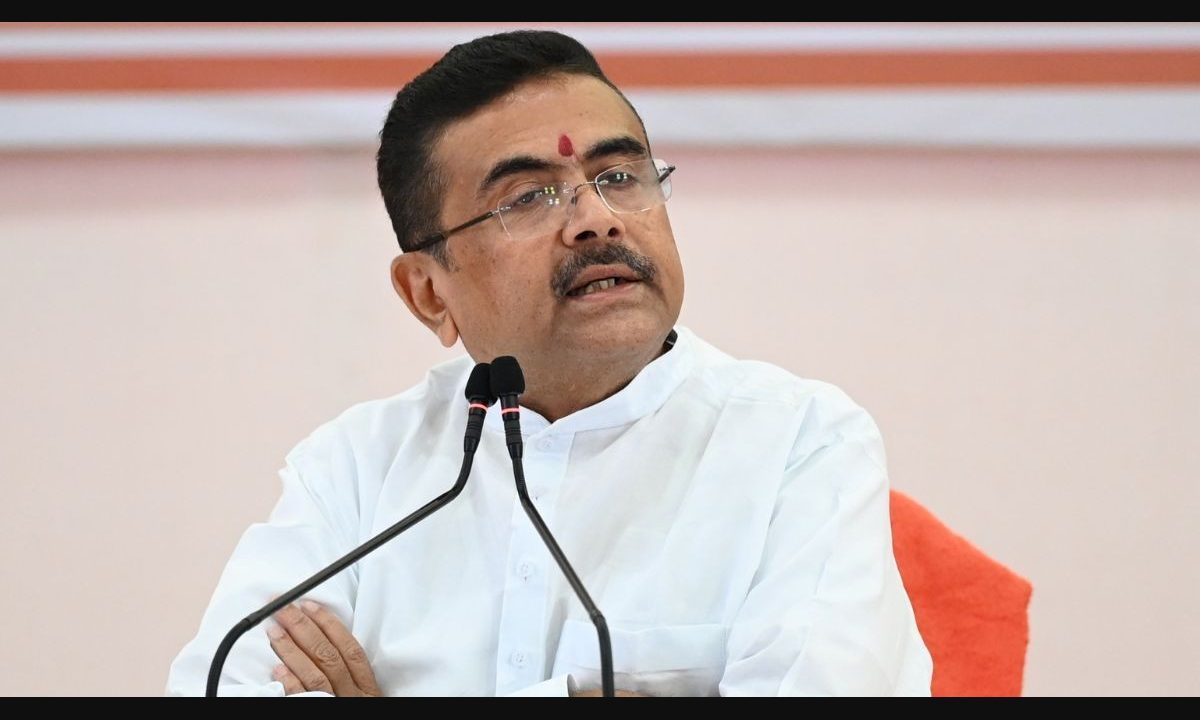

Adhikari’s First Hundred Days: Ambitious Agenda Meets Early Backlash in West Bengal
Indiadailyupdate.com – On May 4, West Bengal witnessed a historic political shift as the Bharatiya Janata Party swept into power, ending fifteen years of Trinamool Congress governance. Voters, driven in part by manifesto pledges that resonated with their desire for change, handed the keys of state administration to the BJP. The new regime moved swiftly, rolling out policies and scaling up proposed allocations without delay.
The “Exam” Pledge
Speaking at a public rally in Purulia district on Monday, Chief Minister Suvendu Adhikari laid out his government’s track record and issued a pointed challenge to the electorate. He asked citizens to hold him accountable when his first full year concludes.
“On the May 9, 2027, I will complete one year in power. I will sit with you in an exam where you will give me marks. If I don’t get 9 on 10, then I will accept my shortcoming. But you will say, we took the right person and the right party.”
Adhikari underscored the necessity of public trust in the Centre–State partnership as the foundation for sustained delivery.
Health Coverage and Census
A centerpiece of the administration’s early achievements, as framed by the CM, is the ₹5 lakh hospitalisation insurance cover delivered through the Ayushman Bharat Pradhan Mantri Jan Arogya Yojana. By August 16, 1.23 crore beneficiaries had been issued smart cards. The scheme now empanels 1,240 private hospitals alongside 600 state-run facilities, and ASHA workers as well as anganwadi staff will also fall within its coverage net.
Separately, the present government launched the 2027 population census — the first enumeration since 2011 — which is currently in progress across the state.
Legal Reform and Welfare Schemes
Adhikari highlighted the phased implementation of the Bharatiya Nyaya Sanhita, set to supplant the Indian Penal Code he described as draconian. On the welfare front, he pointed to the Annapurna Bhandar programme, which channels a monthly ₹3,000 allowance to rural women living below the poverty line. In June alone, 28 lakh women received their stipend; the beneficiary base is projected to swell to 1.29 crore by September.
OBC List and Recruitment Overhaul
The state’s Other Backward Classes roster was pared down to 66 communities — comprising 65 Muslim and 9 Hindu sub-groups — after the Calcutta High Court issued a stay preventing any expansion beyond that figure. The earlier list had contained 113 sub-groups split across 77 Muslim and 34 Hindu categories.
In parallel, the CM announced that recruitment through the School Service Commission, Public Service Commission, and Police Recruitment Board would be conducted exclusively via written examination to ensure transparency. He committed to filling one lakh teacher and police posts by March 31, 2027, under that open framework.
Housing, North Bengal, and Tribal Employment
Adhikari touted progress under the Pradhan Mantri Awas Yojana and the state-specific Paschim Banga Awas programme, noting that funds previously siphoned by ineligible beneficiaries during the TMC tenure have been recovered. Development in North Bengal occupies a central place in his agenda; he has personally retained the Home and Hill Affairs portfolio and earmarked ₹50 crore for the Kurmi Development Board. Industrial units such as Shyam Steel and Amit Metalinks are expected to establish operations in rural pockets, generating employment for tribal communities through both government and private channels. Upgrades to rural school infrastructure were also flagged as an ongoing priority.
The Mid-Day Meal Controversy
Criticism mounted when ISCKON-run mid-day meal programmes were seen omitting eggs. Adhikari responded that eggs are now served twice weekly and that the per-student budget in government primary schools has been raised to ₹10.
“2,45,000 students are availing of the mid-day meals in Kolkata. The opposition said the BJP will provide prasad, where are the eggs? We are providing nutritious food by ISKCON; we have provisioned for eggs twice a week. We have added Purulia in the next phase.”
He confirmed that ISCKON will extend its involvement to Purulia as well. In government hospitals, the per-patient meal allocation has been bumped up to ₹110, covering three meals daily.
Shadow of the Baruipur Tragedy
Yet the administration’s first hundred days have not been free of controversy. In June, a 12-year-old girl was gangraped and murdered in Baruipur, South 24 Parganas district. Four suspects were arrested, but the death of prime accused Prabhas Mondol in a police encounter ignited fierce debate. Opposition voices — led by Mamata Banerjee’s TMC and the Left Front — seized on the episode to question women’s safety across the state, drawing comparisons that cast West Bengal as a potential “Uttar Pradesh 2.0.” For a government still in its infancy, the episode underscores that bold policy announcements alone cannot silence the scrutiny that follows every new regime into office.
Related Reading
Frequently Asked Questions
What is 100 days of Adhikari?
100 days of Adhikari is the main topic of this guide. The article explains the context, practical details, and next steps readers should understand.
Why does 100 days of Adhikari matter?
100 days of Adhikari matters because readers are looking for a useful answer, not just a short summary. Good content should match search intent and help them decide what to do next.