Fresh Garbage in Ajnar River Underscores Challenge of Sustaining Clean-Up Efforts
Indiadailyupdate.com – Plastic bags and other discarded material have once again collected along stretches of the Ajnar River in Madhya Pradesh’s Rajgarh district, dealing a discouraging blow to a volunteer who had spent months clearing the waterway.
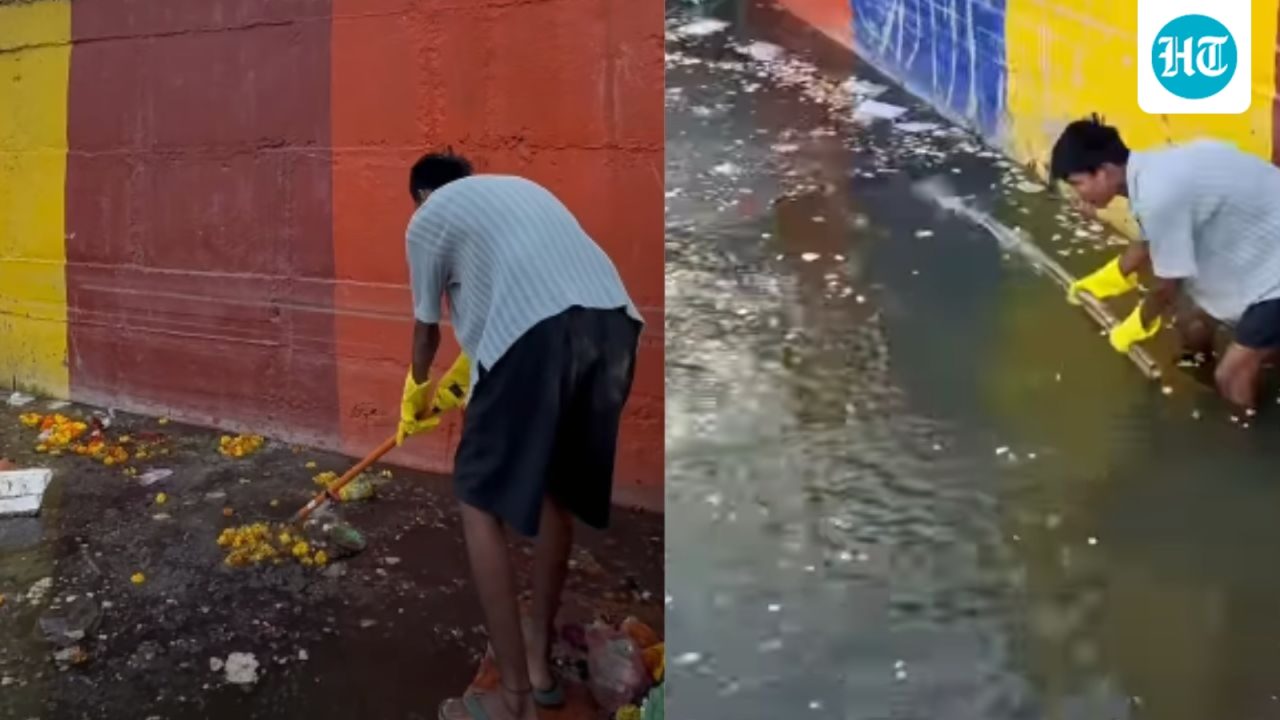
Surendra Singh Choudhary, widely known as “Bittu Tabahi” for his river-cleaning work, shared a video on Instagram showing waste back on the riverbanks only weeks after an extensive clean-up. The images have prompted renewed concern over littering, public participation and the difficulty of protecting local rivers after a clean-up drive ends.
Choudhary had devoted eight months to removing accumulated rubbish from the Ajnar River. Working on his own and without specialised machinery, he cleared tonnes of waste from the site. The return of garbage so soon afterward highlighted how quickly a public space can be damaged again when waste continues to enter it.
Eight months of work, then rubbish returns
In the video, Choudhary showed plastic and other refuse gathered near the river. Rather than stopping his efforts after seeing the condition of the area, he went back into the water and resumed collecting trash bag by bag.
His decision carried an added personal challenge: Choudhary is not a strong swimmer. Even so, he entered the river to retrieve waste and continue the task he had already pursued for months.
“I never imagined that eight months of my hard work would go to waste like this,” Bittu wrote in the caption.
The post was shared on Tuesday and also included an appeal to social media users for practical ideas that could help remove garbage from the Ajnar River more efficiently. The request reflects the scale of the problem facing individuals who undertake such work without formal equipment or a larger team.
Why clean rivers need continuing care
A clean-up can remove what is already visible, but it cannot by itself prevent new waste from being discarded. When plastic bags, packaging and other rubbish repeatedly reach riverbanks, a one-time effort can quickly lose its impact. Sustained protection depends on reducing litter at its source as well as clearing waste that has already accumulated.
The Ajnar River episode has therefore drawn attention beyond a single volunteer’s disappointment. It raises a broader civic question: how can residents, visitors and local communities help ensure that a cleaned public area stays clean? Everyday choices such as disposing of waste properly and avoiding the use of riversides as dumping grounds can determine whether long hours of restoration work endure.
River pollution is also not limited to what can be seen from the bank. Plastic and mixed waste can remain trapped in vegetation, settle in shallow areas or move downstream with changing water levels. Removing it often requires repeated visits, careful collection and safe handling of filled bags. For a person working alone, the physical effort and time involved can be substantial.
Choudhary’s experience illustrates why individual initiative, while valuable, has limits. Volunteers can bring attention to neglected areas and inspire others to act, but lasting results require people to avoid creating the problem again. A cleaner riverbank is easier to maintain when the public treats it as a shared space rather than a place where unwanted material can be left behind.
Online discussion turns to civic responsibility
The video has revived online debate about responsibility for keeping waterways free of garbage. Its central message is simple: restoration work is most effective when it is matched by care from the people who live near, travel through or use the surrounding area.
For readers, the situation offers a reminder that environmental action need not begin only with large campaigns. Proper waste disposal, reducing avoidable plastic use and discouraging dumping near drains, ponds and rivers can all help limit the amount of refuse that eventually reaches a waterway.
Choudhary’s return to the Ajnar River, despite the setback, has kept the focus on the river’s condition and on the need for collective action. His eight months of work may have been undermined by the return of rubbish, but his renewed clean-up effort has also made clear that the issue cannot be solved by one person alone.
The challenge now is not only to remove the latest accumulation of garbage, but to prevent the same cycle from repeating. Protecting a river requires attention after the cameras are gone and after the bags of collected waste have been removed. In Rajgarh district, the condition of the Ajnar River has become a visible test of whether public concern can translate into more responsible everyday behaviour.
Related Reading
Frequently Asked Questions
What is 8 months of hard work wasted?
8 months of hard work wasted is the main topic of this guide. The article explains the context, practical details, and next steps readers should understand.
Why does 8 months of hard work wasted matter?
8 months of hard work wasted matters because readers are looking for a useful answer, not just a short summary. Good content should match search intent and help them decide what to do next.