Supreme Court Clarifies FIR Withdrawal for CJP Protesters
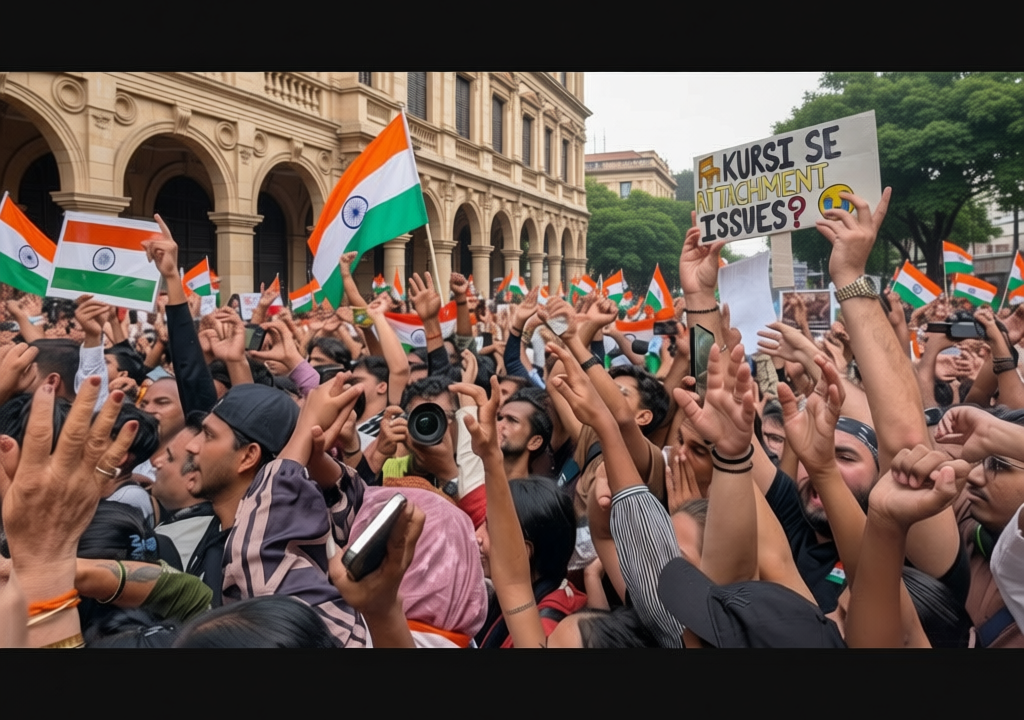
Indiadailyupdate.com – The Supreme Court has delivered a landmark clarification regarding the CJP protests, granting states the authority to withdraw or close First Information Reports (FIRs) against student protesters and activists. This ruling provides significant relief to thousands of individuals booked during the nationwide demonstrations led by the Cockroach Janata Party (CJP) against examination paper leaks. A three-judge Bench, comprising Chief Justice of India Surya Kant, Justice Joymalya Bagchi, and Justice V. Mohana, clarified that the Delhi government and other states may close or withdraw FIRs against protesters, with the exception of those accused of grave and heinous offences.
The clarification specifically addresses the interpretation of the Court’s July 28 order, which had excluded persons with criminal antecedents from protection against coercive action. The Bench emphasized that this exclusion should not be interpreted to cover minor offences or past participation in protests. “It is clarified that the NCT of Delhi and any other State shall be at liberty to close or withdraw FIRs against protesters. The words ‘criminal antecedents’ are to be read as grave and heinous offences,” the bench ordered in its detailed judgment.
Legal Arguments and Government Response
Senior advocates appearing for the petitioners had argued that the expression “criminal antecedents” was being misused to deny relief even to students facing trivial cases such as traffic violations or earlier protest-related FIRs. Senior Advocate Abhishek Manu Singhvi urged the Court to clarify the expression, saying it could otherwise encompass driving offences, petty offences, or political protests. Senior Advocate Gopal Sankaranarayanan echoed the concern, pointing out the ambiguity in the earlier order.
Solicitor General Tushar Mehta, appearing for the Delhi Police, informed the Court that the government was willing to facilitate the withdrawal of FIRs against protesters, except those with serious criminal backgrounds. The Bench observed that cases involving students and those involving hardened criminals should be segregated. “We are not asking you to drop charges against murderers,” the Chief Justice remarked while responding to the Centre’s submissions.
“The words ‘criminal antecedents’ are to be read as grave and heinous offences” — Supreme Court Bench
Investigation into Police Excesses
The Bench also indicated that it is considering a larger institutional response to allegations of police excesses during the CJP protests. It said it was weighing two options: constituting a Special Investigation Team (SIT) comprising senior police officers or appointing a committee headed by a retired judge to independently examine allegations of excessive force by law enforcement agencies. The Court, however, decided to await responses from the Centre, Delhi Police, and the states before taking a final call. Notices have already been issued to the chief secretaries of Delhi, Maharashtra, Bihar, Kerala, Madhya Pradesh, and Uttar Pradesh.
The matter will now be heard on August 18. One of the most significant developments during Monday’s hearing was the Court’s observation on the use of pellet guns against protesters. Counsel for the petitioners alleged that pellet guns had been used by the Delhi Police and the Rapid Action Force during the July 20 Sansad Chalo march despite the absence of any clear operating procedure.
Senior advocate Vrinda Grover argued that pellet guns were first introduced in Jammu and Kashmir in 2010 and that there is no standing order governing their use by the Delhi Police. Taking note of the concern, the Bench said it intends to frame a comprehensive protocol governing the use of pellet guns. “We would like to lay down a complete protocol on how and where pellet guns can be used,” the Court observed, signalling that the issue has implications extending beyond the present case.
The petitions arise from nationwide demonstrations that began in June after repeated examination paper leaks. The protests intensified after climate activist Sonam Wangchuk joined the agitation on a prolonged hunger strike. On July 20, police used batons, tear gas, and pellet guns to disperse protesters marching towards Parliament, leading to allegations of excessive force and arbitrary arrests.
Frequently Asked Questions
Q: What is the Supreme Court’s latest ruling on CJP protests? A: The Supreme Court has clarified that states can withdraw or close FIRs against protesters, except those accused of grave and heinous offences. The term “criminal antecedents” now specifically refers to serious crimes rather than minor offences.
Q: Which states have been issued notices regarding the CJP protests? A: Notices have been issued to the chief secretaries of Delhi, Maharashtra, Bihar, Kerala, Madhya Pradesh, and Uttar Pradesh.
Q: What is the next date of hearing for the CJP protests case? A: The matter will be heard on August 18, 2026.
Q: What protocol is the Court considering for pellet gun usage? A: The Court intends to frame a comprehensive protocol governing the use of pellet guns, addressing concerns about their deployment without clear operating procedures during the protests.