Dravidian Giants Reject Vijay’s Delimitation Consultation
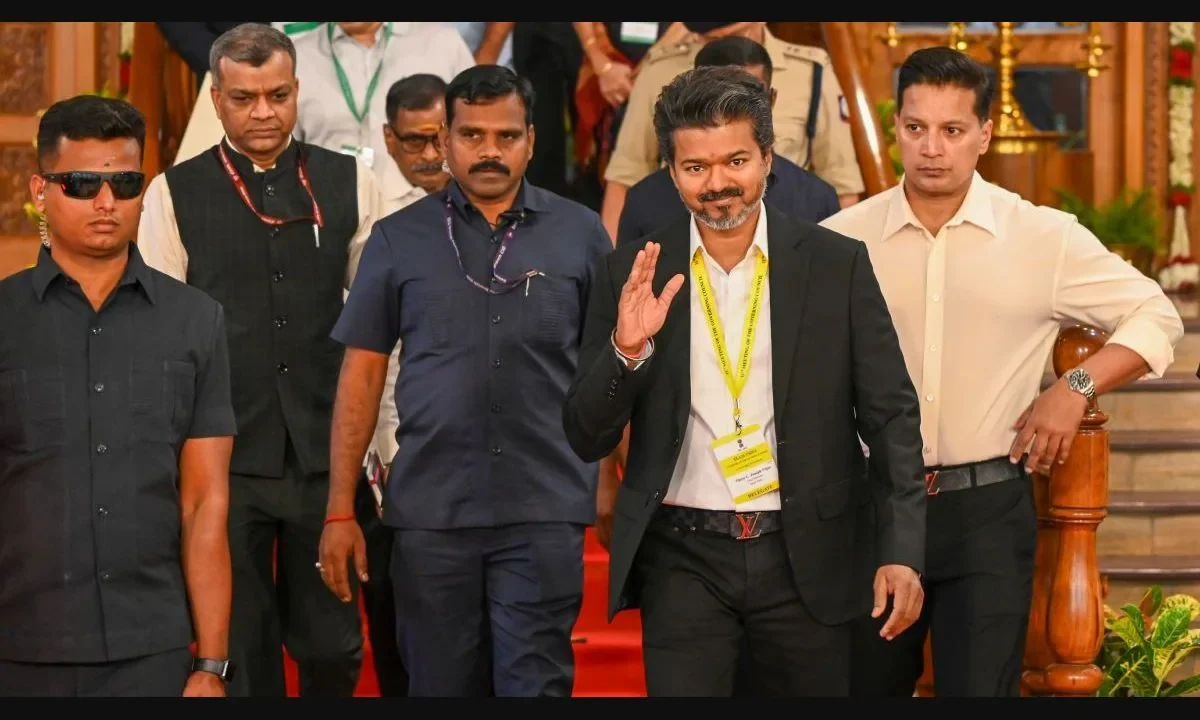
Indiadailyupdate.com – Chief Minister C. Joseph Vijay’s initiative to convene an all-party gathering regarding the central government’s proposed Delimitation exercise has encountered significant opposition. The two dominant Dravidian political formations—AIADMK and DMK—have jointly resolved to exclude themselves from the MPs’ consultation organized by the Tamil Nadu chief minister.
The 80-day-old administration led by Vijay summoned this gathering for Saturday afternoon at 3 pm to deliberate on parliamentary constituency redistribution. For Vijay, whose political party emerged in 2024 merely two years prior to electoral contests, this represents a calculated maneuver to capture federalist leadership from the DMK and its chief M.K. Stalin.
Strategic Concerns Drive Boycott Decision
Dravidian political leaders perceived this consultation as a potential strategic challenge, prompting their withdrawal. Currently, only 20 out of Tamil Nadu’s 57 representatives from both parliamentary chambers plan to participate. Vijay organized this meeting following indications that the BJP might introduce the Delimitation Bill, which connects to the 33 per cent women’s reservation proposal.
Tamil Nadu has consistently maintained that this legislation poses a fundamental threat to the Dravidian governance framework. The state has historically championed population management and social advancement for generations. Nevertheless, seat reallocation based on the 2011 Census could disadvantage this achievement—a position articulated by the DMK and coalition partners previously.
“The DMK, led by our leader M.K. Stalin, remains steadfast in its earlier stance regarding the protection of Tamil Nadu’s representation and the need for fair delimitation. There has been no official announcement from the Union Government stating that the delimitation bill will be passed during the current parliamentary session. Furthermore, the revised draft bill has not yet been made available to us.”
According to DMK analysis, this demographic disadvantage fundamentally challenges Dravidian federalism. The anticipated growth of the Lok Sabha from 543 to roughly 850 positions would advantage northern regions more substantially, potentially weakening southern states’ influence within the national legislature.
DMK’s Evolving Position
Following a challenging assembly election outcome and Congress alliance withdrawal, the DMK has embraced strategic flexibility. Parliamentary party leader Kanimozhi Karunanidhi clarified that the party’s fundamental position on constituency redefinition remains unchanged.
Describing the consultation as a “political drama” and “charade,” DMK MP Kanimozhi indicated the party would deny TVK a stage for regional leadership ambitions. This visible boycott conceals a gradual shift from the “Stalin era” of complete opposition toward pragmatic, conditional engagement.
Kanimozhi further questioned the timing and necessity of Vijay’s meeting on social media platform X, emphasizing that no formal declaration exists regarding bill passage in the current session.
TVK Interprets DMK Shift as Softening
The TVK administration and its emerging Tamil Nadu allies characterize the DMK’s approach as a movement from absolute rejection toward conditional acceptance of the Delimitation legislation. This perceived softening became evident in the State Assembly when Public Works Department Minister Aadhav Arjuna challenged Leader of the Opposition Udhayanidhi Stalin to clarify the DMK’s position amid reports of confidential discussions with the BJP.
Udhayanidhi’s observation that DMK President M.K. Stalin would “take a call” on the matter suggested movement away from the party’s former demand for permanent freeze.
Meeting Attendance and Opposition Response
The AIADMK compared Vijay’s direct appeal to MPs as resembling “a movie producer bypassing distributors to release directly in theatres.”
Confirmed attendees at the Kalaivanar Arangam gathering include 12 Congress representatives—encompassing two Rajya Sabha MPs elected on DMK and TVK tickets—along with two Viduthalai Chiruthaigal Katchi MPs, two Communist Party of India representatives, and single MPs each from the Indian Union Muslim League, Marumalarchi Dravida Munnetra Kazhagam, and the Communist Party of India (Marxist).
With both major Dravidian parties and several allies including Kamal Haasan’s Makkal Needhi Maiam and Vijayakanth’s Desiya Murpokku Dravida Munnetra Kazhagam declining participation, Vijay’s effort to appropriate a longstanding regional concern for immediate political benefit appears to have generated considerable criticism.
Related Reading
Frequently Asked Questions
What is Delimitation Bill?
Delimitation Bill is the main topic of this guide. The article explains the context, practical details, and next steps readers should understand.
Why does Delimitation Bill matter?
Delimitation Bill matters because readers are looking for a useful answer, not just a short summary. Good content should match search intent and help them decide what to do next.