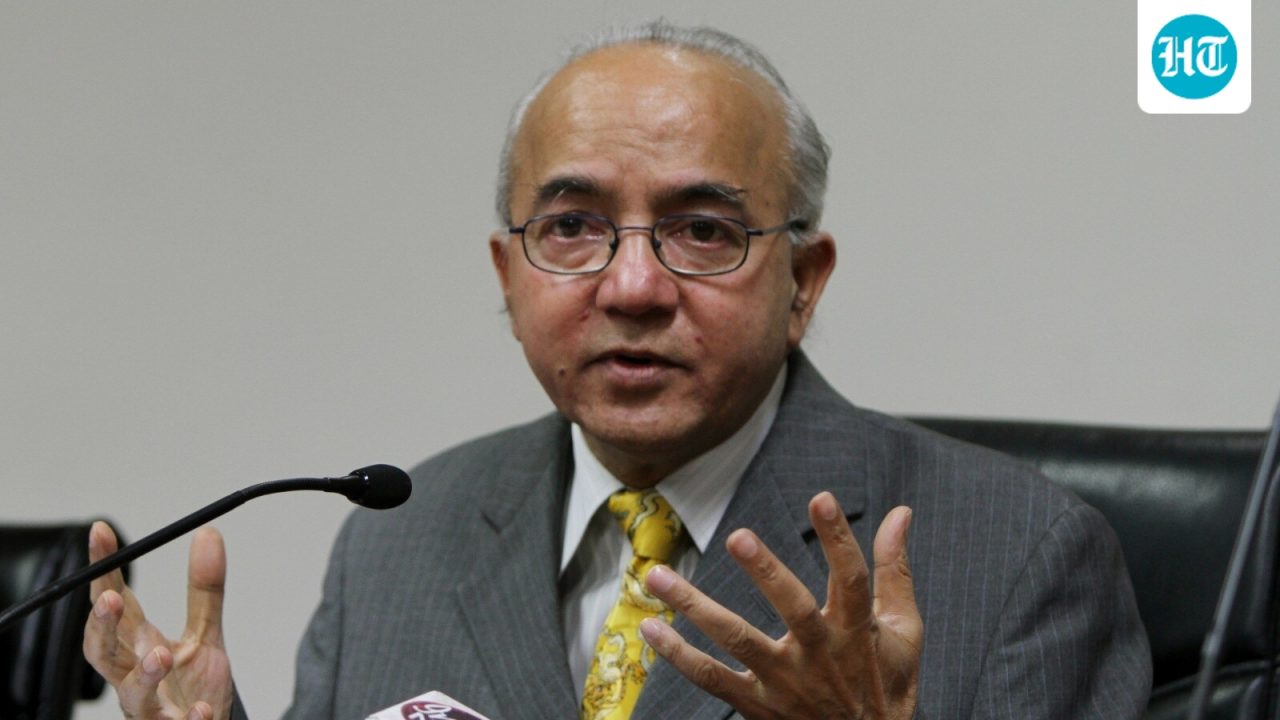
Former Delhi Chief Secretary Rakesh Mehta Found Dead at Noida Residence
Indiadailyupdate.com – A senior Indian Administrative Service officer whose tenure as Delhi’s top bureaucrat reshaped the capital’s civic infrastructure and fiscal policies has died under circumstances police describe as suicide. Rakesh Mehta, a 1975-batch IAS officer who spent over three decades in public service, was found at his home in Noida, where he had been living alone while his family remained in Dehradun. Police officials attributed the death to prolonged health problems that had weighed on the retired administrator.
Circumstances of the Death
Mehta was discovered at his Noida residence, and police confirmed the manner of death as suicide. Officers noted that the former chief secretary had been managing his health difficulties in isolation, separated from his family who resided in Dehradun, Uttarakhand. No other persons were involved, and the case was registered as a death by suicide linked to medical reasons, according to local police statements.
The separation from family and the solitary nature of his living arrangement in Noida added a layer of personal context to the tragedy. Many retired bureaucrats in the National Capital Region maintain residences in satellite cities such as Noida or Gurgaon for proximity to former offices, but the emotional toll of living apart from one’s household during a period of declining health is a concern that families of senior civil servants often raise informally.
A Career Spanning Three Decades
Mehta’s administrative career stretched across more than thirty years, during which he occupied several high-profile positions within the Delhi government and the Municipal Corporation of Delhi. His appointment as chief secretary of the National Capital Territory came in 2007, a role he held until his retirement in November 2010. In that capacity, he was the most senior bureaucrat in the capital’s executive hierarchy, overseeing policy implementation across transport, utilities, taxation, and urban governance.
Before ascending to the chief secretary’s office, Mehta had already built a reputation for hands-on engagement with complex municipal and regulatory files. His postings within the MCD and the Delhi government placed him at the centre of decisions affecting millions of residents, from waste management to electricity distribution to property revenue collection.
Reforms and Legacy
Colleagues and political figures who worked alongside Mehta consistently described him as an administrator marked by operational efficiency, intellectual openness, and a readiness to implement structural changes that had long been debated but rarely executed. His tenure coincided with a cluster of consequential policy shifts in the capital’s civic and transport landscape.
Among the most significant of these were reforms to the property tax assessment framework, which sought to bring greater accuracy and fairness to how residential and commercial properties were valued for municipal revenue. He also advanced the agenda of power privatisation in Delhi, a move intended to introduce competitive dynamics into the capital’s electricity supply chain and reduce the fiscal burden on the government.
In the transport domain, Mehta’s administration moved to phase out the ageing Blueline bus fleet that had served Delhi commuters for decades. The replacement strategy centred on introducing low-floor buses designed to improve accessibility for elderly passengers, persons with disabilities, and those carrying heavy loads. These changes represented a tangible shift in how the capital approached public transit modernisation during the late 2000s.
Former colleagues recalled Mehta as an administrator known for his efficiency, openness to new ideas, and willingness to implement reforms that others had only discussed.
Broader Context: The IAS and Delhi’s Administrative Machinery
The 1975 batch of the Indian Administrative Service represents a cohort that entered government during a period of significant institutional transformation in India. Officers of that vintage carried their careers through the liberalisation era, the expansion of metropolitan governance, and the gradual decentralisation of municipal functions. Their experience shaped the regulatory and fiscal architecture of cities that have since grown into megacities.
Delhi’s administrative structure, split between the elected government of the National Capital Territory and the Municipal Corporation of Delhi, has long been a site of jurisdictional complexity. Senior officers who rotate between the two bodies, as Mehta did, occupy a uniquely demanding position: they must navigate overlapping mandates, coordinate with elected leadership, and deliver services to a population that now exceeds twenty million. The health pressures associated with such roles, particularly in the final years of service and the immediate post-retirement period, are well documented in civil-service welfare discussions.
Mehta’s death underscores a quieter dimension of bureaucratic life that rarely reaches public view: the solitary management of chronic illness by officers who have spent decades in institutional settings and who, upon retirement, find themselves without the daily structure that once defined their routines. Families separated by geography, the absence of institutional health support after retirement, and the psychological weight of a career spent under sustained pressure all converge in ways that warrant closer attention from civil-service welfare bodies.
What Happens Next
Police in Noida completed their preliminary investigation and recorded the incident as a suicide linked to health reasons. No further inquiry was indicated beyond the standard procedural steps. Mehta’s family in Dehradun was informed, and arrangements for the final rites were expected to follow in accordance with personal and religious preferences.
For the broader public, Mehta’s passing closes a chapter in Delhi’s administrative history. The reforms he championed—tax rationalisation, energy-sector restructuring, and transit modernisation—remain embedded in the capital’s operational framework, even as subsequent governments have modified or extended those policies. His name will continue to appear in internal government records, transport planning documents, and municipal finance files as the officer who moved those files from proposal to implementation during a critical window in the capital’s development trajectory.
Related Reading
Frequently Asked Questions
What is Former Delhi chief secretary Rakesh Mehta?
Former Delhi chief secretary Rakesh Mehta is the main topic of this guide. The article explains the context, practical details, and next steps readers should understand.
Why does Former Delhi chief secretary Rakesh Mehta matter?
Former Delhi chief secretary Rakesh Mehta matters because readers are looking for a useful answer, not just a short summary. Good content should match search intent and help them decide what to do next.