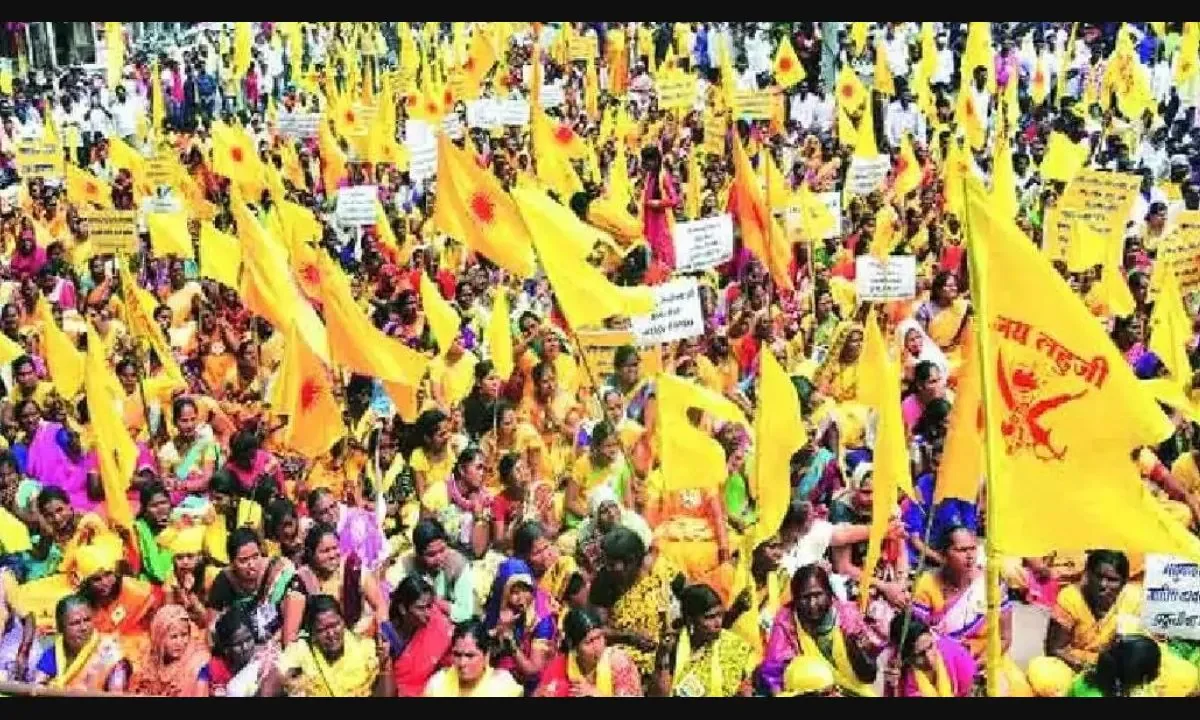

Matang Sub-Categorisation: A Fault Line in Maharashtra’s Dalit Politics
Indiadailyupdate.com – The political landscape of Maharashtra has once again been thrown into turmoil by a demand that cuts to the heart of caste-based reservation policy. The Matang community has escalated its agitation for sub-categorisation within the Scheduled Caste (SC) framework, while legislators representing other SC groups — spanning multiple parties — have dug in against the move. For roughly twenty years, questions of intra-category reservation and sub-categorisation have dominated the state’s political conversation, yet a resolution remains elusive.
The Supreme Court has granted state governments the authority to implement sub-categorisation within both SC and Scheduled Tribe quotas. Despite that judicial green light, the Maharashtra government now finds itself boxed in: opposition from across the party spectrum, coupled with resistance from numerous Dalit organisations, has made the decision politically hazardous. The core question that emerges is whether electoral calculations and the politics of pressure can derail the decentralisation of power that sub-categorisation is meant to achieve. Within the broader context of intra-category disparities and equitable resource distribution, issues of caste identity, cultural politics, and polarisation continue to shape — and distort — the architecture of social-justice policy.
The Matang Community’s Marginalisation in Government Employment
Statistical evidence underscores the depth of the Matang community’s exclusion from reserved administrative roles. Data compiled from 22 municipal corporations across the state, as received by the Lahuji Salve Commission, reveals a stark pattern. Out of 21,066 posts reserved for Scheduled Castes, the Mahar community filled 12,299 positions and the Chambhar community secured 3,578. The Matang community, by contrast, obtained administrative employment in only 1,897 posts.
The disparity is particularly pointed because the Mahar community, which commands a larger population than the Matang, captured far greater representation. Meanwhile, the Chambhar community — smaller in population than the Matang — also outperformed them numerically. In every employment category examined, the Matang community trailed its SC counterparts.
From Commission to Committee: Two Decades of Unresolved Demand
In 2003, the then Maharashtra government constituted the Krantivir Lahuji Salve Matang Samaj Study Commission. Its mandate was to conduct a thorough examination of the backwardness of the Matang community and allied sub-castes, and to formulate recommendations for their comprehensive development. The commission scrutinised appointments to SC-reserved posts across government departments and documented the overwhelming dominance of the Mahar and Chambhar communities at every administrative level.
The study report was delivered in 2008. On the basis of its findings regarding the social and educational backwardness of the Matang community and allied sub-castes, the commission recommended a separate five-per-cent reservation through the mechanism of sub-categorisation. Since that recommendation, the Matang community has maintained continuous agitation across the state to press for implementation.
In 2024, responding favourably to the long-standing demand, the state government constituted the Justice Anant Badar Committee — a one-member judicial commission. That body submitted its report on the social and educational backwardness of Scheduled sub-castes to the state government in March 2026. The report, however, has not yet been made public; the government has issued instructions inviting objections before any disclosure. Legislators from every political party are now demanding immediate publication of the report and a halt to the sub-categorisation process, placing the government in a genuine dilemma.
Ambedkar, the Mahar Community, and the Question of Identity
Dr Babasaheb Ambedkar belonged to the Mahar community. On October 14, 1956, at Deekshabhoomi in Nagpur, he embraced Buddhism alongside millions of his followers. That day marked a mass renunciation of Hinduism and a collective turn toward Buddhism. In the aftermath, hundreds of thousands of Ambedkar’s followers in Maharashtra converted to Buddhism.
The event was far more than a religious conversion. It inaugurated a new struggle for education, social equality, human dignity, and political rights. The movement instilled a sense of self-respect within the Dalit community and set in motion a wave of social transformation that continues to define the political identity of Maharashtra’s Dalit population — and, by extension, the contested boundaries of who speaks for whom within the SC category.
Related Reading
Frequently Asked Questions
What is How the Matang reservation debate is reshaping?
How the Matang reservation debate is reshaping is the main topic of this guide. The article explains the context, practical details, and next steps readers should understand.
Why does How the Matang reservation debate is reshaping matter?
How the Matang reservation debate is reshaping matters because readers are looking for a useful answer, not just a short summary. Good content should match search intent and help them decide what to do next.