Prakash Raj backs continued peaceful protests over CEC and electoral roll revision
Indiadailyupdate.com – Actor and activist Prakash Raj has said protests questioning Chief Election Commissioner Gyanesh Kumar and the Special Intensive Revision of electoral rolls will continue in different parts of India, despite detentions and restrictions imposed on demonstrators.
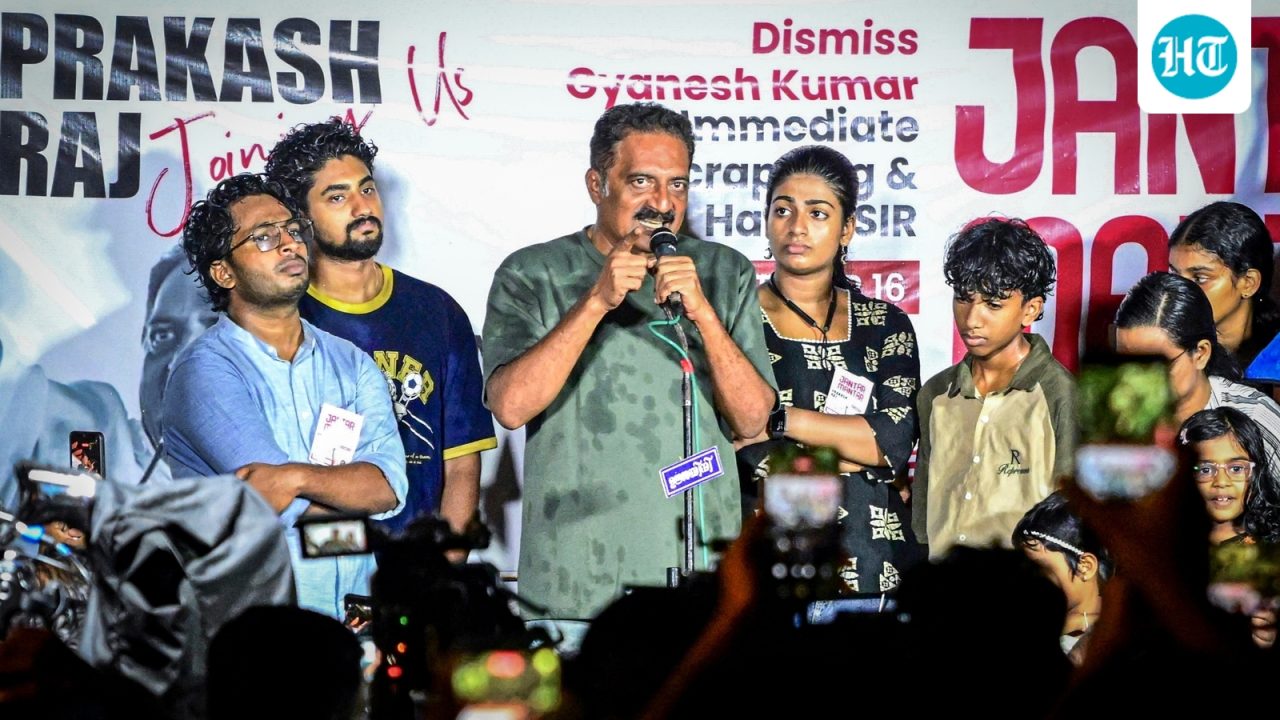
Raj spoke after taking part in a protest gathering at Manaveeyam Veedhi in Thiruvananthapuram on Friday. The event focused on concerns surrounding the SIR process and actions taken against people participating in demonstrations. He argued that public dissent and the right to seek answers are fundamental to a democratic country.
“There is Gandhi’s blood in us. There is Ambedkar’s blood in us, there is Bhagat Singh’s blood in us.”
Invoking Mahatma Gandhi, BR Ambedkar and Bhagat Singh, Raj said the movement would remain non-violent while continuing to challenge what he described as authoritarian conduct. He maintained that attempts to halt public gatherings would not prevent citizens from raising difficult questions.
“We will continue to fight, we will continue to protest peacefully across the country, and it will prove you wrong that you can get away with this dictatorship.”
Questions over restrictions on demonstrations
Police stepped in before the Thiruvananthapuram meeting began, resulting in a short confrontation with organisers. Officers said permission had not been obtained for using a microphone at the venue. After the brief tussle, the meeting was allowed to proceed.
Raj questioned why a peaceful public event required such intervention. He also asked why protesters were being stopped or detained, saying that the restrictions themselves raised concerns about the authorities’ response to criticism.
“Gyanesh Kumar, why are you stopping us? The very fact that you are stopping us, detaining us illegally, shows something is wrong.”
He said India’s democratic character depends on citizens being able to question those in authority. In his view, farmers, labour unions, student groups and other sections of society could join demonstrations until their concerns are addressed.
The Special Intensive Revision, commonly referred to as SIR, concerns the updating and review of electoral rolls. Electoral rolls determine who is eligible to vote, making the process an important part of election administration. Raj’s remarks placed the issue within a broader debate over public accountability, participation and the treatment of protest movements.
Raj rejects portrayal of protesters as offenders
During his address, Raj objected to the suggestion that young people seeking answers should be treated as criminals. He stressed that the protesters were engaging in peaceful action and said questioning the government should not be viewed as an offence.
“What do you mean by protest? Are they terrorists? The youth and the people of this country are doing a peaceful protest. Is that a crime in this country?”
He said the authorities may see the protests as a problem because demonstrators are pressing for responses to questions that have not been answered. His comments came amid heightened attention on protests in Delhi and elsewhere, where security measures and detentions have drawn criticism from activists and civil society groups.
Raj also expressed confidence that police personnel would not indefinitely support actions directed at peaceful protesters. He said members of the police and armed forces are citizens as well, and suggested they could eventually resist orders they consider unfair.
“We are not your workers. Please stop making us do this.”
He imagined police officers conveying that message to Prime Minister Narendra Modi and Home Minister Amit Shah. He similarly said members of the armed forces could refuse participation in actions against citizens, arguing that they too are human beings with a place in the country’s democratic life.
Call for a broader movement
Raj said international human rights organisations would strongly condemn measures taken against protesters. He also noted that farmers had indicated support for young demonstrators, suggesting that the agitation could bring together multiple groups with different backgrounds but shared concerns.
He predicted that upcoming demonstrations could exceed the scale of the protest seen at Jantar Mantar in Delhi. Whether that happens will depend on how organisers, authorities and participating groups respond in the coming days, but Raj’s remarks signalled an intention to sustain the campaign rather than retreat after police action.
“Let us see. It’s going to be a bigger fight, a bigger protest than what you saw in Jantar Mantar.”
The episode in Thiruvananthapuram illustrates the tension between public protest and administrative restrictions. Organisers may need to navigate requirements related to venues, sound systems and public order, while authorities face scrutiny over whether those rules are being applied in a proportionate manner. Raj’s intervention placed that tension at the centre of the debate, framing peaceful protest as a democratic right and continued public questioning as essential to accountability.
Related Reading
Frequently Asked Questions
What is Prakash Raj says anti CEC protests?
Prakash Raj says anti CEC protests is the main topic of this guide. The article explains the context, practical details, and next steps readers should understand.
Why does Prakash Raj says anti CEC protests matter?
Prakash Raj says anti CEC protests matters because readers are looking for a useful answer, not just a short summary. Good content should match search intent and help them decide what to do next.