A Wide-Ranging Portrait of Tamil Life Through Fiction
Indiadailyupdate.com – Review – Selecting a representative collection of contemporary Tamil short fiction is no small undertaking. Tamil literature carries an enormous range of histories, regions, voices and political realities, making any attempt to define its “best” stories inherently ambitious. Perundevi’s anthology meets that challenge with confidence, bringing together 22 stories that move across roughly three decades and multiple parts of the world.
Rather than presenting Tamil identity as something fixed by geography alone, the collection examines it as an experience shaped by language, migration, caste, faith, gender, memory and everyday survival. Tamil Nadu remains central to many of these narratives, but the book also travels to places such as Mumbai, Canada, North America and Singapore. The result is a literary map in which Tamil lives cannot be reduced to a single homeland or social type.
Perundevi describes the shared spirit of the anthology in her introduction:
a common thread that unites the stories in this anthology is their unflinching confrontation with life and truth, set against the shifting realities of the world outside of them.
That refusal to look away gives the volume its force. These stories are often lyrical, funny and observant, yet they do not soften humiliation, prejudice, desire or loss. Their beauty comes from precision rather than sentimentality.
Art, Labour and Everyday Dignity
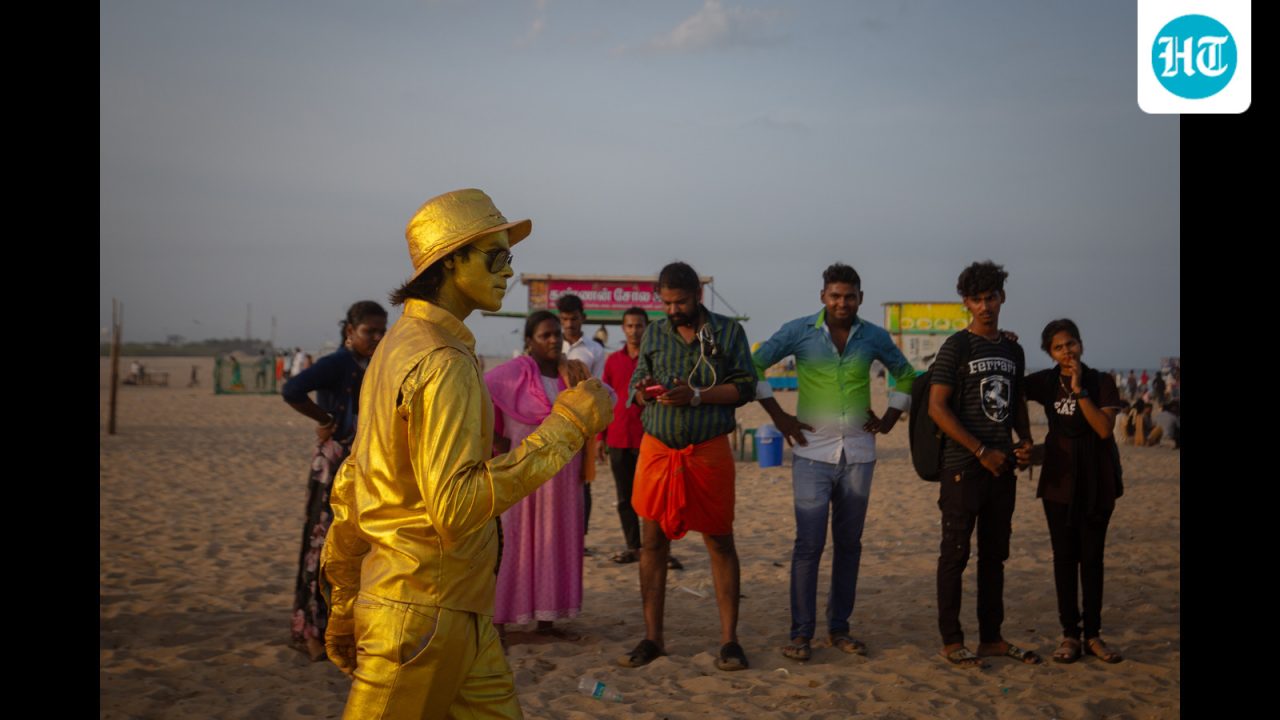
Kanmani Gunasekaran’s The King’s Way, translated by N. Kalyan Raman, offers one of the anthology’s memorable depictions of artistic labour. It follows a group of therukoothu, or street-theatre, performers on a journey to an engagement. They travel with their costume bundle, jewellery trunk, mattalam blocks and harmonium box, but even finding a place on a bus becomes difficult. The practical obstacles faced by the troupe reveal a deeper truth: their art is celebrated onstage while the artists themselves struggle to claim space in public life.
At night, the performers become commanding figures, roaring and leaping as kings who possess every imaginable power. By morning, their grandeur has dissolved into a modest meal of idlis made from sour batter and too much baking soda. Their ability to turn public insult into a joke for an audience is both moving and painful. The story understands that performance can be an act of pride, but also a way of enduring disregard.
Tamilness Beyond a Single Place
The anthology’s international settings add another dimension to its concerns. A prison in Canada, a North American casino and a Singapore queue all become sites where Tamil identity is reconsidered. These stories ask readers to think beyond easy assumptions about who belongs within the category of “Tamil.” Is it a matter of mother tongue, family history, cultural practice, location, or something more unsettled?
In Ambai’s The Horsewoman, translated by G. J. V. Prasad and set in Mumbai, Reshma sees every woman from Tamil Nadu through the broad label “Mami.” Latha’s Cheenalatchumi’s Queue, translated by Janani Kannan, turns attention to a protagonist uneasy with her own name, one that signifies “Chinese Lakshmi.” Such details complicate cultural labels that might otherwise seem simple. They show how identity can be imposed by others, inherited uneasily, or quietly resisted.
The presence of writers including Ashokamitran, Perumal Murugan, Imayam and Jeyamohan gives the book considerable literary weight. Just as important are the translations, which carry local speech, social texture, caste awareness, gendered experience and idiom into English without flattening them. A description of kneecaps as resembling black grams shining with oil is a small but striking example of imagery that retains its sensory distinctiveness.
Faith, Caste and the Violence of Social Boundaries
The collection is clear-eyed about social hierarchy. Keeranur Jakirraja’s The Saga of Butchery, also translated by Kalyan Raman, places caste and religion in uneasy proximity. A butcher hired by Vatti Hussain to kill a camel for Bakrid reflects on the distinctions people try to make between different kinds of slaughter:
leader is feeling bad that there seems to be no difference between those who slaughter pigs and us, who slaughter goats.
The line is blunt, but the story’s power lies in how it exposes the contradictions embedded in ideas of purity, occupation and religious difference. Nothing is resolved neatly, and that is precisely why it stays with the reader.
Women Who Cannot Be Reduced to One Story
Gender is another major concern, and the anthology refuses the notion of a uniform Tamil womanhood. Its women vary in age, class, desire, agency and vulnerability. In S. Ramakrishnan’s Soundaravalli’s Moustache, translated by Yashasvi Arunkumar, a young character voices a line whose emotional impact extends far beyond its immediate situation:
This is enough to marry a well-digger, ma.
The tears shared by mother and daughter are not merely about Soundaravalli’s moustache. They arise from a larger recognition of social judgment, gendered expectations and the narrow futures imposed upon women.
Salma’s Black Beads and Television, translated by Kalyan Raman, presents a different kind of female self-determination. Zakiramma responds to every film she watches with the single verdict “laddu,” but the story is more than a playful account of entertainment. Her decision to exchange a gold-bead chain for plain black beads and purchase a television opens a window onto leisure, longing and personal choice. The act is ordinary, yet it becomes meaningful because it belongs to her.
A Sharp Look at Spectacle and the Male Gaze
Sundara Ramaswamy’s The Breaking of a Story, translated by Janani Kannan, is especially pointed in its treatment of voyeurism and media spectacle. At Sage Junction, a beautiful woman appears, immediately becoming an object of public fascination. The crowd’s attention narrows grotesquely to her body, while journalists and photographers compete to turn the incident into news.
Her breasts, God almighty! (..) Their eminence. Their ampleness.
The language is deliberately disturbing, revealing how quickly a woman can be transformed into a spectacle. The story also targets the machinery of media attention, where the desire to be first overwhelms any sense of dignity or responsibility. Its final twist is haunting: she vanishes, and her breasts disappear from every photograph as well.
Perundevi’s description of the anthology as akatambam, an assortment of fragrant leaves and flowers, captures its variety beautifully. The comparison suggests abundance rather than sameness. These stories differ in tone, setting and style, but together they create a vivid, often unsettling portrait of Tamil life in its many forms. The anthology’s achievement lies not in offering one final definition of Tamil identity, but in showing why no single definition can contain it.
Related Reading
Frequently Asked Questions
What is Review?
Review is the main topic of this guide. The article explains the context, practical details, and next steps readers should understand.
Why does Review matter?
Review matters because readers are looking for a useful answer, not just a short summary. Good content should match search intent and help them decide what to do next.