Running Low on Energy? Try These 3 Drinks
Indiadailyupdate.com – Running low on energy, try these kitchen staples before you reach for another energy drink. The 3 p.m. fog — blurred focus, a to-do list that feels impossible, an irresistible urge to nap — is something most working adults recognise instantly. The usual fix, a shot of caffeine or a handful of candy, buys twenty minutes of alertness before a steeper crash sets in. Repeated reliance on that cycle degrades sleep architecture, whips blood sugar into sawtooth patterns, and trains the brain to expect an external jolt for every dip in alertness.
A calmer route sits in the pantry. Shweta Shah, a celebrity nutritionist and Ayurveda practitioner who has guided more than 20,000 clients through food-first wellness protocols, shared three straightforward homemade beverages on an Instagram post dated August 31. Her framing was direct:
“Feeling tired or low on energy? Instead of reaching for sugary drinks, try these simple options.”
Shah, founder of the wellness platform EATFIT247 and holder of over two decades of clinical and lifestyle-nutrition experience, stresses that durable vitality depends on steady nutrient delivery, adequate hydration, and a healthy gut microbiome — not on isolated stimulant hits. Each of the three drinks below targets a distinct physiological pathway for restoring alertness without the spike-and-crash pattern.
Okra (Bhindi) Powder in Water
The preparation is almost comically simple: stir a measured spoonful of dried okra powder into a glass of water and drink. Shah likens its functional effect to a glucose-water solution, pointing to the vegetable’s nutritional architecture as a legitimate quick-recovery option.
The mechanism rests on okra’s exceptionally high soluble-fibre content. That fibre gels in the digestive tract, slowing the rate at which glucose enters the bloodstream and producing a gentler, more sustained energy curve rather than the sharp spike-and-crash pattern of free sugars. Beyond glycaemic moderation, the soluble fibre acts as a prebiotic substrate, feeding beneficial colonic bacteria and reinforcing the gut barrier that underpins immune function and nutrient absorption. Okra also carries meaningful quantities of vitamin B6 and magnesium — two micronutrients that participate directly in cellular energy metabolism. B6 co-factors amino-acid and carbohydrate pathways; magnesium is required by more than three hundred enzymatic reactions, many involved in ATP generation. Regular inclusion of okra-based preparations therefore addresses both the immediate energy question and the longer-term structural health of the digestive system.
Dates, Black Raisins, and Fresh Mint
The second drink leans on the natural sweetness of dried fruit. Shah’s formulation pairs pitted dates with black raisins and a torn handful of mint leaves, yielding a beverage that tastes closer to a spiced fruit infusion than a medicinal tonic. It delivers readily metabolisable carbohydrates while simultaneously replenishing vitamins and minerals that deplete during sustained mental or physical exertion.
Dates and black raisins contain glucose and fructose in their natural bound forms, meaning the sugars arrive alongside fibre, polyphenols, and minerals rather than in isolation. That matrix slows absorption relative to a sugar cube dropped in water, reducing the likelihood of a reactive insulin surge. Both fruits are also notable sources of dietary fibre, which aids bowel regularity, and of potassium, an electrolyte that counterbalances sodium and supports normal cardiac rhythm and vascular tone. For someone whose fatigue is compounded by sluggish digestion or mild electrolyte imbalance, this combination addresses several fronts at once.
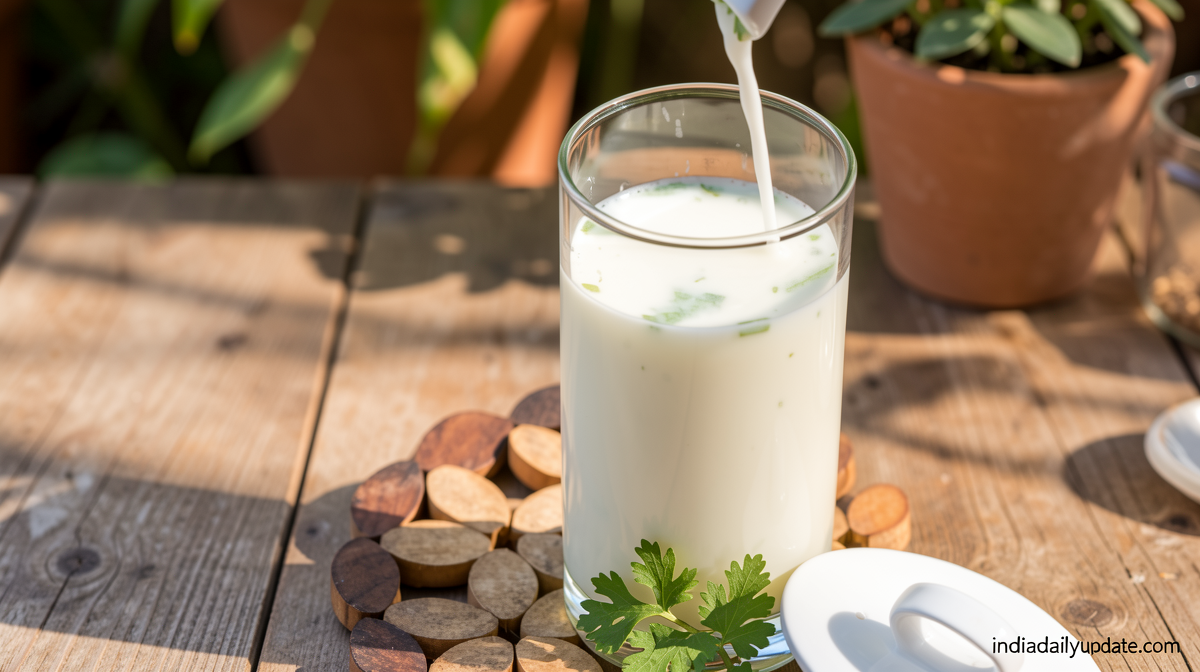
Light Buttermilk (Chaas) with Mint and Cumin
The third suggestion is perhaps the most culturally embedded of the three. Shah specifically recommends buttermilk served as a thin, chilled chaas rather than the thick, cream-heavy lassi more common on restaurant menus. Her preparation guidance: dilute roughly one spoonful of cultured buttermilk in a generous volume of water, then season with chopped mint, a pinch of ground cumin, and a small amount of salt.
The rationale is straightforward physiology. Dehydration, even at mild levels, impairs cardiovascular output, reduces cerebral perfusion, and manifests as fatigue, headache, and difficulty concentrating. A chilled, electrolyte-bearing fluid like diluted chaas rehydrates quickly, while the probiotic cultures in cultured buttermilk support gut-microbiome balance. Cumin adds carminative compounds that ease bloating, and mint contributes menthol, which has a mild cooling and soothing effect on the upper digestive tract. The net result is a refreshing, low-calorie pick-me-up that restores hydration and gut comfort simultaneously.
FAQ
Can I make these drinks every day? Yes. Shah’s guidance treats them as everyday functional beverages, not occasional tonics. Okra powder in water, the date-and-mint infusion, and light chaas are all low-calorie and free of added sugar, so daily use is reasonable for most adults. If you have a specific medical condition — kidney disease, diabetes, or a probiotic-sensitive gut disorder — check with your physician first.
Where do I get okra powder? Dried okra (bhindi) powder is sold in most Indian grocery stores, Ayurvedic apothecaries, and online spice retailers. Look for a fine, unflavoured powder labelled “bhindi powder” or “okra powder.” If unavailable, a small amount of fresh okra blended into water and strained works as a substitute, though the soluble-fibre concentration will be lower.
Is the buttermilk drink the same as lassi? No. Shah explicitly distinguishes the two. The recommended preparation is a thin, water-diluted chaas with mint and cumin — closer to a savoury probiotic drink than to the sweet, thick lassi served as a dessert. The dilution keeps the calorie load minimal and maximises the hydration benefit.
Will these replace my morning coffee? They are not positioned as caffeine replacements. Shah’s framework treats them as complementary energy-support beverages for the midday or post-lunch dip. If you enjoy coffee, keep it; simply avoid stacking additional sugary or heavily caffeinated drinks on top of the afternoon slump.