Sapta Dhara: PM Modi’s Seven-Point Vision for Viksit Bharat
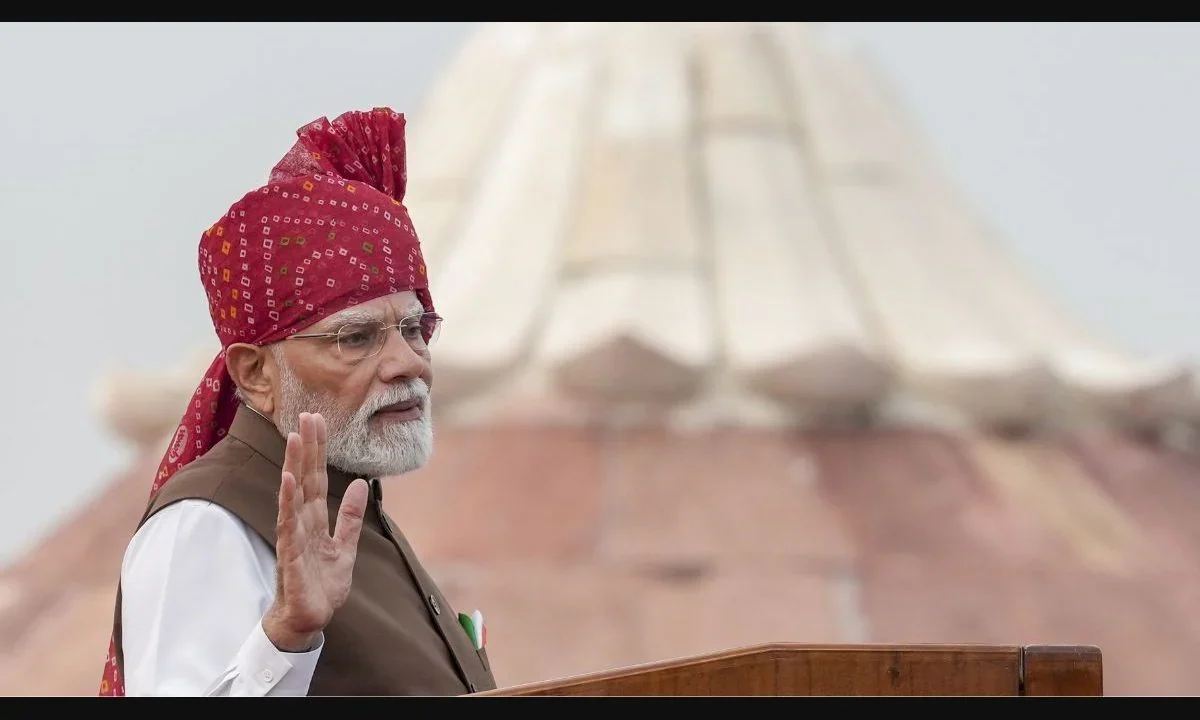
Indiadailyupdate.com – Prime Minister Narendra Modi unveiled Sapta Dhara, a comprehensive seven-point reform framework designed to accelerate India’s development journey. Speaking to the youth from the historic Red Fort on Saturday, marking the country’s 80th Independence Day, the PM drew parallels between ancient India’s strength as ‘Sapta Sindh’ and the need for new streams of power in the modern era. “Now, to build a developed India, we need a new stream,” he declared, setting the stage for the Sapta Dhara initiative.
Manufacturing and Agriculture: Building Global Strength
The first pillar of Sapta Dhara emphasizes manufacturing excellence. PM Modi stressed that India must develop a complete value chain spanning from design to production, positioning itself as a trusted global supply chain partner. “For every manufacturer, every entrepreneur, every MSME, I want to say that in the global market, our identity should be based on trust and quality,” the Prime Minister affirmed, adding that there should be “no compromise” on quality standards.
Agriculture and food processing form the second stream of the Sapta Dhara roadmap. The PM highlighted that free trade agreements have opened world markets for Indian farmers. “The world’s markets are now open for our farmers. Due to FTAs, we are gaining access to a very large market. We must reach there,” Modi stated. He emphasized moving “from the farm to the export market,” noting that traditional cuisine, millets, spices, fruits, flowers, and chemical-free produce could become global brands if they meet international parameters.
Technology, Defence, and Green Economy
Under the technology and innovation pillar, PM Modi outlined India’s ambition to become an innovation hub. With emerging technologies like artificial intelligence, quantum computing, space exploration, robotics, and data centres creating unprecedented opportunities, the Prime Minister noted, “We have made our mark in UPI and digital public infrastructure.” He called for India’s digital public technologies to reach every corner of the globe.
“India must lead in next-generation communication technology. Made in India 6G should reach every corner; this should be our goal,” Modi declared, emphasizing speed and connectivity as critical components of the Sapta Dhara vision.
The Speed Shakti component focuses on high-speed rail connectivity and port-led development. The PM stressed that ports must evolve beyond mere loading and unloading points to become engines of economic growth. In defence, India aims for self-reliance and global leadership in next-generation technologies. “When the world is thinking about itself, India cannot remain merely a market for the world,” Modi asserted, calling for India to become a global supplier of hypersonic defence technologies, drones, and counter-drone systems while strengthening cyber security.
The green and blue economy represents another crucial stream. PM Modi highlighted opportunities in green hydrogen, renewable energy, energy storage, green mobility, and green manufacturing. India’s extensive coastline also presents significant potential in fisheries, coastal tourism, and ocean technology under the blue economy framework.
Soft Power and Holistic Development
Soft power completes the Sapta Dhara framework. The Prime Minister emphasized yoga’s growing global influence and India’s strengths in faith-based tourism, spiritual centres, Ayurveda, and holistic healthcare. “Yoga is becoming an energy for the world and a major source of confidence for India,” he observed. The ‘Heal in India’ movement, handicrafts, culture, films, VFX, animation, gaming, and digital content were identified as areas where India can build substantial global strength.
PM Modi concluded by clarifying that the seven powers of Sapta Dhara are interconnected rather than isolated. He emphasized that the combined strength of all seven streams would propel India toward new heights, accelerating the nation’s transformation into a developed country. This holistic approach ensures balanced growth across all sectors while positioning India as a global leader in multiple domains.
Frequently Asked Questions About Sapta Dhara
What is Sapta Dhara?
Sapta Dhara is Prime Minister Narendra Modi’s seven-point reform framework announced during India’s 80th Independence Day celebrations at the Red Fort. The term draws inspiration from ancient India’s designation as ‘Sapta Sindh’ and represents seven new streams of national strength.
What are the seven pillars of Sapta Dhara?
The seven pillars include: Manufacturing, Agriculture and Food Processing, Technology and Innovation, Speed Shakti (connectivity), Defence Power, Green and Blue Economy, and Soft Power. Each pillar addresses critical areas for India’s development as a Viksit Bharat.
How does Sapta Dhara relate to Viksit Bharat?
Sapta Dhara serves as the strategic roadmap for achieving Viksit Bharat (Developed India) by 2047. The seven interconnected streams ensure comprehensive development across economic, technological, and cultural dimensions.
What role does technology play in Sapta Dhara?
Technology and innovation form a central pillar, with emphasis on AI, quantum technology, space, robotics, and data centres. The framework also highlights India’s achievements in UPI and digital public infrastructure, with goals for Made in India 6G to reach globally.