
Shiv Sena vs Shiv Sena: Supreme Court Clarifies Party Split Rules
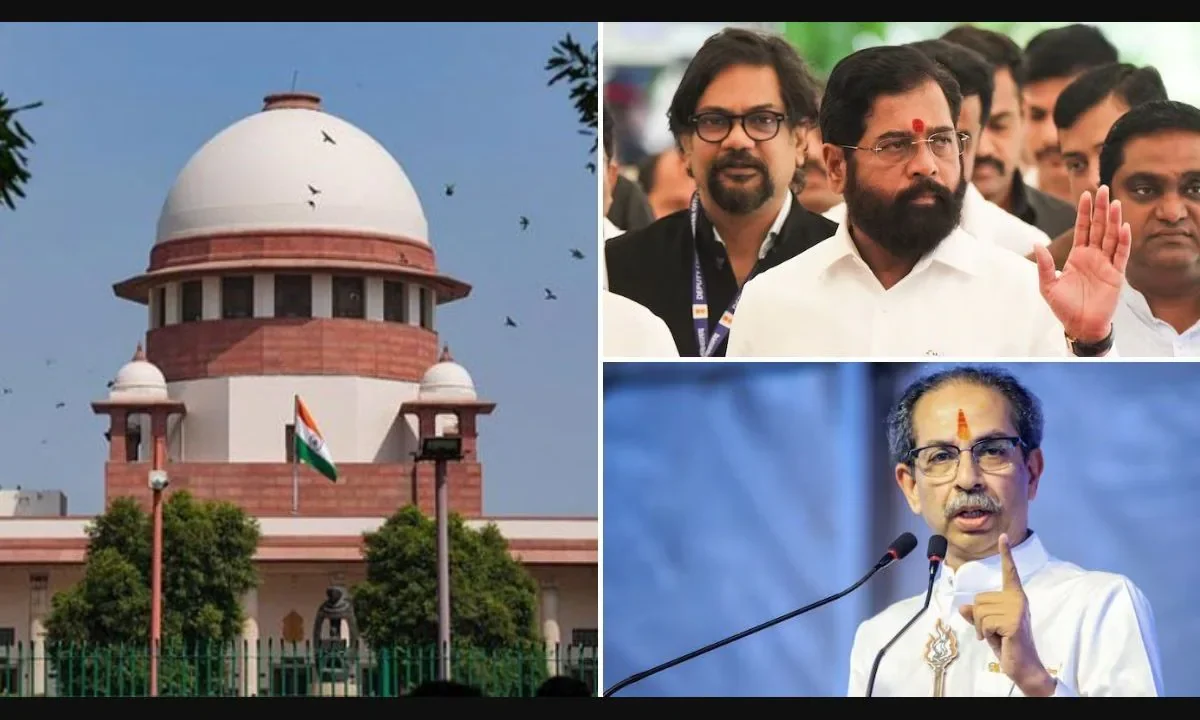
Indiadailyupdate.com – Shiv Sena vs Shiv Sena has reached a critical juncture as the Supreme Court delivered significant observations during its final hearing of the Uddhav Thackeray camp’s plea. The constitutional bench, comprising Chief Justice Surya Kant, Justice Joymalya Bagchi, and Justice V. Mohana, made crucial remarks regarding party splits and legislative majority in Maharashtra politics. This landmark case challenges both the Maharashtra Speaker’s refusal to disqualify rebel MLAs who defected to Eknath Shinde’s faction under the 10th Schedule, and the Election Commission’s 2023 decision recognizing the Shinde camp as the official Shiv Sena while granting exclusive rights to the party’s iconic ‘bow and arrow’ symbol.
Key Observations on Political Party Control
During the proceedings, the Supreme Court emphasized that a political party maintains subsisting control over its legislature party. The bench clarified that any decision made by the political party would prevail over the will of the majority of the legislature party members. This observation carries substantial implications for how future party splits and defections will be handled in Indian politics. Senior advocate Kapil Sibal, representing the Thackeray camp, highlighted an important distinction: the Tenth Schedule recognizes mergers with another political party, but does not explicitly provide for a ‘split’ within the same party.
“A political party has subsisting control over a legislature party. Any decision of the political party would prevail over the will of the majority of the legislature party,” observed the Supreme Court bench.
Revisiting the Subhash Desai Precedent
The apex court reiterated its position from the landmark Subhash Desai v. Government of Maharashtra case. In that judgment, a Constitution Bench had held that the Maharashtra Governor’s decision to call a floor test after the Shiv Sena split was incorrect. However, the court also ruled that Uddhav Thackeray could not be reinstated to his former position as Chief Minister because he had resigned before facing the floor test. Sibal argued that the question before the Election Commission was not about the split of a ‘political’ party, but rather, a ‘legislature’ party.
In this regard, the Supreme Court noted that the Election Commission’s 2023 recognition of the Shinde faction as the real Shiv Sena, based on the reasoning that the latter had a legislative majority, was also flawed. Justice Bagchi remarked, “It should be something to do with the political party,” in response to the EC’s decision. This led Chief Justice Surya Kant to note that the concept of a ‘majority’ itself was a grey area under these circumstances.
Sibal further pointed out that the Supreme Court’s own judgment in the Sadiq Ali v. Election Commission of India (1972) case had already answered such issues by laying down tests to determine which faction had the majority. These tests provide a framework for evaluating claims of majority support within political parties during times of internal conflict.
What This Means for Maharashtra Politics
The Supreme Court’s observations in the Shiv Sena vs Shiv Sena case could have far-reaching consequences for party dynamics in Maharashtra and potentially across India. By clarifying the relationship between political parties and their legislature parties, the court has established important precedents for handling future disputes. The distinction between a ‘political’ party and a ‘legislature’ party is particularly significant, as it affects how defections and splits are interpreted under the anti-defection law.
The matter will be heard further at 2 PM on Thursday, with all eyes on the final verdict. Legal experts suggest that the court’s decision could reshape how political parties manage internal dissent and how the Election Commission evaluates claims of majority support. The outcome may also influence how other states handle similar situations where rebel factions challenge the official party leadership.
Frequently Asked Questions
Q: What is the main issue in Shiv Sena vs Shiv Sena? A: The case involves two main challenges: the Speaker’s refusal to disqualify rebel MLAs who joined Eknath Shinde’s faction, and the Election Commission’s recognition of the Shinde camp as the official Shiv Sena with exclusive rights to the ‘bow and arrow’ symbol.
Q: What did the Supreme Court say about party splits? A: The court observed that a political party has subsisting control over its legislature party, and its decisions prevail over the will of the majority of legislature party members. The court also noted that the Tenth Schedule recognizes mergers but not splits.
Q: When will the final verdict be delivered? A: The matter will be heard further at 2 PM on Thursday, with the final verdict expected shortly thereafter.
Q: How does this relate to the Subhash Desai case? A: In the Subhash Desai case, the Supreme Court had held that the Governor’s decision to call a floor test after the Shiv Sena split was wrong, but Uddhav Thackeray could not be reinstated as he had resigned before facing the floor test.