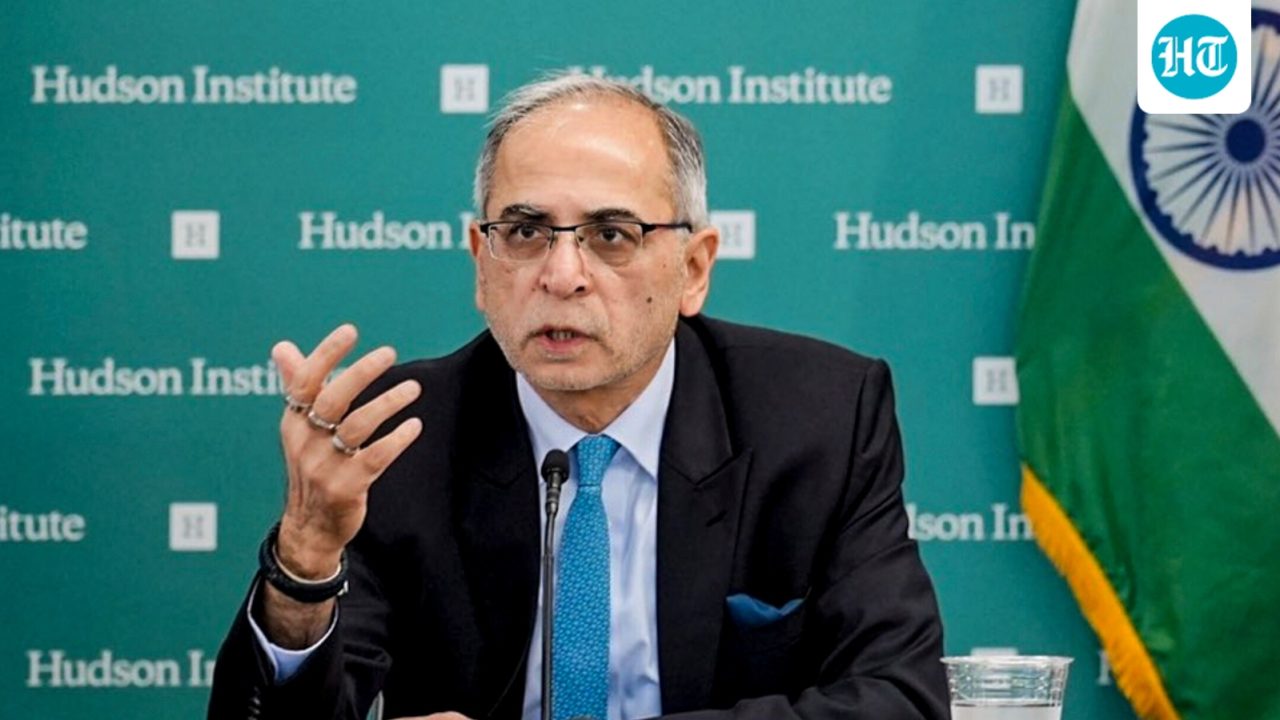

Indian envoy objects to US lawmaker’s comments on electoral-roll revision
Indiadailyupdate.com – India’s ambassador to the United States, Vinay Mohan Kwatra, has criticised Congresswoman Pramila Jayapal over her comments about the revision of Indian electoral rolls, calling them an intrusion into India’s domestic affairs.
The exchange followed Jayapal’s expression of concern over the Election Commission of India’s Special Intensive Revision, or SIR, a nationwide voter-list verification exercise. The Indian-origin Democratic representative from Washington state said she was troubled by claims involving roughly 130 million names.
“The remarks by [Jayapal] on India’s electoral and political processes are unacceptable interference in India’s internal affairs,” Kwatra wrote on X.
Kwatra said India’s electoral system is supported by established constitutional institutions and a long history of elections conducted freely and fairly. He also said he was open to a constructive discussion with Jayapal to address what he described as misunderstandings about the process.
“India is a vibrant democracy, with robust, independent constitutional institutions and a longstanding record of free and fair elections. Always open to constructive conversation with the Congresswoman to dispel her misconceptions,” he said.
Jayapal raises voter-rights concerns
Jayapal framed her criticism around the possible impact of the revision on voters. She compared the concerns surrounding India’s roll-cleaning exercise with efforts in the United States to scrutinise voter-registration data under President Donald Trump’s administration.
“I am deeply concerned about the actions of the Indian government to purge 130 million people from the voting rolls. This appears to be a similar playbook to what the Trump Administration is doing here at home to undermine voting rights in a democracy,” Jayapal wrote on X.
The dispute reflects sharply different interpretations of the SIR. Election authorities describe it as an administrative effort to make voter records current, while opposition parties have questioned both its scale and its potential political consequences.
Electoral-roll revisions are significant because the voter list determines who may cast a ballot. A routine update can involve removing records for people who have died, registered more than once, permanently moved away or cannot be located. At the same time, the process must allow eligible citizens to seek inclusion or correct their records, particularly where a name has been omitted in error.
Election Commission’s position
The Election Commission has said the Special Intensive Revision is intended to improve the accuracy of electoral rolls by identifying entries that are no longer valid. It has rejected the suggestion that all of the estimated 13 crore names represent final and confirmed deletions of eligible voters.
Election officials have maintained that qualified electors can apply to have their names entered on the rolls. That distinction is central to the debate: an entry flagged during verification does not necessarily settle a person’s voting status permanently.
Opposition parties have nevertheless challenged the breadth of the exercise. They have alleged that more than 13 crore people were removed under Chief Election Commissioner Gyanesh Kumar in a manner that could assist Prime Minister Narendra Modi’s Bharatiya Janata Party in elections.
Questions about the process grew after concerns were raised within the Election Commission itself. Election Commissioners Sukhbir Singh Sandhu and Vivek Joshi were said to have formally objected at least 14 times over a 10-month period on matters connected to the revision, voter-registration procedures and digital electoral-roll systems. Their concerns included decisions they believed had been made without their knowledge by Gyanesh Kumar.
Parallel debate in the United States
Jayapal’s comparison came as the Trump administration has intensified efforts to examine voter-registration records in the United States and identify individuals it considers potentially ineligible to vote.
The White House has presented the effort as an election-integrity measure designed to sustain public confidence in voting. Federal law bars non-US citizens from participating in federal elections. Critics, however, have warned that incomplete or inaccurate databases may wrongly flag eligible citizens, creating barriers for lawful voters.
The administration has pursued access to state registration files and sought to use federal databases to assess voter eligibility. Those efforts have prompted legal challenges and renewed debate over how authorities should balance election security with protections against wrongful removal or disruption of eligible voters.
On Tuesday, the US Justice Department gave California election officials 48 hours to review a list of people it suspected were non-US citizens registered to vote. The department warned of legal action if officials did not comply.
It also asked officials to withhold or separate ballots connected to the people identified on the list until citizenship status could be verified. The request was made after California had started sending ballots to voters for the November 3 midterm elections.
Los Angeles County Registrar-Recorder Dean Logan said his office was examining the request alongside state officials. He said the county had not opened a USB drive containing the names because of data-security concerns.
Accuracy and access remain central issues
The US Justice Department said its actions were aimed at enforcing federal election law. Opponents questioned the timing and cautioned that errors in official records could affect people entitled to vote. A request for verification, they noted, does not by itself establish that an individual is not a citizen or has cast an unlawful ballot.
In both countries, the debate underscores the sensitivity of voter-list management. Governments and election bodies face pressure to prevent inaccurate registrations, while voters and civil-rights advocates focus on ensuring that administrative checks do not improperly exclude eligible people from democratic participation.
For India, Kwatra’s response makes clear that the government views external political commentary on its election administration as a matter of sovereignty. For Jayapal, the issue remains tied to a wider concern about voter access and the consequences of large-scale electoral-roll reviews.
Related Reading
Frequently Asked Questions
What is Unacceptable interference?
Unacceptable interference is the main topic of this guide. The article explains the context, practical details, and next steps readers should understand.
Why does Unacceptable interference matter?
Unacceptable interference matters because readers are looking for a useful answer, not just a short summary. Good content should match search intent and help them decide what to do next.