India make a strong start as Nishad Kumar wins long jump gold in Nagoya
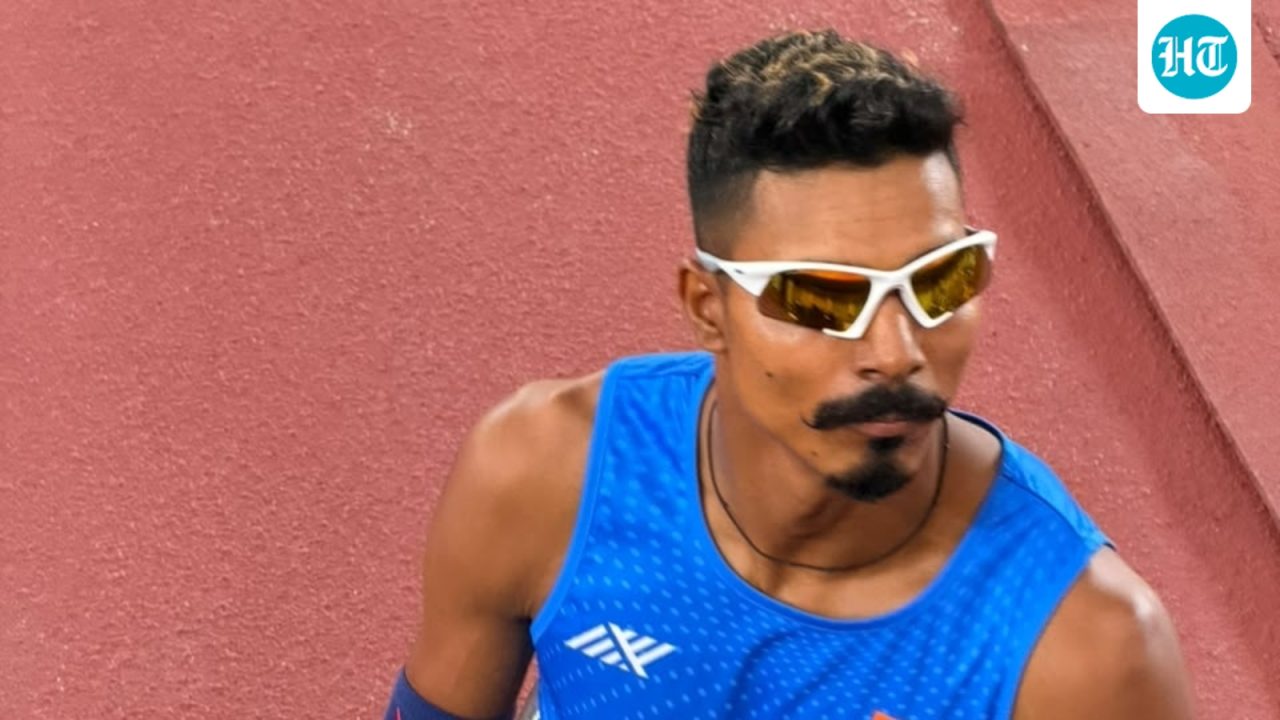
Indiadailyupdate.com – India began the athletics programme at the 2026 Asian Para Games in Nagoya with an encouraging display, collecting four gold medals on the opening day of competition. The breakthrough moment came from Nishad Kumar, who claimed the men’s long jump T47 title in his first international outing in the event.
Known primarily as a high jumper, Nishad cleared a new competitive hurdle by producing a winning leap of 7.11m at Nagoya City Mizuho Park Athletic Stadium. Uzbekistan’s Omadbek Khasanov finished second with 6.99m, while Sri Lanka’s Mohammadu Safran secured bronze after jumping 6.55m.
The result marked India’s first athletics gold of the Games and reflected a carefully planned expansion of Nishad’s programme. The 31-year-old already has two Paralympic silver medals in high jump, earned at Tokyo 2021 and Paris 2024, and entered Nagoya as the defending Asian champion in that discipline. His new long jump success has now added another dimension to his ambitions.
“There were no questions in my mind. I felt fully prepared,” Nishad said after the final. “I had the belief in myself, my team, and our plan.”
A double-jump ambition
Nishad competes in the T47 classification for athletes with upper-limb impairments. As a child, he lost his right arm in an accident involving a grass-cutting machine while helping his father on the family farm in Himachal Pradesh. He has since become one of India’s leading para-athletes, particularly in high jump.
The move into long jump was influenced by the career of American athlete Roderick Townsend-Roberts. At the Rio 2016 Paralympics, Townsend-Roberts won both the long jump and high jump titles in T47. Nishad had finished behind him for high jump silver at the Tokyo and Paris Paralympics, and his coaching team saw scope to pursue a similar multi-event path.
India’s para athletics head coach Satyanarayana said the project began around eight months ago, with the 2028 Paralympics forming the larger target. The physical demands of the two events overlap in areas such as power, strength and flexibility, even though their technical details differ.
“Our idea was to make him a double gold medallist for the 2028 Paralympics,” Satyanarayana said. “We thought if the American could do it, why not Nishad? The work for long jump and high jump is quite similar. Technically, there are a few differences, but aspects like strength and flexibility remain the same. Nishad’s lower body is very strong.”
Nishad acknowledged that the preparation window was limited, but said his training had been adjusted to meet the challenge. His attention in recent months had leaned more heavily towards long jump, while he remained focused on delivering in high jump as well during the Games.
“I knew time was less, but we trained accordingly,” Nishad said. “My focus shifted more to the long jump compared to high jump. Now that I have won gold in my first long jump event, it makes me feel really good and gives me more belief for the high jump.”
Rinku Hooda delivers after a difficult month
India’s second athletics gold of the evening came in the men’s javelin F46 final, where Rinku Hooda produced a season-best throw of 65.11m. He narrowly defeated fellow Indian Ajeet Singh, who took silver with 65.02m. Indonesia’s Bagus Saktyono completed the podium with a best effort of 55.30m in the three-athlete contest.
The gold carried particular emotional weight for Rinku. The Haryana athlete, whose left arm was amputated following an accident when he was three, lost his mother only a month before the competition. His ability to produce his best throw of the season in Nagoya drew praise from the Indian coaching staff.
“It’s been a very tough time for Rinku. He could not eat properly for days after he lost his mother. Still, he became a champion,” Satyanarayana said.
Teenager Soumya shines on Asian Para Games debut
Soumya, competing in her first Asian Para Games, added another gold for India in the women’s 1,500m T12/T13 race. The 18-year-old from Karnataka recorded a personal best of 5:12.39 to take first place in the combined classification event for visually impaired runners.
Radha Venkatesh earned silver in 5:30.90, while Japan’s Mana Sasaki took bronze. Soumya’s victory came as a welcome surprise for the Indian team, which had expected the more experienced Radha to be its leading contender in the race.
“We expected a silver from Soumya and gold from Radha because Radha is more experienced. But we are really happy for Soumya,” Satyanarayana said.
Ravanni Valasanaini also reached the podium on the Nagoya track, taking bronze in the women’s 1,500m T11 event. Together, the athletics medals underscored India’s depth across jumping, throwing and middle-distance disciplines on the opening day.
Shooting begins the medal rush
India’s momentum had started earlier in the day at the shooting range, where Mona Agarwal and Avani Lekhara claimed a one-two finish in the women’s 10m air rifle standing SH1 competition. Their gold and silver set the tone before the athletics session delivered the evening’s bigger haul.
India also collected medals in swimming and judo. Ravi Karthik Budigina took silver in the men’s 100m freestyle S13, while Kokila won silver in the women’s J2 -52kg judo category. Kapil Parmar added a bronze medal in the men’s J1 -70kg competition.
By the end of the first medal day, India had 11 medallists and stood fourth in the overall table with four gold, five silver and two bronze medals. For Nishad, the opening triumph offered more than a new title: it was an early sign that his decision to pursue two jumping events could widen India’s prospects on the road to the 2028 Paralympics.
Related Reading
Frequently Asked Questions
What is Asian Para Games?
Asian Para Games is the main topic of this guide. The article explains the context, practical details, and next steps readers should understand.
Why does Asian Para Games matter?
Asian Para Games matters because readers are looking for a useful answer, not just a short summary. Good content should match search intent and help them decide what to do next.