Messi’s Magic Leaves: South America’s Void
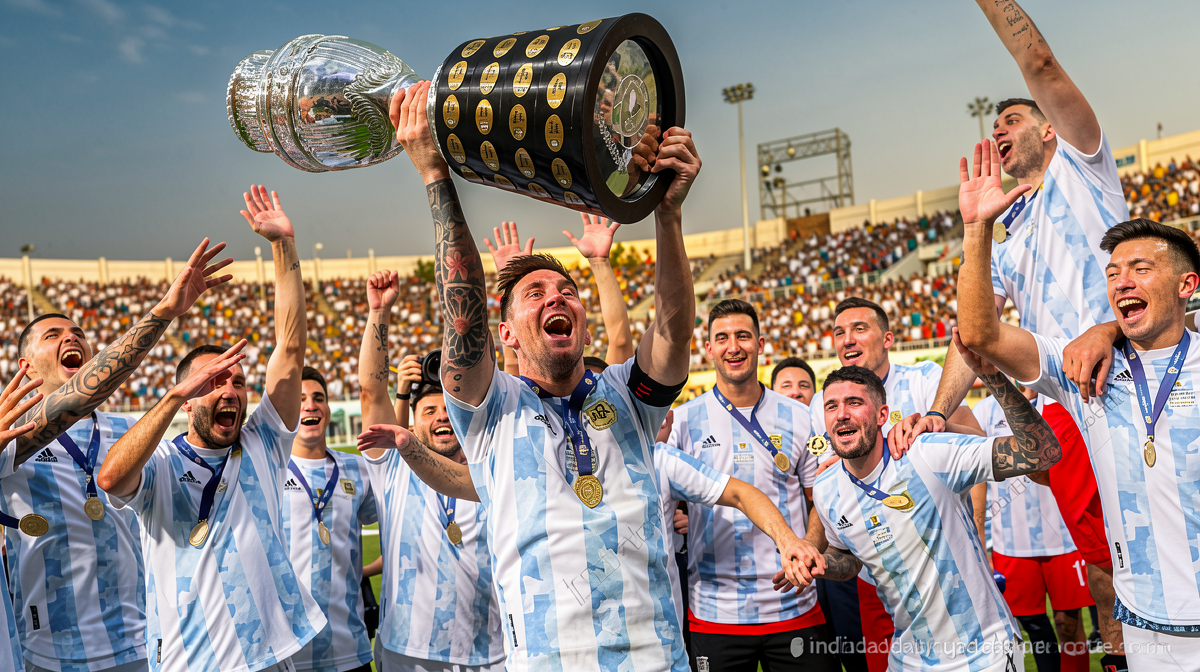
Indiadailyupdate.com – The moment Lionel Messi’s magic leaves the international stage for good, the reverberations will stretch well past Buenos Aires. Argentine supporters who watched him steer their team through two decades of triumph and heartbreak will feel the sharpest cut, yet the aftershock will register in every stadium, every living room, and every broadcast booth across South America. A continent that once seemed to field an endless parade of world-class talent now watches its last generational figure walk away from the jersey.
A Pipeline That Ran Dry
South America’s football pedigree predates Messi by decades. Pelé, Maradona, Ronaldo Nazário, Ronaldinho, Neymar, and Luis Suárez each anchored a different era, handing the torch forward in what appeared to be an unbroken chain of brilliance. That chain has frayed. With Messi stepping back from international duty, the number of players on the continent capable of commanding a global audience single-handedly has collapsed to near zero.
Vinicius Junior is the name most frequently floated in replacement conversations, but even his extraordinary seasons at Real Madrid have not produced the same gravitational pull for Brazil’s national side. The gap between club dominance and international magnetism highlights just how singular Messi’s role had become — a role no other South American player has replicated at scale.
The Structural Dependency
For years the continent’s highest-level narrative rested on one pair of feet. Neymar offered a brief window of shared responsibility, but recurring injuries across multiple seasons meant his international career never matched the ceiling of his raw ability. Whenever his availability wavered, Messi absorbed the full tactical and psychological burden alone.
That dependency became structural. Argentina’s in-game problem-solving, its resilience under pressure, its very tactical identity — all of it funneled through a single player’s decision-making. The 2026 World Cup final against Spain exposed the fragility in stark terms: a Messi out of form left Argentina outmatched across every phase of play, with no natural second option in the squad to absorb the vacuum. Analysts expect that absence to persist for years.
The task ahead is not to find a Messi replacement. It is to build a team that functions as a collective, capable of navigating adversity without waiting for one moment of individual genius to rescue it.
Barcelona navigated a comparable void after Messi’s 2021 departure and required multiple seasons before its identity stabilized. Argentina faces an analogous challenge, perhaps more acute, because the national team’s entire competitive architecture was constructed around one individual’s choices on the pitch.
The Global Attention Gap
Beyond Argentina’s borders the implications are subtler but no less consequential. South American stadiums will continue to fill for Copa América and international fixtures; the passion embedded in the continent’s fan culture is not contingent on one player. Yet the external gaze — the European and Asian viewer who tuned in because Messi was on the pitch — may dim considerably. Broadcasters, sponsors, and casual fans who followed Argentine and South American internationals primarily for his presence will have less reason to switch channels.
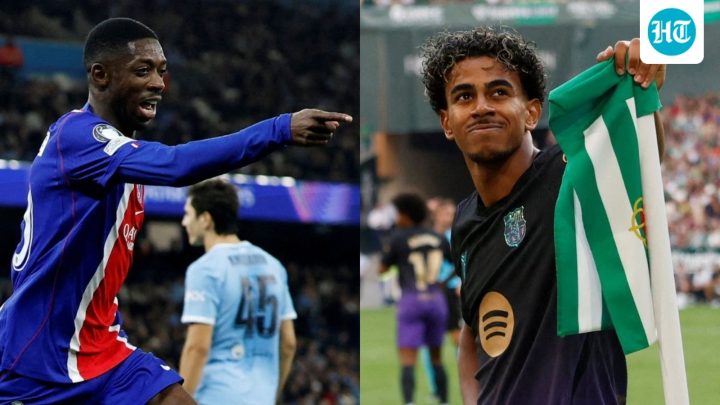
That shift represents a competitive disadvantage. European football already fields a constellation of superstars who draw worldwide viewership consistently: Kylian Mbappé, Lamine Yamal, Erling Haaland, Jude Bellingham, and Harry Kane all deliver at the elite level on a regular basis. South America’s talent pool remains deep, but talent without a unifying global figure struggles to command the same cross-continental spotlight.
FAQ
When does Messi’s final Argentina appearance take place? His last international cap is tied to the 2026 World Cup cycle, after which he has confirmed he will not return to the national team.
Who is expected to fill the leadership vacuum in South American football? No single successor has emerged. Vinicius Junior is the most-cited name, but most analysts anticipate a distributed leadership model rather than one new focal point.
Will South American leagues lose commercial interest? Domestic leagues will retain their passionate local audiences, but international broadcast revenue and sponsorship tied specifically to Messi’s presence are likely to decline in the near term.
How long did Messi represent Argentina? Close to twenty years, spanning two decades of qualifiers, Copa América campaigns, and World Cup tournaments.