
Nitesh Siwach’s Historic Greco-Roman Silver for India
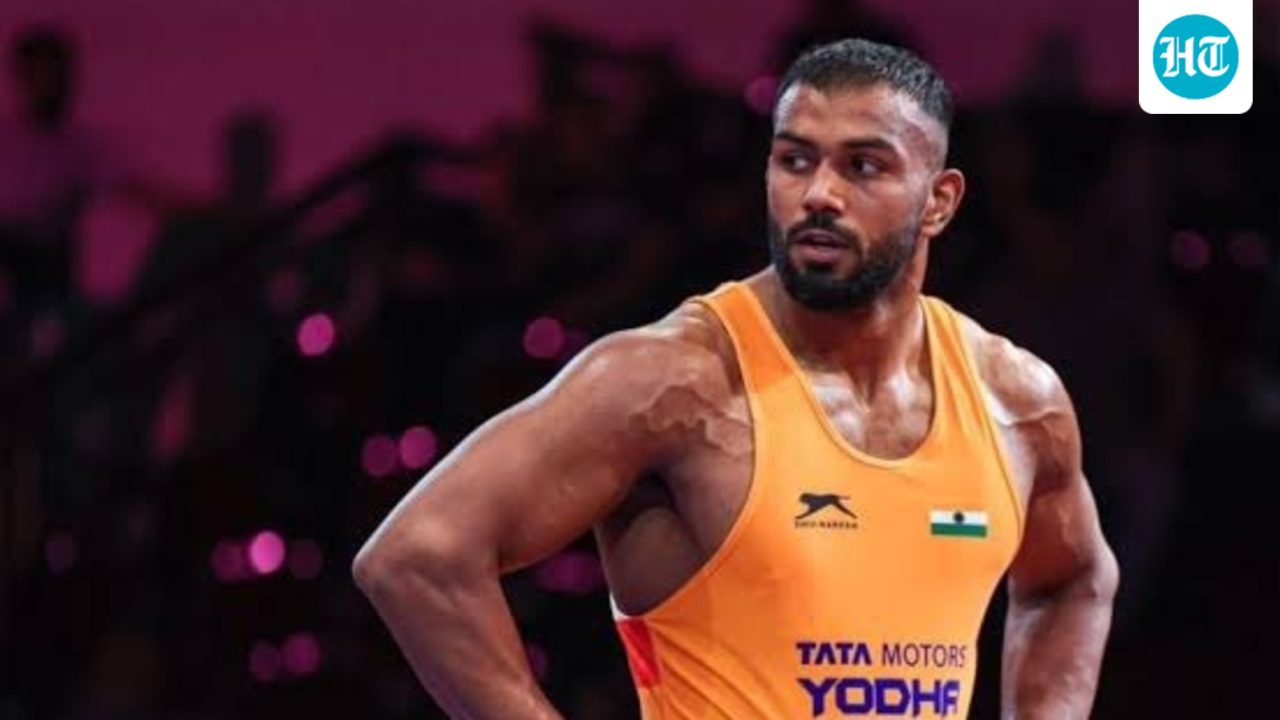
Indiadailyupdate.com – Nitesh Siwach s historic Greco-Roman silver marked a major moment for Indian wrestling at the Asian Games. Competing in the men’s 97kg category, Siwach won silver and ended India’s long wait for a Greco-Roman silver medal at the event.
The 23-year-old reached the final with an emphatic 9-0 semifinal win over Mongolia’s Gankhuyag Ganbaatar. The bout was decided by technical superiority, highlighting Siwach’s command of the upper-body style required in Greco-Roman wrestling.
Siwach was defeated by Japan’s Yuri Nakazato in the final, but his result remains historically important. India had not won an Asian Games silver medal in Greco-Roman wrestling since the 1962 Games in Jakarta.
In 1962, Maruti Mane in the 97kg category and Sajjan Singh in the 87kg division both finished with silver medals. That edition also produced India’s only Asian Games gold in Greco-Roman wrestling, with Ganpat Andalkar winning the over-97kg category.
India have won 65 wrestling medals at the Asian Games, including 11 in Greco-Roman wrestling and 54 in freestyle. India have also collected five Greco-Roman bronze medals over the years. At the 2026 Aichi-Nagoya Games, Sunil Kumar won bronze in the men’s 87kg category for the second consecutive time.
How Greco-Roman Wrestling Differs From Freestyle
Greco-Roman and freestyle wrestling have the same basic aim: score through legal attacks, control and exposure while preventing an opponent from doing the same. The key difference is where wrestlers are allowed to attack.
In Greco-Roman wrestling, athletes may only use holds above the waist. They cannot attack an opponent’s legs, grab below the waist or use their own legs to initiate lower-body attacks. Freestyle wrestling allows attacks on the entire body, including takedowns aimed at the legs.
This rule gives each discipline a distinct rhythm. Freestyle wrestlers often work from lower stances, using level changes and quick attacks toward the thighs, knees or ankles. Distance management and defending leg attacks are central parts of freestyle strategy.
Greco-Roman wrestlers usually compete in a more upright position and at close range. They fight for body locks, arm control and dominant grips around the torso, looking to lift, throw, turn or drive an opponent into a scoring position.
Why Upper-Body Strength Matters
Nitesh Siwach s historic Greco-Roman achievement reflects the physical and technical demands of the discipline. Since leg attacks are prohibited, wrestlers must create scoring chances through hand fighting, posture, balance and upper-body positioning.
A strong underhook, body lock or chest-to-chest grip can quickly become an attacking opportunity. However, power alone is not enough. A mistimed lift or throw may allow an opponent to regain control, making timing and technique essential.
Greco-Roman wrestlers therefore train extensively for grip strength, balance, explosive lifts and movement in tight positions. Throws and turns can lead to significant points, but every attack must remain within the above-the-waist rule.
Match Format, Passivity and Technical Superiority
A wrestling bout is made up of two three-minute periods, with a 30-second break between them. In Greco-Roman wrestling, referees can penalise passivity when they determine that a wrestler is not actively competing.
A passive wrestler can be placed face down on the mat, allowing the opponent an attacking chance from around the waist. The attacking wrestler has roughly 20 to 30 seconds to lift or turn the opponent and score points. Such situations can prove decisive in close matches.
Ground positions are less common in freestyle wrestling and generally arise in more specific situations, including attempts to leave the competition area or escape the mat.
What Is Technical Superiority?
A match can end early through technical superiority when one wrestler builds a large enough points advantage. In freestyle wrestling, the required margin is 10 points. In Greco-Roman wrestling, the margin is eight points.
Siwach’s 9-0 semifinal victory over Ganbaatar crossed the Greco-Roman technical-superiority threshold, sending him into the final and securing a place in Indian wrestling history.
FAQ: Greco-Roman Wrestling in India
Can Greco-Roman wrestlers attack the legs?
No. Greco-Roman rules restrict attacks and holds to above the waist. Leg grabs, trips involving the legs and lower-body attacks are not permitted.
Why does Greco-Roman wrestling look more upright than freestyle?
Because leg attacks are banned, wrestlers have less reason to stay in a low stance. They instead focus on controlling the torso, arms and upper body from close range.
Why is Nitesh Siwach’s silver important?
Nitesh Siwach s historic Greco-Roman silver ended India’s Asian Games wait for a silver medal in the discipline, which had lasted since 1962.