Trump’s Middle East Vision Faces a Test From War
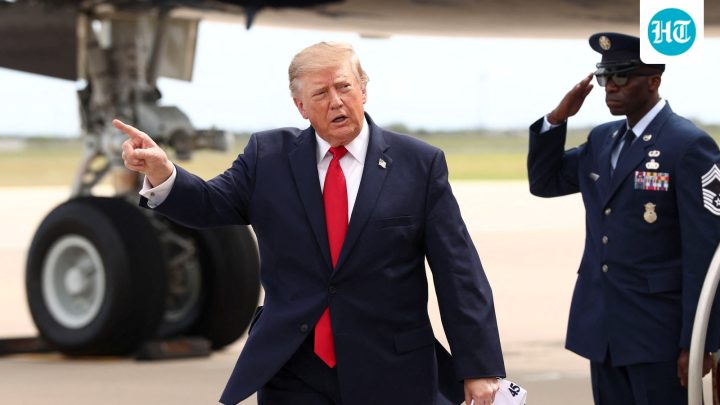
Indiadailyupdate.com – President Donald Trump’s enthusiasm for the Middle East once appeared to fit neatly with the ambitions of the region’s wealthiest states. Gulf capitals offered the kind of spectacle he enjoys: imposing palaces, grand development plans, rapid construction and leaders comfortable with direct, transactional diplomacy. Yet as conflict involving Iran spreads uncertainty across the region, the qualities Trump praised are being threatened by the instability surrounding them.
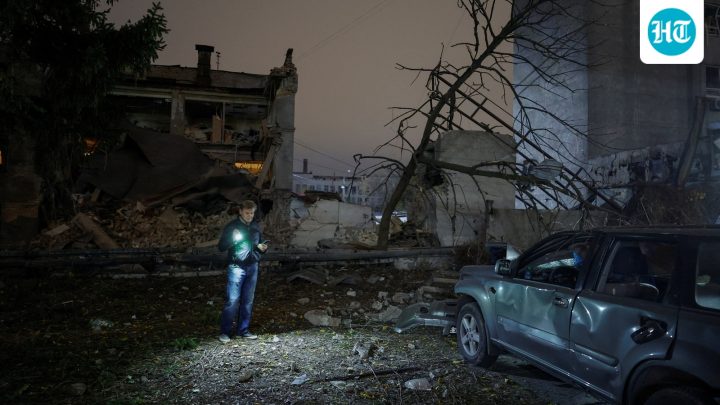
For governments in Abu Dhabi, Doha and Dubai, the concern is not only military. Their long-term economic plans depend on convincing global businesses, investors, travellers and skilled workers that the Gulf is a dependable place to operate. Missile attacks, disrupted shipping routes and risks to airports can quickly weaken that promise, even when the immediate physical damage is limited.
A relationship built on admiration
During a visit to Qatar in May 2025, Trump was visibly impressed by the Emir’s palace and its materials.
“I’m seeing perfect marble. This is what they call perfecto,”
His broader message in Riyadh was equally warm. Trump celebrated Gulf rulers for building prosperous societies without embracing political lessons from outsiders. He argued that their success rested on national confidence, respect for inherited values and a determination to pursue economic opportunity.
That appeal resonated with leaders who had found previous American administrations more inclined to question their domestic systems. Trump, by contrast, praised their governing style and treated economic deals as a central measure of diplomatic success. His appreciation also extended to their infrastructure-heavy vision: new cities, airports, ports, technology ventures and luxury development.
In Riyadh, he described a region looking beyond historical divisions and toward trade, innovation and commerce. The image was of Gulf states using their location between major markets to become hubs for shipping, aviation, finance and advanced technology.
Prosperity requires predictability
Saudi Arabia, Qatar and the United Arab Emirates have abundant oil and gas resources, but all have sought to broaden their economic bases. Cheap energy, available land and large pools of capital have encouraged plans for data centres, artificial-intelligence infrastructure and other industries expected to grow in importance.
Those ambitions depend on openness. Container terminals need functioning sea lanes. Airlines need secure airspace and reliable airports. Data-centre operators need confidence that power, connectivity and physical sites will remain protected. International companies and expatriate families also make decisions based on whether a location seems stable over many years, not merely whether it is secure on a particular day.
This is why regional conflict poses a deeper problem than the destruction of a single facility. A palace can be guarded, and oilfields can be protected by national forces supported by American military power. But it is much harder to insulate an entire commercial ecosystem from repeated threats. If Iranian drones or Houthi missiles interrupt shipping, strike airports or endanger data infrastructure, the cost is felt across the wider investment environment.
Gulf officials can discuss stronger air defences or more protected construction for vital facilities. Such measures may reduce particular risks. They cannot fully replace the confidence created by a peaceful regional setting and dependable transport links.
The contradiction in Trump’s approach
The conflict exposes a weakness in Trump’s preferred theory of international order. He has often presented assertive nationalism and economic self-interest as forces that can produce stability. In the Gulf, however, leaders see the opposite danger: nationalism driven by ideology, religion or historical grievance can erode the very prosperity that commercial integration is meant to create.
From that perspective, Israel under Binyamin Netanyahu, Iran’s Islamic regime and Yemen’s Houthi movement are distinct actors with different political systems and objectives. Still, Gulf observers see a shared pattern. Each draws legitimacy from narrow ideological, religious or civilisational claims, and each has shown a willingness to use force in pursuit of its aims.
That creates a difficult environment for neighbouring states that would prefer to concentrate on trade and development. The Gulf’s modernisation model rests partly on a balance between strong domestic authority and strong international connections. It combines national control at home with an economic strategy that requires foreign capital, global talent and uninterrupted movement across borders.
War makes those two goals harder to reconcile. A state may be able to defend its territory, but it cannot easily compel international investors, airlines or shipping firms to accept growing uncertainty. In that sense, the region’s economic transformation is more vulnerable than its traditional sources of wealth.
A costly threat to the Gulf’s future
Trump’s praise for Gulf development was based on a real transformation: countries once known primarily for hydrocarbons have tried to become broader centres of business and technology. But their plans assume that prosperity can become a source of regional calm. The current confrontation suggests that prosperity alone cannot overcome political actors prepared to risk economic damage for ideological or strategic goals.
For Trump, the Middle East may remain a place of impressive wealth, lavish construction and lucrative partnerships. For Gulf leaders, it is increasingly a reminder that economic ambition needs more than capital and vision. It also needs a durable political order in which trade routes remain open, airports remain safe and the future is not repeatedly interrupted by war.
Related Reading
Frequently Asked Questions
What is Donald Trump may love the Middle?
Donald Trump may love the Middle is the main topic of this guide. The article explains the context, practical details, and next steps readers should understand.
Why does Donald Trump may love the Middle matter?
Donald Trump may love the Middle matters because readers are looking for a useful answer, not just a short summary. Good content should match search intent and help them decide what to do next.