Riyadh Airport Attack Raises Pressure for Wider U.S. Role in Yemen Conflict
Indiadailyupdate.com – Saudi Arabia’s capital faced another major security shock on Saturday after a missile hit the area serving domestic terminals at Riyadh’s King Khalid International Airport, deepening concern that the conflict with Yemen’s Houthi rebels is expanding into a more dangerous regional confrontation.
The strike hit the complex containing terminals 3 and 4, leaving many people injured, a regional official said. It followed an earlier attack this week that killed three Saudi nationals, including a pilot. Saudi aviation authorities halted airport operations while damage and casualties were assessed, issuing a notice that kept the suspension in place until midnight.
Police sealed off entrances to the airport, where lighting around the facility was reduced. Flight-tracking data showed aircraft being redirected to other destinations, while at least 291 Riyadh flights had been canceled over the preceding 24 hours.
Trump considers intervention
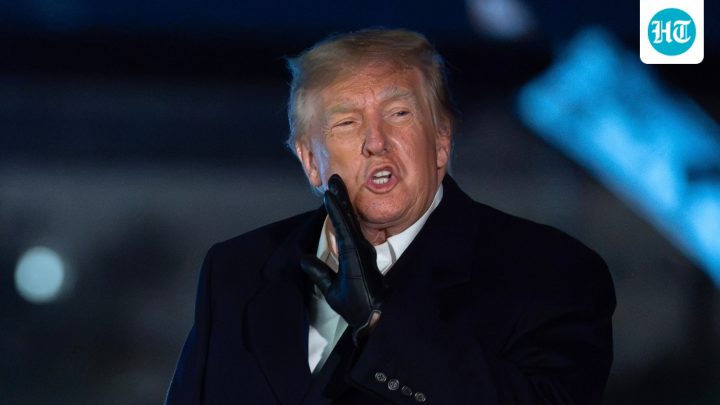
President Donald Trump said Washington was considering whether to take part in Saudi military action against the Iran-backed Houthis in Yemen. His comments came shortly after news of the latest airport strike emerged.
“We may. We’re going to look at it,” Trump said of intervening. “We just found out about the recent attack. So we’ll make a decision. We move very quickly.”
The United States has already provided support linked to the current Saudi-led offensive, including intelligence sharing, help identifying targets and planning assistance. A decision to take a more direct combat role would mark a significant escalation at a time when U.S. missile-defense resources have also been strained during the war involving Iran.
Saudi Arabia has sought additional air-defense help from France, Britain, Pakistan and Egypt as its supply of missile interceptors declines. The request highlights the growing challenge of defending a vast country from repeated missile and drone launches, especially when civilian airports, energy installations and military sites are among potential targets.
Conflict spreads beyond Yemen
The Houthi attacks have intensified since a Saudi-led coalition began a major operation against the group last week. Saudi-backed Yemeni government forces, supported from the air by the coalition, have been trying to reverse recent Houthi advances along Yemen’s Red Sea coast.
Those advances have increased the rebels’ ability to monitor maritime activity near a shipping route viewed as an important alternative to the Strait of Hormuz. Iran has attacked vessels in that waterway during the broader conflict, adding to fears that commercial shipping and aviation could both face heightened risks.
The Houthis have maintained that their focus is Saudi shipping, framing their actions as a response to a blockade imposed against them. But the movement’s previous attacks on vessels after the Gaza war began, which it described as support for Palestinians, have contributed to wider concern over possible threats to international traffic. A prior U.S. bombing campaign had significantly restricted those operations.
There was no immediate public statement from the Houthis on Saturday’s Riyadh strike. Earlier in the day, however, they accused Saudi Arabia of attacking Sanaa International Airport in Yemen’s Houthi-controlled capital.
Aviation disruption and public warnings
Governments including the United States, Britain, Germany, Australia and Canada urged their citizens to avoid Riyadh airport during the disruption. Several carriers had already suspended or adjusted service to Riyadh and other Saudi airports, including Air India, FlyDubai, Lufthansa Group and Pakistan International Airlines.
The European Union Aviation Safety Agency broadened its guidance for Saudi airspace, citing the Houthis’ demonstrated capacity to reach locations far inside the kingdom, including Riyadh. The agency also noted a growing emphasis on aviation facilities, where missile and drone activity can create a serious hazard for aircraft even when an attack is intercepted.
The Houthis had warned international airlines this week of possible consequences for flights using Saudi airspace, calling the area part of their military operations. For travelers, the immediate result is likely to be continued uncertainty, with cancellations, diversions and last-minute schedule changes possible while security assessments continue.
Economic stakes remain high
The attacks have unsettled regional markets because Saudi Arabia is the world’s leading oil exporter and because its infrastructure plays a central role in global energy supplies. Yet Saudi Arabia’s Energy Ministry continued promoting an international energy conference scheduled to begin in Riyadh on Sunday, signaling an effort to maintain commercial activity despite the security crisis.
Saudi officials have also cautioned residents against recording or sharing details involving missile and drone interception efforts or impact locations.
“Filming, publishing or sharing information related to countering missiles and drones and their impact sites exposes you to legal liability.”
Diplomatic activity has continued alongside the military escalation. Saudi Arabia said its foreign minister spoke by telephone with Oman’s foreign minister about the need to support diplomatic measures that could reduce regional tensions. Oman, located across the Strait of Hormuz from Iran, has at times served as a mediator in regional disputes.
The latest attack underscores how rapidly the Yemen conflict is becoming intertwined with the broader confrontation involving Iran, Saudi Arabia and the United States. With a major civilian airport now struck again and air defenses under sustained pressure, decisions made in Washington and Riyadh could shape whether the fighting remains contained or widens further.
Related Reading
Frequently Asked Questions
What is Trump weighs joining the fight against?
Trump weighs joining the fight against is the main topic of this guide. The article explains the context, practical details, and next steps readers should understand.
Why does Trump weighs joining the fight against matter?
Trump weighs joining the fight against matters because readers are looking for a useful answer, not just a short summary. Good content should match search intent and help them decide what to do next.