Taslima Nasrin Returns to Kolkata, Igniting Political Discourse in Bengal
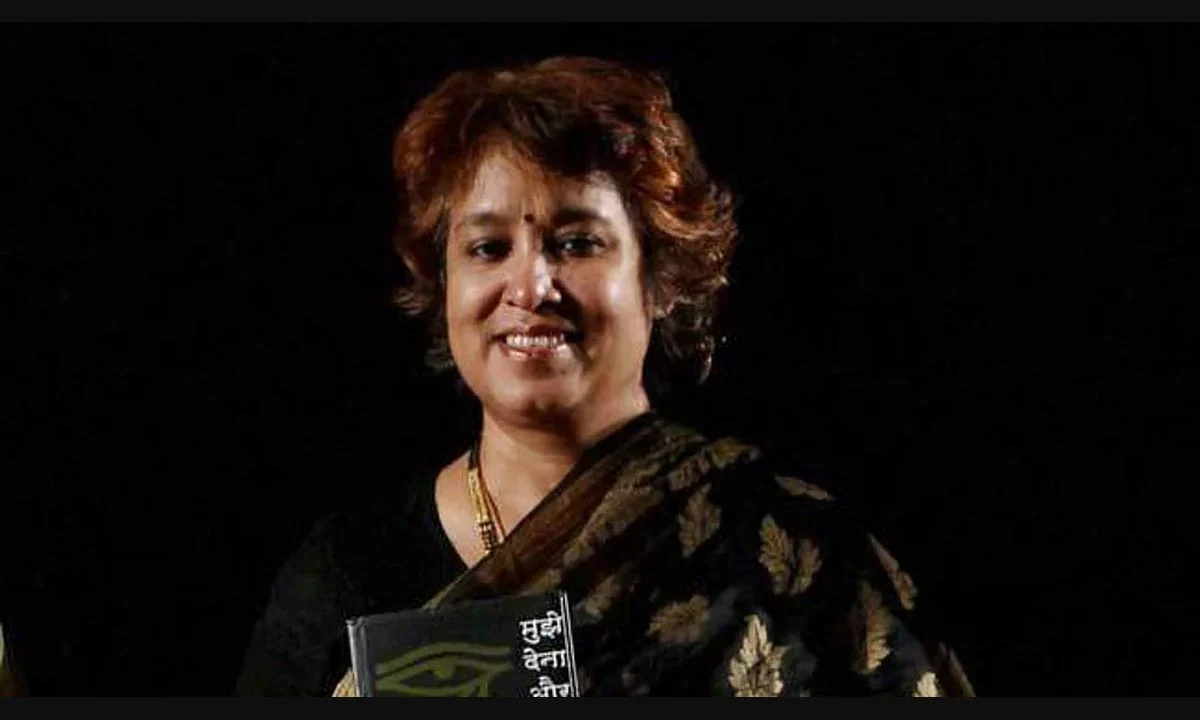
Indiadailyupdate.com – Taslima Nasrin’s return to Kolkata after nearly two decades has reignited a heated political debate in West Bengal. The Bangladeshi writer, who has long been a figure of controversy for her critiques of religious practices, is set to attend a literary event at Rabindra Sadan on August 1. This momentous occasion marks her first visit to the city since 1994, and her presence is expected to fuel discussions about free speech, cultural identity, and the role of politics in shaping public discourse.
The Political Backdrop of Her Comeback
With the Bharatiya Janata Party (BJP) now in power, the political landscape of Bengal has shifted dramatically. The party’s victory ended the Trinamool Congress’s (TMC) 15-year reign, creating an opportunity for renewed narratives around Nasrin’s activism. Her literary event has become a focal point for both supporters and critics, as the BJP frames it as a victory for secular values, while the TMC questions its motives. The debate underscores the deepening divide over how religious and cultural issues are perceived and addressed in the state.
“Taslima Nasrin’s return to Kolkata symbolizes a new era of openness,” stated BJP spokesperson Samik Bhattacharya. “Her critiques of fundamentalist ideologies have long resonated with Bengali intellectuals, and this event is a testament to the party’s commitment to free expression.”
Nasrin’s visit is not just a cultural milestone but a political statement. Her past criticisms of Islamic practices in Bangladesh, particularly in her novel *Lajja*, have made her a lightning rod for debate. The BJP’s emphasis on her return highlights its efforts to align with a more secular image, contrasting with the TMC’s accusations that the party is using her to marginalize Muslim voices in the region.
A Legacy of Exile and Resistance
Taslima Nasrin’s journey to Kolkata has been marked by exile and return, reflecting broader tensions in Bengal. Her initial departure in 1994 followed the issuance of fatwas demanding her death after *Lajja* was published. The novel, which depicted the oppression of a Hindu family in a Muslim-dominated setting, sparked widespread protests and earned her a reputation as a bold critic of religious extremism. After spending over a decade in Europe and the U.S., she returned to Kolkata in 2004, a city she described as her “most culturally familiar refuge.”
“Kolkata is the heart of Bengali culture, and returning here felt like a homecoming,” Nasrin shared in a recent interview. “But even in exile, my voice remained connected to the people of Bengal.”
Her second return in 2007, however, was short-lived. The release of her autobiography *Dwikhandita* triggered violent clashes between Muslim groups and secular activists, forcing her to flee again. These episodes highlight her complex relationship with the region, where her ideas are both celebrated and contested. Her current visit, though, signals a possible reconciliation or a new chapter in her engagement with Bengal’s cultural and political scene.
The political row surrounding Nasrin’s return also reflects the broader ideological struggles in the state. The BJP’s support for her visit is seen as a strategic move to position itself as a defender of progressive values, while the TMC argues that her critiques are used to distract from issues affecting the state’s majority Hindu population. As the event approaches, tensions are expected to peak, with both parties vying to shape the narrative around her return. This moment encapsulates the evolving dynamics of Bengal’s political identity in an increasingly polarized climate.