
Why Some Greek Ancient Sites Do Not Allow High Heels
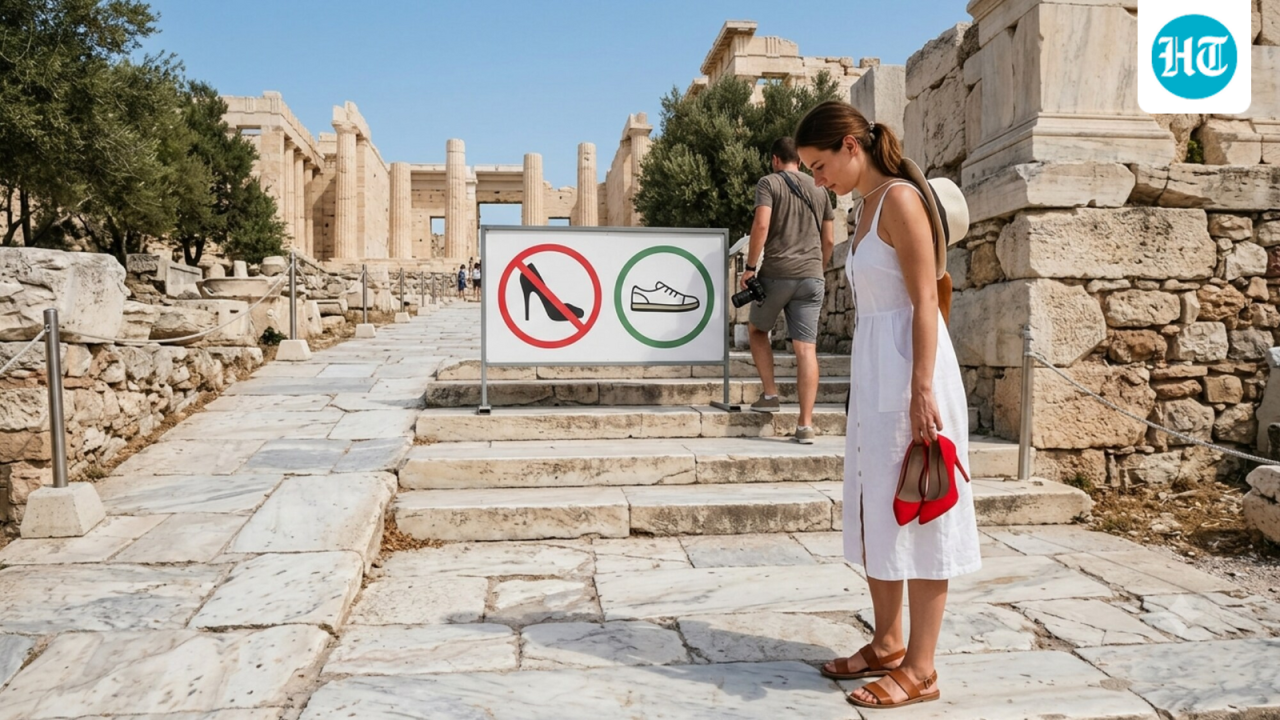
Indiadailyupdate.com – Visitors heading to selected archaeological landmarks in Greece may need to leave their high heels behind. The footwear restriction, introduced in 2009 at certain heritage locations, was designed to reduce damage to ancient stone and marble that can be affected by the pressure created by narrow, pointed heels.
The rule applies to specific monuments rather than the country as a whole. Greece has not prohibited high heels in public life; the limitation concerns access to vulnerable historic spaces where conservation is a priority.
Protecting Fragile Ancient Surfaces
High heels can place a person’s weight onto a very small point of contact. On modern flooring, that pressure may leave little trace. On aged marble, stone steps and other historic surfaces, however, repeated impact can contribute to visible wear over time.
Greek heritage authorities introduced the measures as some important sites faced the combined effects of large visitor numbers and regular cultural activity. Preventing avoidable surface damage is especially significant at monuments that have survived for centuries and remain open to the public.
The concern is not limited to footwear. Visitor guidance for some venues also draws attention to chewing gum and discarded food, which can leave stains or residue that is difficult to remove without risking further harm to historic materials.
The Odeon of Herodes Atticus
One of the best-known locations covered by the no-heels policy is the Odeon of Herodes Atticus in Athens. Positioned on the southern slope of the Acropolis, the ancient theatre remains one of the city’s most recognisable cultural sites.
Herodes Atticus built the Odeon in AD 161 in memory of his wife. Its long history gives the venue an importance beyond its architectural presence: it continues to function as a setting for performances, connecting a monument from the Roman era with Athens’ modern cultural calendar.
Its marble surfaces are central to the reason for the footwear rule. A pair of pointed heels may seem insignificant on its own, but conservation decisions take account of the cumulative effect of many thousands of footsteps. Limiting concentrated pressure helps reduce the risk that historic flooring will become scarred, chipped or worn down.
What Visitors Should Keep in Mind
People attending a concert or other event at the Odeon of Herodes Atticus should review entry guidance before arriving. Comfortable flat shoes are the sensible choice, both for complying with venue rules and for navigating the uneven terrain often found around ancient sites.
The restriction also offers a useful reminder that heritage tourism involves shared responsibility. Monuments are not simply scenic backdrops; they are irreplaceable structures made from materials that can be damaged by ordinary visitor behaviour when it is repeated at scale.
For travellers, the practical takeaway is straightforward: pack footwear suited to walking and preservation rules when visiting archaeological areas in Athens and elsewhere in Greece. A small adjustment in what visitors wear can help safeguard surfaces that have endured for nearly two millennia.
A Rule About Conservation, Not Fashion
The ban has occasionally attracted attention because it appears unusual at first glance. Yet its purpose is rooted in the physical realities of preserving ancient stonework. The rule is not a judgement on fashion or a general restriction on what people may wear in Greece.
Instead, it is a targeted conservation measure for places where every detail matters. By keeping sharp heels away from delicate marble and stone, site managers aim to protect the character and condition of monuments such as the Odeon of Herodes Atticus for future visitors, performers and researchers.
Related Reading
Frequently Asked Questions
What is Why are high heels banned at some?
Why are high heels banned at some is the main topic of this guide. The article explains the context, practical details, and next steps readers should understand.
Why does Why are high heels banned at some matter?
Why are high heels banned at some matters because readers are looking for a useful answer, not just a short summary. Good content should match search intent and help them decide what to do next.