Heavy Rains Overwhelm Mumbai: Schools Closed, Landslides and Waterlogging Alert
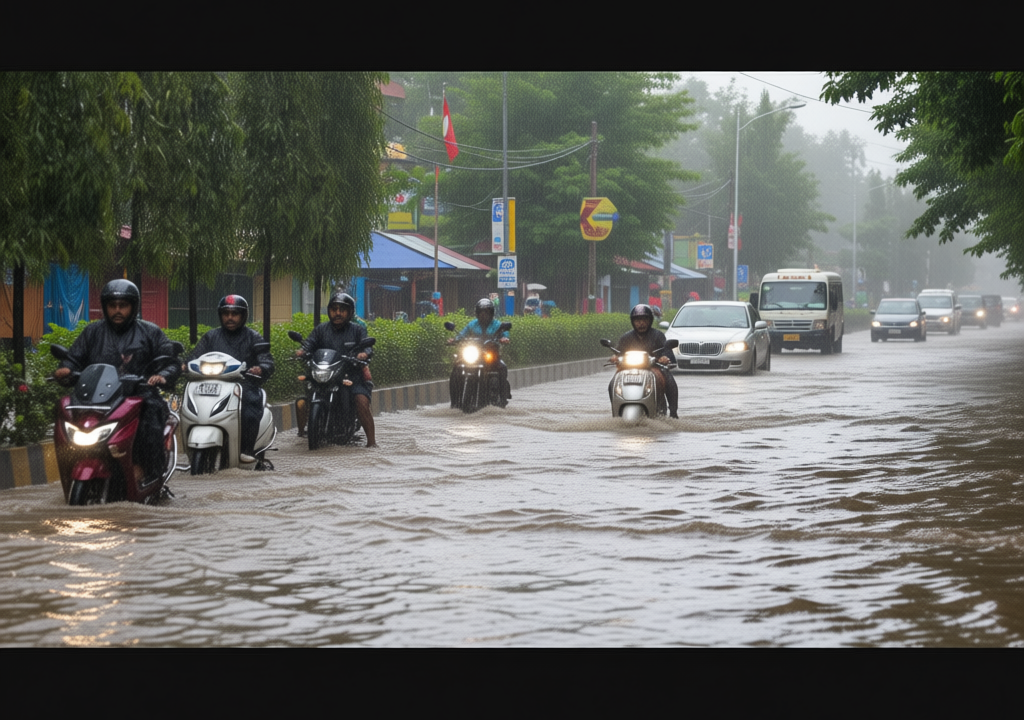
Indiadailyupdate.com – Heavy rains take over Mumbai as intense monsoon activity has flooded the city, prompting the Indian Meteorological Department (IMD) to issue a red alert for Mumbai, Thane, Palghar, and Raigad districts for Saturday and Sunday. The downpours, driven by a weather system centered over the Konkan coast and influenced by low-pressure areas in the Bay of Bengal, are expected to continue through July 7, with moderate to heavy rainfall also affecting Satara, Pune, and Nashik in western Maharashtra. Pune, for instance, faces similar alerts, with heavy to very heavy rain projected for Sunday. This surge in precipitation has disrupted daily life, prompting authorities to take immediate action to mitigate the impact.
Widespread Disruptions and School Closures
The relentless downpours have caused severe waterlogging in key areas such as Sakkar Panchayat, Old National Market, Gandhi Market, and Mahalaxmi Junction, among others. In response to the escalating situation, the municipal corporation has ordered the closure of all educational institutions in Mumbai city and its suburbs. The decision follows reports of extensive flooding, which has made travel hazardous and forced residents to stay indoors unless absolutely necessary. Emergency services have been deployed to monitor vulnerable zones, with the National Disaster Response Force (NDRF) on standby to manage potential landslides and rescue operations.
“The girl’s family has accused the electricity department of negligence,” stated a relative, citing the incident where a 17-year-old died after stepping into a waterlogged road in Thane’s Mumbra area. The victim, who was crossing to her father’s shop, succumbed to electrocution from an electric current in the pooled water. This tragic event highlights the dangers of heavy rains take over Mumbai, particularly in poorly maintained infrastructure. Authorities are investigating the incident and have urged citizens to exercise caution while navigating flooded streets.
Regional Flooding and Infrastructure Challenges
Excessive rainfall has not only affected Mumbai but also caused flooding in the Konkan region, leading to overflowing rivers and streams. In Mahabaleshwar, the state recorded its highest rainfall on Friday, with 278 mm measured by 8 am. The situation has been compounded by rising dam water levels, which threaten to spill over into low-lying areas. In Nashik, a landslide struck the Saptashrungi Gad Ghat Area, sending large boulders and debris onto the road. Although no injuries were reported, the incident underscores the risk posed by heavy rains take over Mumbai, particularly in hilly regions.
Authorities have extended their efforts to manage the crisis, with the Brihanmumbai Municipal Corporation (BMC) initiating evacuation plans for flood-prone neighborhoods. The monsoon season has already seen Mumbai city accumulate 780.7 mm of rain between June 1 and July 3, while suburbs recorded 819.1 mm. These figures reflect the severity of the weather system, which is expected to persist due to a trough lingering between Maharashtra and Karnataka coasts. The combination of these factors has led to widespread disruptions, including delayed public transport, closure of businesses, and the cancellation of outdoor events.
Community Response and Ongoing Concerns
Residents across Mumbai have taken proactive measures to safeguard their properties, with many installing sandbags and using waterproof covers to prevent further damage. Social media platforms have been flooded with updates and photos from affected areas, showcasing both the scale of the crisis and the resilience of the community. However, concerns remain about the long-term effects of heavy rains take over Mumbai, including potential damage to roads, drainage systems, and residential buildings. The BMC has also launched a public awareness campaign to educate citizens on safety protocols during extreme weather events.
As the monsoon season continues, experts warn that the region may face additional challenges, including increased risk of landslides and prolonged waterlogging. The IMD has advised people to stay alert and prepare for further downpours, which could lead to additional evacuations and infrastructure strain. In the meantime, relief efforts are ongoing, with teams working to clear drainage channels and assist those displaced by the floods. The situation serves as a reminder of the importance of resilient urban planning and timely disaster response mechanisms in mitigating the effects of heavy rains take over Mumbai.