What Borders Couldn’t Break: Sindhi Genetic Bond Survives Partition
Indiadailyupdate.com – What borders couldn’t break – a recent genetic study reveals that Sindhis in India and Pakistan still share a deep, unbroken connection through their DNA. Nearly eight decades after the partition of British India divided families and communities, this research underscores how the Sindhi identity has persisted, defying political separation. Despite generations of migration and cultural shifts, the findings show that the genetic makeup of Sindhi populations on both sides of the border remains remarkably similar, highlighting the resilience of their shared heritage.
Genetic Continuity Across Time and Space
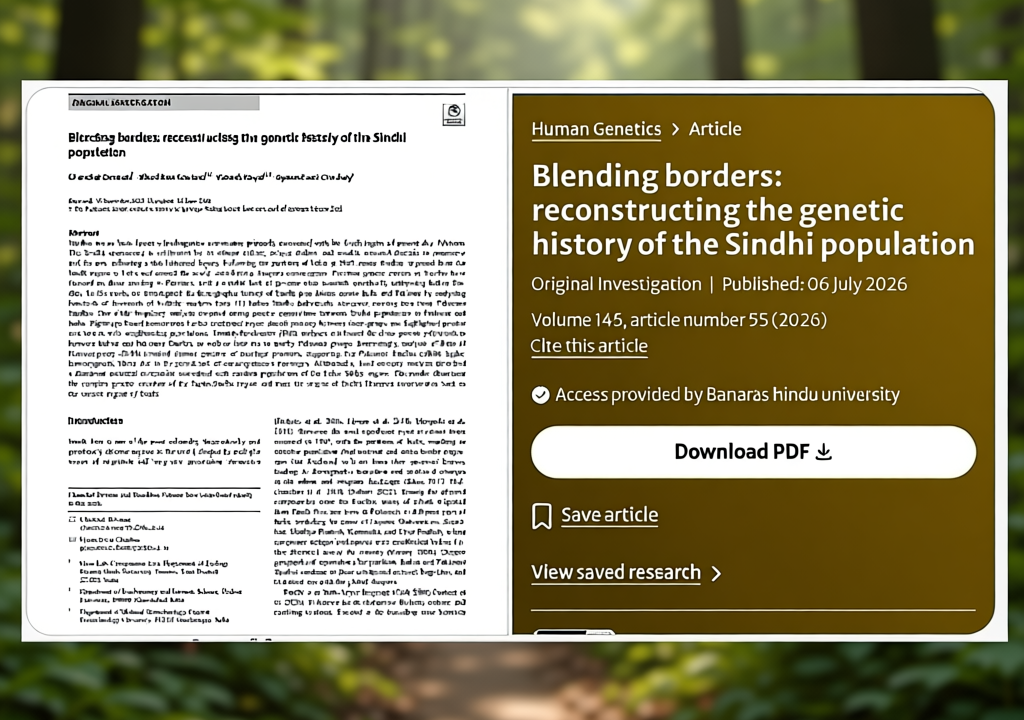
The groundbreaking study, published in the journal *Human Genetics*, is the first to conduct a genome-wide analysis of the Sindhi diaspora in India. Led by Chanchal Devnani and Professor Gyaneshwer Chaubey from Banaras Hindu University, the research team included Dr. Khushboo Gautam and Professor Rakesh Rawal from Gujarat University and Gujarat Biotechnology University. Their analysis of over 650,000 genetic markers from volunteers across Rajasthan, Gujarat, Maharashtra, Madhya Pradesh, Chhattisgarh, Uttar Pradesh, and Telangana shows that Sindhis in India and Pakistan maintain a genetic bond that stretches back thousands of years.
By comparing the DNA of modern Sindhis with ancient samples from the Indus Valley civilization, the researchers found that 60 to 66 percent of the community’s ancestry traces to populations that thrived in the region 5,000 years ago. The remaining genetic composition includes contributions from South Asian groups and Steppe pastoralists who migrated to the subcontinent millennia ago. This blend of ancient and diverse genetic elements has been preserved across the partitioned regions, offering a unique insight into the enduring unity of Sindhi communities.
Partition’s Influence on Genetic Patterns
Although the partition of 1947 displaced millions and created distinct nations, the study found minimal disruption to the genetic structure of Sindhi populations. Volunteers from different Indian states displayed strikingly similar ancestry patterns, suggesting a shared genetic lineage despite geographic and political fragmentation. This continuity challenges assumptions that political boundaries could erase cultural or biological ties.
“The Sindhi community is a diaspora, much like the Jewish people. Partition scattered them across various countries, yet their DNA remains linked to the 5,000-year-old Indus Valley civilisation. Even after settling in diverse locations, this stands as the greatest testament to their shared heritage,” said Professor Gyaneshwer Chaubey.
One notable distinction emerged in marriage practices: Pakistani Sindhis showed higher rates of inbreeding, evidenced by longer stretches of identical DNA. This is attributed to traditional family structures that prioritize endogamy in certain regions. However, the overall genetic similarity between Indian and Pakistani Sindhis suggests that the partition did not fully sever their historical ties, reinforcing the idea that cultural and biological identity can transcend borders.
Significance for Cultural and Historical Understanding
The research not only highlights the genetic continuity of the Sindhi people but also provides new perspectives on the historical migration patterns and cultural exchanges that shaped their ancestry. By linking modern Sindhi DNA to ancient populations, the study offers evidence that the community’s roots are deeply embedded in the Indus Valley civilization, one of the earliest urban cultures in the world. This connection suggests that the Sindhis have preserved a unique genetic legacy despite centuries of external influences.
Additionally, the findings contribute to broader discussions about the role of genetic heritage in sustaining cultural identity. As the focus keyword “what borders couldn’t break” becomes a central theme, the study serves as a powerful reminder that even in the face of political division, certain communities retain an unbroken link to their ancestral past. This genetic unity could inform future research on the resilience of other minority groups in the Indian subcontinent.
Implications for Future Research
Researchers emphasize that this study opens new avenues for exploring how migration and historical events have shaped genetic diversity across regions. The comparison of Sindhi DNA with populations across Asia and Europe also sheds light on the broader genetic landscape of South Asia, revealing shared ancestry with neighboring groups and distant populations. These insights could help in understanding the migration routes of early human populations and the role of the Indus Valley civilization in shaping modern genetic profiles.
Further studies may focus on expanding the sample size to include more Sindhi communities from other regions and comparing their genetic data with historical records. This could provide a more comprehensive picture of how the Sindhi identity has evolved over time, while also highlighting the importance of genetic research in bridging cultural and political divides. As the focus keyword “what borders couldn’t break” continues to resonate, the study reaffirms the unifying power of shared ancestry in shaping human history.
Conclusion: A Genetic Legacy That Endures
What borders couldn’t break has become a central theme of this research, demonstrating that the Sindhi community’s genetic bond remains intact despite the partition of 1947. The study’s findings offer a compelling argument for the resilience of cultural identity in the face of political fragmentation. By preserving the genetic continuity of the Indus Valley civilization, Sindhis in India and Pakistan continue to share a biological legacy that transcends national boundaries. This research not only deepens our understanding of Sindhi history but also provides a model for studying the interplay between genetics, migration, and cultural survival in other communities.