Kerala Police Uncover New Lead in 40-Year Hunt for Sukumara Kurup
A Decades-Old Mystery Resurfaces
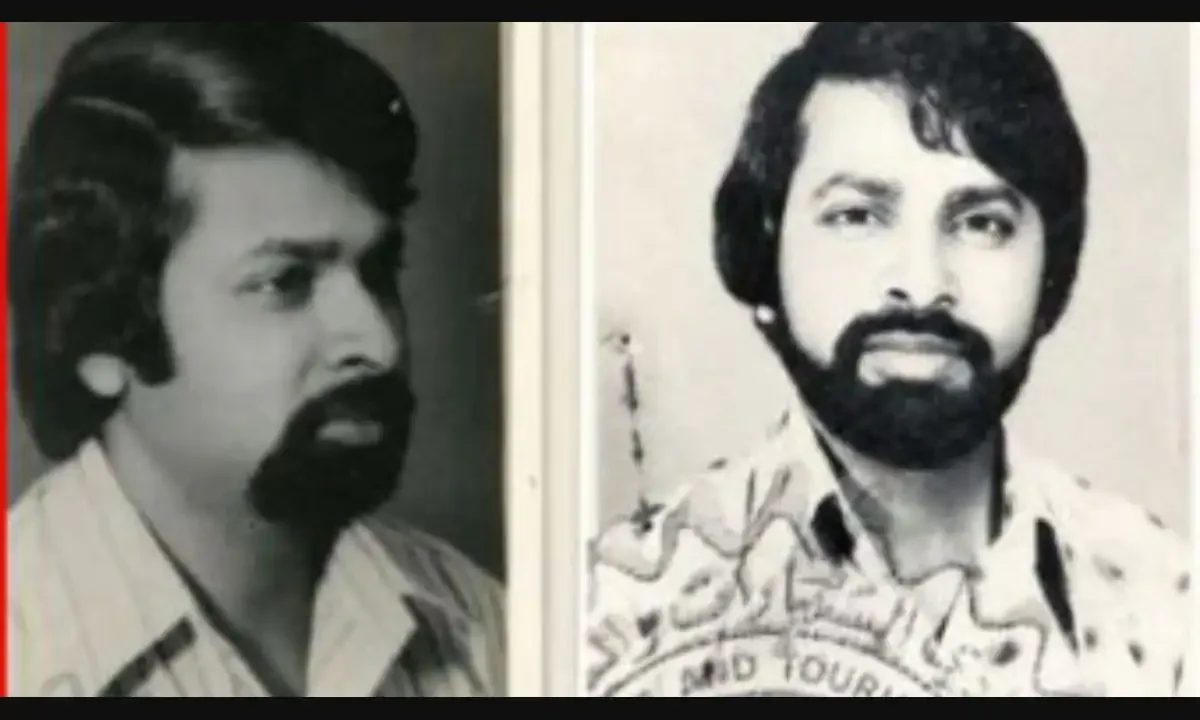
Indiadailyupdate.com – After a four-decade-long search, the Kerala Police has reportedly found fresh momentum in the investigation of Sukumara Kurup, a fugitive linked to the 1984 murder of K.J. Chacko. The case, which has captivated public interest for over 40 years, has seen a renewed focus as investigators revisit a long-forgotten lead involving a retired Malayali nurse. This breakthrough has reignited hopes of finally closing the case, which was initially dismissed as a staged road accident but has since evolved into one of India’s most enduring criminal enigmas.
The Chacko murder case dates back to January 21, 1984, when the victim was lured into an Ambassador car by Sukumara Kurup, according to preliminary reports. The alleged assailant allegedly strangled the victim and meticulously altered his facial features to disguise his identity before setting the body ablaze near Tannimukkam Puncha in Mavelikara, Alappuzha. Despite forensic evidence later confirming the victim’s identity, Kurup vanished from the scene, leaving authorities with a baffling mystery that has persisted for nearly four decades.
Revisiting the Nurse’s Account
During a recent statewide special operation, the Kerala Police Crime Branch has reexamined the testimony of a retired nurse who worked in Dhanbad, Jharkhand, in 1989. At that time, she reportedly encountered a man claiming to be “P.S. Joshi” with a cardiac condition, who appeared to match Sukumara Kurup’s physical description. This detail has sparked renewed interest, as investigators now suspect the nurse’s encounter could be a critical piece of the puzzle.
Police officials have emphasized that this lead is being treated with utmost seriousness. The nurse’s testimony, previously dismissed due to lack of corroborating evidence, is now being cross-referenced with old case files and forensic records. The Kerala Police has also launched a targeted campaign to track down any remaining leads from the 1980s, including interviews with local residents and re-examination of surveillance footage from the era. This case has become a symbol of the challenges faced in long-term criminal investigations.
Public Theories and Speculation
The disappearance of Sukumara Kurup has fueled a myriad of theories over the years. Some believe he fled to Nepal, where he became a monk and adopted a new identity. Others suggest he converted to Islam and now lives under a different name in Saudi Arabia, possibly within a mosque community. The most recent wave of speculation emerged in 2010, when his son, Sunit Pillai, married at the Sree Vallabha Temple in Thiruvalla, Pathanamthitta, under the name “Mr. Sukumara Pillai.”
“The groom was listed as the son of ‘Mr. Sukumara Pillai’ rather than ‘Late Mr. Sukumara Pillai,’” noted local reports, which fueled rumors that the fugitive might have survived the 1984 incident. This development added a personal dimension to the case, drawing attention from both media and the public. However, without definitive proof, these theories remain unverified, leaving the mystery intact.
Experts have pointed out that the lack of physical evidence and the absence of Kurup from the public eye have made the case particularly challenging. Some analysts argue that the 1984 murder was not just a crime but a masterstroke of deception, with Kurup possibly using the cover of a road accident to conceal his actions. The Kerala Police continues to explore all possibilities, including the idea that Kurup may have lived under a false identity for years.
Investigative Techniques and Modern Advances
With the advent of modern technology, the Kerala Police has upgraded its methods to analyze the case more thoroughly. Digital forensics, DNA testing, and facial recognition software are now being applied to old evidence, including photographs and witness statements from the 1980s. This approach has allowed investigators to revisit key moments in the case, such as the moment Kurup allegedly staged the accident and the subsequent disappearance of the victim.
The renewed investigation has also led to a broader review of Sukumara Kurup’s movements during the 1980s. Police are examining travel records, bank statements, and communication logs to trace his path. While the nurse’s lead is central to the current effort, authorities are also considering other angles, including the possibility of accomplices or hidden connections to the crime. This case has become a test of how effectively modern forensic tools can solve historical mysteries.
Legacy of the Case and Public Interest
The Chacko murder case has left a lasting impact on Kerala’s crime history, serving as a benchmark for long-term investigations. For decades, it has been a topic of discussion in local circles, with some calling it the “Unsolved Murder of the Century.” The Kerala Police’s recent decision to revisit the case has reignited public curiosity, with many hoping for a breakthrough in the 40-year hunt for Sukumara Kurup.
As the investigation progresses, the police have urged the public to come forward with any information that could help locate the suspect. Social media campaigns and community outreach programs are now being utilized to spread awareness. This case underscores the importance of persistence in criminal justice, as authorities strive to uncover the truth behind one of India’s most perplexing cold cases.