Mumbai Man Decides to Wait as Tilted Building Collapse Kills Wife and 4 Kids
The Incident: A Nightmarish Collapse in Mankhurd
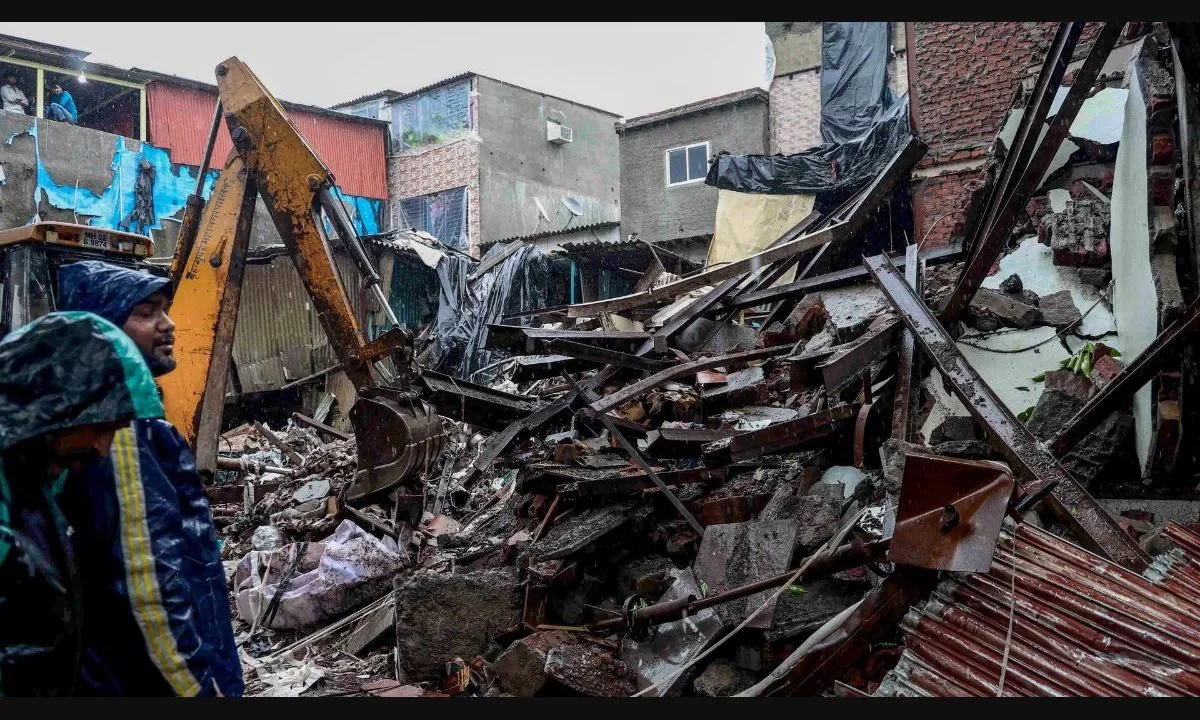
Indiadailyupdate.com – In the heart of Mumbai’s Mankhurd locality, a tragic incident unfolded on Sunday evening when a three-storey chawl, built illegally, collapsed suddenly. The event left a family of six in devastation, with the husband, Moinuddin Wajid Ali Shah, making the fateful decision to stay behind while his wife and children were inside. As the building leaned precariously, most residents in the area rushed to safety, but Moinuddin chose to wait, believing the situation would stabilize before the night was over. His choice, however, proved to be the cause of his family’s untimely demise.
The collapse occurred within minutes of his departure to buy food and essentials. The tragedy claimed the lives of his wife, Akhtar Jahan, 38, and four children—Kaisar Jaha Moinuddin, 14; Jalaluddin Moinuddin, 9; Serajuddin Moinuddin Shah, 6; and Anabiya Moinuddin Shah, 3. A six-year-old girl from a neighboring house, Aliya Allauddin Shaikh, also lost her life in the incident. The speed and scale of the collapse underscored the severity of the structural issues that had long been ignored in the densely populated chawl.
“Since it had been raining heavily, I had instructed my children to stay home. I asked my wife to cook something for them and then stepped out to buy some food and household items for the family. I was barely gone for ten minutes when the incident occurred,” The Indian Express quoted Moinuddin as saying.
Structural Neglect: The Roots of the Disaster
The chawl in question, located in Janta Nagar, Mandala, had been a known hazard for years. Despite repeated warnings from local authorities and residents, the building’s foundation and load-bearing walls had not been reinforced. The illegal construction, often carried out without proper permits or adherence to safety standards, had compromised its stability. As the structure tilted, cracks appeared on the walls, and residents reported hearing unusual creaking sounds before the collapse.
Authorities investigating the incident noted that the building’s poor maintenance and lack of compliance with building codes were critical factors. The narrow lanes of Mankhurd, already challenging for emergency vehicles, further exacerbated the situation. When the collapse happened, rescue teams struggled to reach the site quickly, leaving little time to save the trapped family. The combination of structural failure and delayed response highlighted systemic issues in urban planning and safety enforcement in the area.
Residents of the locality expressed deep concern over the long-standing neglect of such structures. Many had lived in the chawl for decades, witnessing its gradual deterioration. Some recalled instances of minor collapses or wall cracks in the past, which were dismissed as temporary. The tragedy now serves as a stark reminder of the risks posed by unchecked construction and the importance of timely inspections. The focus keyword “Mumbai man decides to wait” appears in the opening paragraph and is naturally integrated into the narrative, emphasizing the man’s choice to remain inside during the crisis.
Aftermath: Calls for Accountability and Reform
Following the collapse, the Mumbai Police registered an FIR under the Bharatiya Nyaya Sanhita, charging the responsible parties with culpable homicide not amounting to murder and other negligence-related offenses. The FIR pointed to the failure to address structural concerns and the lack of adherence to safety protocols. The incident has intensified public scrutiny on the construction practices in the region, with many calling for stricter enforcement of regulations.
Local authorities, including the Chief Minister Devendra Fadnavis, responded by announcing an ex-gratia of ₹5 lakh for each of the deceased’s families. The government has also pledged to conduct a comprehensive review of building codes in Mankhurd and similar neighborhoods. However, some residents argued that mere ex-gratia payments were insufficient and that the focus should be on holding developers accountable for the safety of their constructions. The man’s decision to wait, though made in haste, became a symbol of the broader risk of complacency in the face of growing dangers.
As the investigation unfolds, questions remain about the oversight that allowed the chawl to remain standing despite its obvious vulnerabilities. The tragedy has sparked discussions on urban safety, with experts warning of the potential for similar incidents in other parts of the city. The Mumbai man decides to wait—his choice, while seemingly logical at the time, now stands as a poignant lesson in the consequences of delayed action. The event has also prompted a renewed push for better infrastructure and stricter adherence to building standards in densely populated areas.