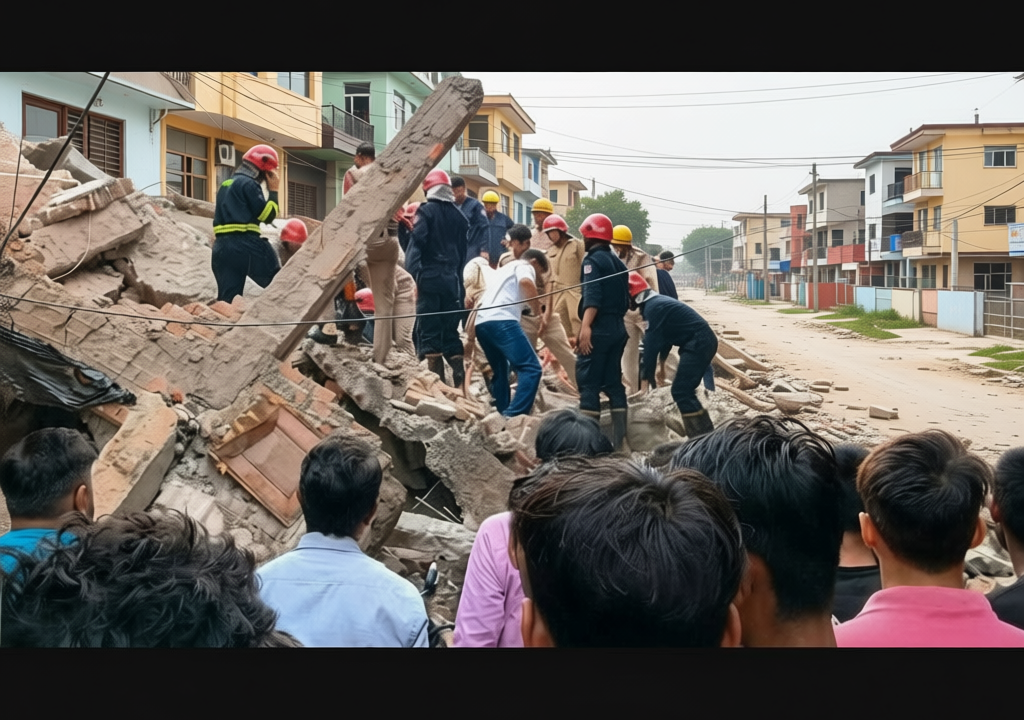

Delhi Disaster: Multi-Storey Building Collapses in Rohini Amid Heavy Rain
Indiadailyupdate.com – A tragic Delhi disaster unfolded in Sector 16 of Rohini on July 8, 2026, when a three-storey building crumbled under the weight of relentless downpours, trapping multiple individuals beneath the debris. The incident, which occurred in the late afternoon, has raised urgent concerns about structural safety and emergency preparedness in the National Capital Region (NCR). Rescue teams, including the National Disaster Response Force (NDRF) and local police, have been deployed to the site to sift through the rubble and locate survivors. The Delhi disaster has become a focal point for authorities, as they investigate whether the heavy rainfall exacerbated existing vulnerabilities in the building’s foundation.
Residents’ Heroic Efforts Amid the Crisis
As the building collapsed, nearby residents swiftly mobilized to assist in the rescue operation, showcasing remarkable community spirit. Without access to heavy machinery, locals used makeshift tools such as shovels, ropes, and even their bare hands to clear the wreckage and reach trapped individuals. A viral video captured the chaos, showing people forming human chains to shift debris and rescue survivors from the depths of the rubble. The footage, which circulated widely on social media, highlighted the urgency of the situation and the determination of the people on the ground. Despite the risk, bystanders continued their efforts until professional rescuers arrived, ensuring that no one was left behind in the immediate aftermath.
“We saw a hand waving from under the rubble. We had to act fast before the water levels rose further,”
one witness recounted in an interview, emphasizing the critical timing of the rescue. The Delhi disaster has prompted discussions about the need for better infrastructure and early warning systems, as the incident underscores the dangers of unpreparedness during extreme weather events. While the exact number of casualties remains under investigation, the debris has been described as a “mini mountain” of broken concrete and twisted metal, complicating the search and rescue process.
Weather Conditions and Structural Vulnerabilities
Authorities are now scrutinizing the role of heavy rainfall in triggering the collapse. The National Capital Region experienced a low-pressure system that brought unprecedented rainfall from July 8 to 10, 2026, with some areas recording over 150 mm of rain in a single day. Experts suggest that the prolonged saturation of the soil may have weakened the building’s underground supports, leading to its sudden collapse. The Delhi disaster has also raised questions about the adequacy of drainage systems in the region, as standing water and flooded roads were reported in several neighborhoods before the incident.
In the wake of the disaster, structural engineers are conducting assessments to determine the cause. Initial reports indicate that the building, which housed a mix of residential and commercial units, had been flagged for minor cracks in its foundation a week prior. However, no immediate evacuation orders were issued, leaving residents unaware of the impending danger. The incident has sparked a debate about the need for regular inspections and updated building codes in densely populated urban areas like Rohini, where multi-storey structures are common.
Rescue Operations and Public Response
As the rescue efforts intensified, teams worked tirelessly to extract survivors from the wreckage. The Delhi disaster has been marked by a coordinated response, with local authorities, volunteers, and even construction workers lending a hand. Over four hours, the teams managed to pull out at least two individuals, though several others are still feared trapped. The use of thermal imaging cameras and drones has helped locate potential survivors, while medical teams are on standby to provide immediate care. The situation has been further complicated by the risk of secondary collapses, prompting rescuers to take extreme caution in their operations.
Meanwhile, social media has played a pivotal role in amplifying awareness about the Delhi disaster. Viral videos and real-time updates have kept the public informed, with hashtags like #DelhiDisaster and #RohiniCollapse trending on platforms such as Twitter and Instagram. Residents in the vicinity have shared personal accounts of the event, describing the sheer force of the collapse and the panic that followed. The incident has also prompted calls for increased investment in disaster mitigation infrastructure, with some activists urging the government to prioritize safety in urban development projects.