Madhya Pradesh Congress: Factional Struggles and the Datia Assembly By-election
Indiadailyupdate.com – The Madhya Pradesh Congress has become a focal point for discussions about internal party dynamics, particularly as factional tensions intensify ahead of the upcoming Datia assembly by-election. The state unit, known for its complex leadership structure, is currently embroiled in a dispute between its current president, Jitu Patwari, and former chief minister Digvijaya Singh. This conflict, which has gained traction through recent allegations and counter-allegations, raises questions about the stability of the party’s governance and its ability to maintain unity during critical electoral periods.
The Heart of the Factionalism Narrative
Jitu Patwari’s recent accusations against Mohan Yadav and his allies in Ujjain have sparked a wave of debate, with the Madhya Pradesh Congress at the center. Patwari claimed that government land worth ₹500 crore was transferred to the Veer Bharat Nyas trust for a nominal ₹1, implicating Shriram Tiwari, Yadav’s cultural adviser, in the transaction. These allegations were presented at a Delhi press conference, drawing attention to the potential for power struggles within the party. In response, Digvijaya Singh, who had previously supported Patwari’s political rise, dismissed the claims during his visit to Ujjain on June 27 and 28. While the conflict has been framed as a challenge to party cohesion, insiders suggest it may not escalate into a full-fledged factional battle but rather reflect differing strategies in leadership and governance.
The By-election as a Crucible for Unity
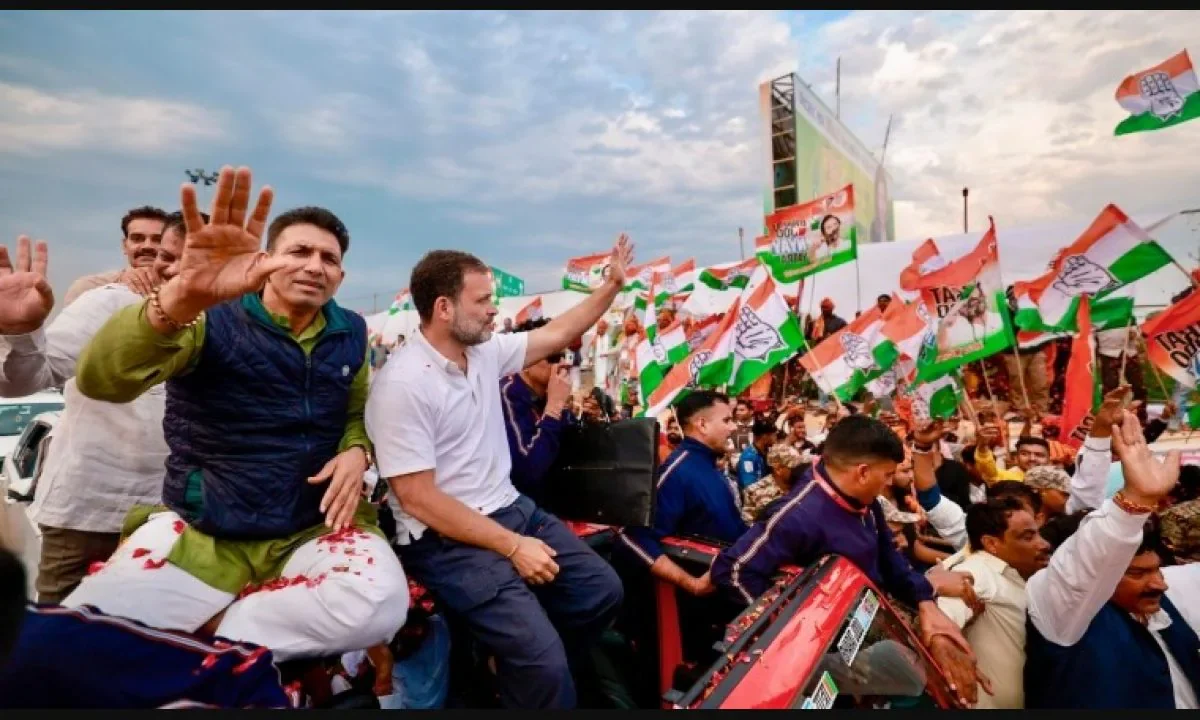
The Datia by-election, currently seen as a key opportunity for the Madhya Pradesh Congress, will serve as a litmus test for the party’s ability to overcome internal divisions. The vacancy arose after a Congress legislator was disqualified from the assembly, creating a power vacuum that has been strategically contested. While the Madhya Pradesh Congress has expressed a commitment to presenting a united front, the by-election may reveal the extent to which factionalism affects grassroots mobilization and voter perception. The outcome could also influence the party’s future trajectory in the state, particularly as it seeks to regain momentum in a competitive political environment.
Within the Madhya Pradesh Congress, the rivalry between Patwari and Singh has highlighted the competing priorities of different factions. Patwari, who has been groomed by Singh himself, is positioning himself as a leader with a strong organizational base and a focus on modernizing the party’s structure. Meanwhile, Singh’s influence remains tied to his legacy as a former chief minister and his continued involvement in shaping the party’s direction. This dynamic has led to occasional friction, not only between the two but also involving other senior figures such as Leader of Opposition Umang Singhar and former state chief Arun Yadav. The Madhya Pradesh Congress’s internal balance of power is now a topic of intense scrutiny, with implications for both its future governance and electoral performance.
Political analysts have pointed to the Madhya Pradesh Congress’s long-standing history of factionalism as a backdrop to the current tensions. While the party has historically been a hub for competing interests, recent developments have amplified the visibility of these divisions. However, leaders argue that the Madhya Pradesh Congress’s core operations remain unaffected, citing the appointment of new district presidents and the energetic campaign strategies led by Patwari’s faction. These actions signal a renewed focus on grassroots engagement and organizational strength, which could bolster the party’s chances in the upcoming by-election and beyond.
“The Madhya Pradesh Congress has always had multiple power centers, but the current situation has brought these differences to the forefront,” remarked a senior Congress legislator. “Some leaders have personal ambitions and are naturally working to secure their political futures, while others may differ on strategy and tactics. But all leaders are ultimately working for the party,” said another Congress member, emphasizing that factionalism, though visible, is not a new phenomenon in the Madhya Pradesh Congress.