Yogi Adityanath Slams Congress and SP for Hanuman Chalisa in Jama Masjid
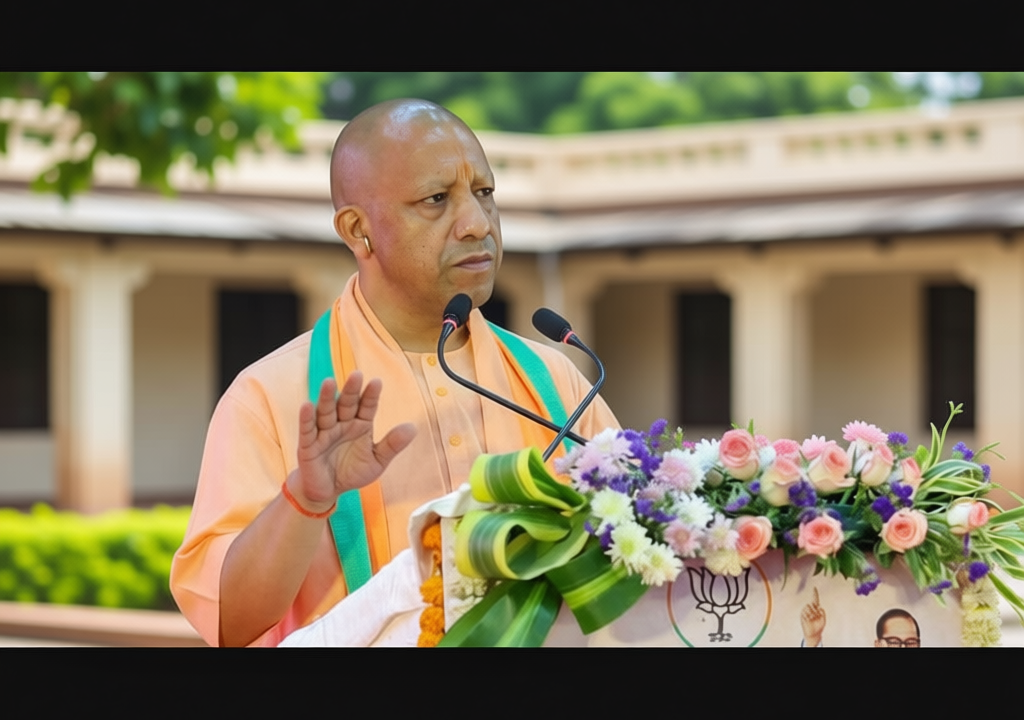
Indiadailyupdate.com – Can anyone imagine Hanuman Chalisa being recited inside Jama Masjid? Uttar Pradesh Chief Minister Yogi Adityanath used this rhetorical question to launch a scathing attack on the Congress and Samajwadi Party during a public event in Bikapur. The criticism centers on the opposition’s alleged role in allowing namaz to be performed at the Hanumangarhi temple in Ayodhya, a site traditionally associated with Lord Hanuman. Adityanath accused these parties of eroding Hindu cultural practices and questioned their commitment to preserving religious heritage.
Historical Context of the Controversy
The incident that sparked Adityanath’s remarks dates back to November 2003, when local authorities reportedly blocked attempts to hold namaz outside the Hanumangarhi temple. According to PTI reports, the opposition had previously raised concerns about the temple’s location and its proximity to the Ram Janmabhoomi site. Adityanath framed this as a deliberate move to undermine Hindu traditions, suggesting the opposition’s actions were driven by political agendas rather than religious conviction.
“They allowed namaz to be performed at Hanumangarhi. Can anyone imagine the Hanuman Chalisa being chanted inside the Jama Masjid? Why would any government, including the Samajwadi Party or Congress, permit such a thing? Who is accountable for this act?”
The chief minister further criticized the opposition for opposing the Ram temple’s construction, accusing them of creating obstacles for the project. He highlighted how the BJP-led government had completed the temple without hindrance, contrasting it with the challenges faced under previous administrations. Adityanath emphasized the spiritual and symbolic significance of the temple, which he described as a beacon of Hindu pride and cultural identity.
Political and Religious Ramifications
Adityanath’s comments have intensified the debate over religious syncretism in Ayodhya. While the Hanumangarhi temple is a Hindu site, the allowance of namaz there has been seen as a symbolic gesture by the opposition. The chief minister argued that this act was not just a religious matter but also a political one, reflecting the opposition’s alleged neglect of Hindu traditions. He reiterated his belief that the Congress and SP had consistently resisted Ayodhya’s development, even going so far as to shoot at devotees during the Ram temple’s construction phase.
“These are the same people who halted the Ram temple’s construction and who shot at Ram devotees. Now, they must apologize for the sin committed at Hanumangarhi,”
Adityanath also pointed to the renaming of projects after revered figures, such as Maharishi Valmiki and Nishad Raj, as an example of the opposition’s resistance to Hindu cultural narratives. This critique aligns with ongoing discussions about alleged mismanagement of donations for the Ram temple, which he claims has fueled the opposition’s current stance. By linking these issues, Adityanath aims to position the BJP as the rightful custodian of Ayodhya’s spiritual legacy.
Ayodhya’s Transformation Under BJP Leadership
Since 2017, Ayodhya has undergone significant transformation under the BJP-led government. Adityanath highlighted modern infrastructure, including improved roads, electricity, and civic services, as evidence of the party’s commitment to the city’s development. He noted that the Ram temple’s completion in 2019 symbolized this progress, contrasting it with the stagnation under the Congress and SP. The chief minister emphasized that the current state of Ayodhya’s ghats, such as Ram Ki Paidi and Bhakti Path, reflects the government’s efforts to revitalize the region.
“Ayodhya once lacked proper roads, electricity, and essential civic services. Today, it shines as a solar city, with illuminated streets and seamless transportation networks. What took generations to achieve is now realized,”
These developments have not only enhanced Ayodhya’s physical landscape but also strengthened its religious significance. Adityanath argued that the opposition’s resistance to such projects had delayed progress for years, while the BJP’s leadership had accelerated the city’s growth. By framing the controversy as a clash between tradition and modernization, he sought to galvanize public support for his administration’s policies.