
3 Lakh Doesn’t Feel Rich: A Gurgaon Founder’s Warning
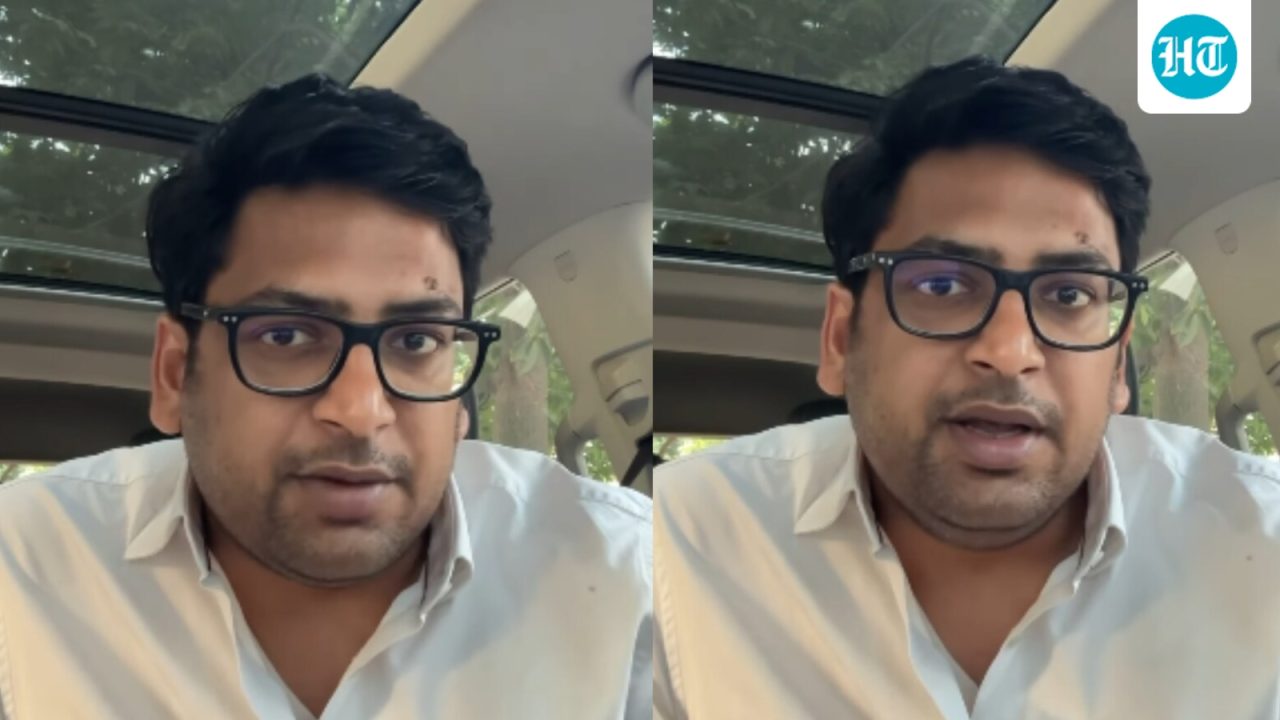
Indiadailyupdate.com – Walk through any upscale corridor in Gurugram and you will hear the phrase “3 lakh doesn’t feel rich” muttered over dinner tables, in carpool groups, and in late-night WhatsApp threads. Dr Sunny Garg, an entrepreneur operating in the National Capital Region, turned that whispered frustration into a viral Instagram post that laid out, line by line, why a dual-earner household clearing ₹3,00,000 a month can still end the cycle with an empty wallet. His breakdown has since become a reference point for thousands of metro families trying to understand where their salaries actually go.
Where the Money Vanishes
Garg built his argument around a composite couple—each partner pulling in ₹1.5 lakh monthly. The combined figure sounds comfortable on a payslip, but his itemised walkthrough strips that comfort away within seconds. A home-loan EMI or premium rent swallows ₹60,000 to ₹70,000. School fees, transport, and extracurricular charges add another ₹25,000 to ₹30,000. A car EMI follows. Household staff—a maid, a cook, a nanny—claim their own slice. Groceries, insurance premiums, contributions toward ageing parents’ medical bills, SIP top-ups, weekend restaurant bills, Swiggy deliveries, Uber rides, and a shelf of streaming and software subscriptions round out the list. After every entry is tallied, the residual balance hovers near zero.
“The husband earns ₹1.5 lakh a month, and the wife earns ₹1.5 lakh. Together, they make ₹3 lakh every month. On paper, life should be pretty comfortable. But by the end of the month, they still sometimes wonder, ‘We earn so much, so why does it still not feel like enough?'”
The emotional punch, Garg noted, is not the size of any single expense but the cumulative weight. Once the machine is running, the household stops asking whether it is free and starts asking how to keep it turning.
The Structural Lock-In Behind the Lifestyle
The expense list, painful as it is, describes only the visible symptom. The deeper mechanism, Garg argued, is structural. Mortgage approvals, premium-school admissions, vehicle upgrades, and the broader consumption pattern are all underwritten on the assumption that two salaries will flow without interruption. Remove one pillar and the entire operating model was never engineered to survive.
“You chose the house because there were two incomes. You chose the school because there were two incomes. You upgraded the car because there were two incomes. You built your lifestyle around two incomes.”
The fragility becomes stark the instant one partner contemplates leaving a role, pivoting careers, or taking a prolonged sabbatical. What looked like redundancy turns out to be a single point of failure dressed in two paychecks.
Reframing the Question
Rather than prescribing smaller ambitions or tighter belts, Garg proposed a different diagnostic. The meaningful metric, he suggested, is not gross inflow but resilience under shock. His closing line has been quoted widely:
“Perhaps the better question about financial freedom is not how much we earn. It is: if one income stops tomorrow, how long can we continue living our lives comfortably? Maybe wealth is not just about increasing what comes in. It is also about building a life that does not collapse the moment you stop running.”
That framing aligns with long-standing personal-finance guidance recommending six to twelve months of essential expenses held in liquid reserves before scaling lifestyle commitments. In the Indian context—where employer tenure can shift abruptly through restructuring, sector downturns, or health events—the single-income stress test carries particular urgency for metro households.
The post drew swift engagement across social platforms. Commenters echoed the thesis without reservation: “This is actually so true.” Others noted, “High income doesn’t always mean financial freedom,” while a third highlighted the practical takeaway: “This is why emergency funds matter.” A fourth cautioned, “Building a lifestyle around two incomes can be risky.” The conversation lands amid a wider pattern in Indian metro economies. Post-pandemic hiring in technology, finance, and professional services has pushed more women into full-time roles, swelling dual-earner households in Gurugram, Bengaluru, and Hyderabad. Simultaneously, NCR housing prices have climbed sharply, school-fee inflation has outpaced general CPI, and the cost of domestic help has risen in step—squeezing the very margin that was supposed to make the ₹3 lakh figure feel secure.
Frequently Asked Questions
Is ₹3 lakh per month considered rich in India? In metro cities like Gurugram or Bengaluru, ₹3 lakh places a household in the upper-middle bracket, but after housing, education, transport, and household-staff costs, disposable surplus is often minimal. Income alone does not equal financial freedom.
How much should a dual-income household keep in emergency reserves? Most personal-finance literature recommends six to twelve months of essential expenses in liquid, easily accessible instruments—savings accounts, liquid mutual funds, or short-term debt funds—before taking on additional fixed obligations.
What is the single-income stress test? It is a simple exercise: assume one earner’s salary drops to zero for the next twelve months. If the household cannot cover housing, food, insurance, and debt service from savings and the remaining income, the lifestyle is over-leveraged relative to actual risk tolerance.
Why did Garg’s post go viral? It named a feeling many dual-earner families already had but lacked a structured vocabulary for. By itemising the outflows and then reframing the question from “how much do we earn” to “how long can we survive without one income,” it gave readers both validation and a concrete next step.