Anna Hazare Urges Government to Engage with Sonam Wangchuk Before Escalation
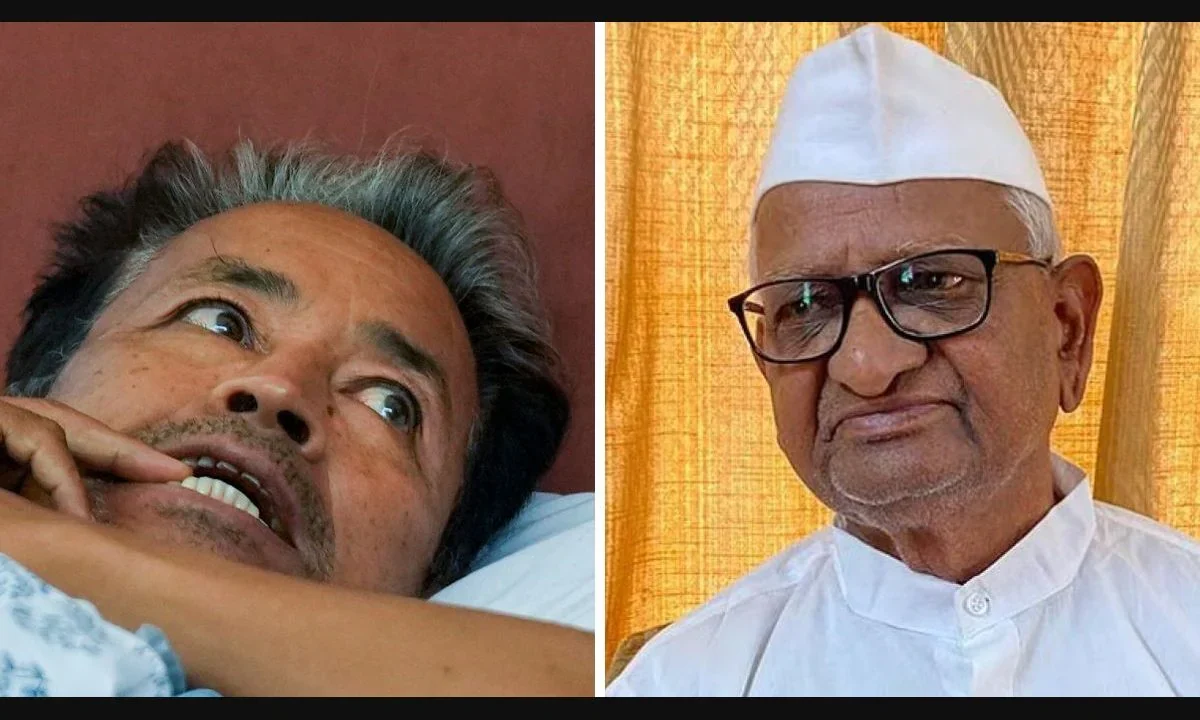
Indiadailyupdate.com – On Saturday, renowned social activist Anna Hazare made a compelling call for the central government to engage in immediate dialogue with Sonam Wangchuk, who was actively participating in a hunger strike at Jantar Mantar in Delhi. Hazare emphasized the critical need for proactive communication, asserting that delaying decisions could result in more dire consequences. His appeal comes as the situation surrounding the protest intensifies, with the potential for public unrest growing by the hour.
The Urgency of Dialogue
“The administration should not hesitate to address this issue now. Why wait for a crisis to unfold when a simple ‘yes’ or ‘no’ could resolve the matter? What is the challenge in initiating conversations?” Hazare stated in a video message, urging the government to act swiftly.
Speaking from the heart of the protest, Hazare highlighted the importance of bridging the gap between the authorities and the demonstrators. He argued that a collaborative approach would not only de-escalate tensions but also prevent the situation from spiraling into a more tragic outcome. His words resonated with the crowd, many of whom were weary of prolonged stalemates.
Legal and Security Measures Intensify
The hunger strike by Sonam Wangchuk has prompted Delhi police to take decisive action, relocating him to Safdurjung Hospital following a directive from the Delhi High Court. The court’s intervention, coupled with medical experts’ recommendations, underscores the gravity of the situation and the administration’s commitment to ensuring the safety of the protester. Hazare noted that this transfer occurred during the hunger strike, reinforcing the urgency of the government’s response.
“This is a public concern, and the best way to address it is through calm and cooperation. If force or resistance is employed, the issue becomes far more complex to resolve,” Hazare added, stressing the need for a diplomatic resolution.
As the Monsoon session of Parliament progresses, security measures around the legislative building have been heightened. Authorities have expanded vehicle inspections and increased surveillance, citing concerns about the upcoming July 20 ‘Chalo Sansad’ march. Despite these efforts, Hazare remains optimistic that a dialogue can still prevent the escalation of tensions.
Historical Context and Political Implications
Wangchuk’s hunger strike follows a significant chapter in 2011 when Hazare’s protest for the Lokpal Act shook the UPA government and catalyzed the formation of the Aam Aadmi Party (AAP). His current campaign, however, is spearheaded by the Cockroach Janta Party (CJP), a political group focused on grassroots activism and public accountability. The parallels between this event and the past highlight Hazare’s enduring influence in shaping India’s political landscape.
Historically, Hazare’s ability to mobilize public support has been a key factor in his advocacy. This time, he is urging the Centre to hold talks with Wangchuk, echoing his earlier strategies. The political implications of such a move could be profound, as it might signal a shift toward more inclusive governance or a deeper divide between the ruling party and dissenting voices.
Public Reaction and Broader Impact
The hunger strike has drawn widespread attention, with citizens and political analysts alike weighing in on the situation. Many view Hazare’s appeal as a timely reminder of the power of dialogue in resolving conflicts. Others argue that the Centre’s reluctance to engage could fuel public frustration and lead to broader unrest. The movement has also reignited discussions about transparency and the role of civil society in holding the government accountable.
As the days pass, the hunger strike has become a symbol of the protesters’ resolve. Hazare’s call for talks with the Centre has not only energized the demonstrators but also prompted questions about the government’s preparedness to address their concerns. The upcoming ‘Chalo Sansad’ march, which is expected to draw thousands, adds to the pressure on authorities to respond effectively.
“Even if the organizers request permission later, it’s unlikely they’ll receive it. The security measures around the legislative building will be at peak, and the administration must be ready to engage before the situation becomes irreversible,” a police official told PTI, reinforcing the stakes of the current standoff.
Conclusion: A Call for Unity
Anna Hazare’s persistent advocacy for dialogue remains a beacon of hope for those seeking peaceful resolution. His insistence on the Centre to hold talks with Sonam Wangchuk reflects a broader message of unity and collaboration. As the protest continues, the outcome will serve as a test of the government’s commitment to addressing public grievances and fostering a more responsive political environment.