End of an Era: K.T. Shivaprasad’s Passing Marks a Loss for Karnataka’s Cultural Heritage
Artistic Roots and Diverse Contributions
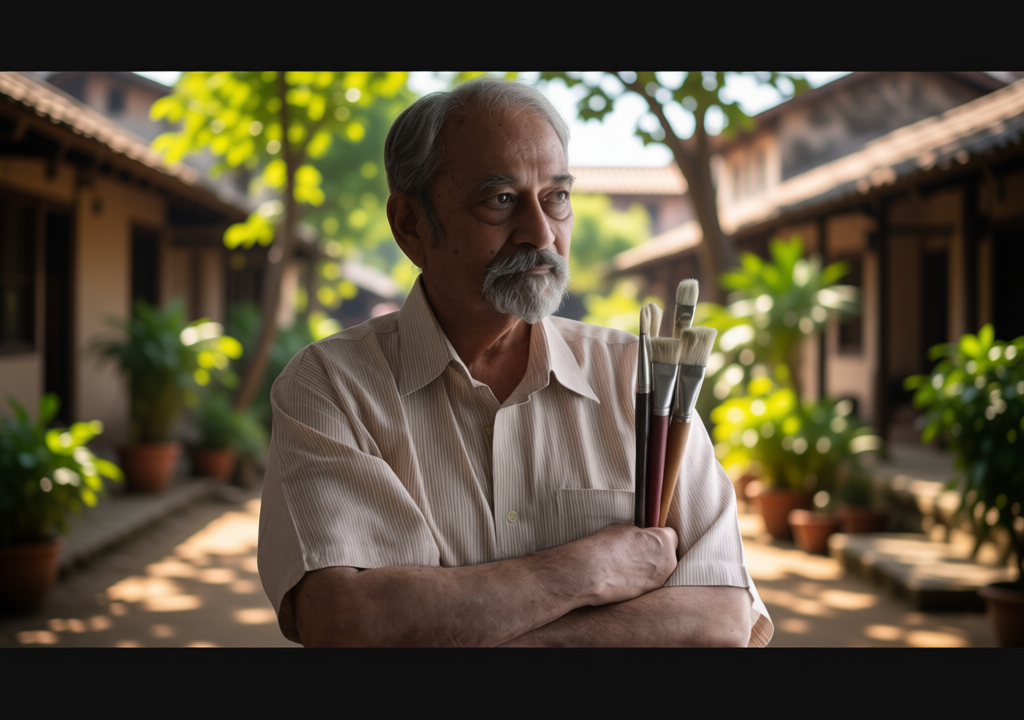
Indiadailyupdate.com – K.T. Shivaprasad, celebrated as a multifaceted figure in Karnataka’s creative landscape, left behind a legacy as an artist, photographer, architect, and social advocate. Born in 1947 in Kodagu, he came from a family deeply rooted in political influence, specifically in Hassan, Karnataka. His father, L. T. Karle, was a prominent freedom fighter, politician, and founder of the Karle Group. Despite his father’s aspirations for him, Shivaprasad pursued art, a path that defined his life’s work.
Artistic Vision and Style
Shivaprasad’s art centered on everyday people, capturing their resilience, struggles, and dignity. His subjects ranged from laborers and farmers to women and rural traditions, often drawing inspiration from his own photographs of village life. This unique method gave his paintings an unmistakable quality. His approach combined realism with symbolic depth, creating a visual language that resonated with the common populace rather than elite galleries. Whether highlighting the hardships of workers or honoring the endurance of rural communities, his work reflected a deep empathy for marginalized groups.
Architectural Achievements
As an architect, Shivaprasad designed numerous homes that balanced artistic expression with practicality. His creations were spread across Bengaluru, Mysuru, and other parts of Karnataka. Notable projects included the rock installation at Kavishaila and the memorial for Kannada poet Kuvempu in Kuppalli, Shivamogga. The latter was backed by V.G. Siddartha, founder of Cafe Coffee Day. His architectural contributions were as impactful as his paintings, blending functionality with cultural storytelling.
Social Activism and Community Work
Shivaprasad was deeply involved in social causes, aligning himself with movements advocating for farmers and Dalits. He participated in campaigns to recover household items seized by banks, even organizing raids on bank warehouses. His commitment to social justice extended beyond art, making him a vital voice in Karnataka’s grassroots activism. He also chose to live in Hassan, his hometown, prioritizing proximity to the communities he sought to represent.
Awards and Philanthropy
His contributions earned him recognition, including the Karnataka Rajyotsava Award in 2001. Instead of keeping the honor, he donated his gold medal to an NGO supporting children of sex workers in Mysuru. Shivaprasad also received the Varnashilpi Venkatappa Award and organized extensive exhibitions nationwide. His dedication to both art and societal upliftment defined his career.
Enduring Influence and Connections
Contemporary artist Mahesha G, who focuses on rural narratives, notes that Shivaprasad’s depictions of ordinary people and their environments elevated these communities in major galleries. “His paintings brought villagers into the spotlight,” G says. “It’s rare to find an artist whose style feels entirely singular in India.” Shivaprasad’s work remains unmatched, with its unique treatment of themes and subjects. He was also a close friend of Banu Mushtaq, the 2025 International Booker Prize winner, who resides in Hassan. His passing marks the closing of a significant chapter in Karnataka’s cultural history.