As Opposition Backs Wangchuk’s Fast, Students Push for Lasting Education Reforms
Indiadailyupdate.com – As opposition backs Wangchuk’s fast, the movement has taken on new momentum as political leaders and student activists unite in demanding systemic changes in India’s education policy. The hunger strike, initiated by climate activist Sonam Wangchuk, has drawn widespread attention, with figures from the Samajwadi Party, Aam Aadmi Party, and other opposition groups standing in solidarity. The protest, which began in early July, has highlighted growing dissatisfaction with the current framework of examinations and recruitment processes in higher education. As the Monsoon Session of Parliament approaches, the call for structural reforms intensifies, urging leaders to address the root causes of the system’s inefficiencies rather than merely endorsing symbolic acts of protest.
The Political Show of Solidarity
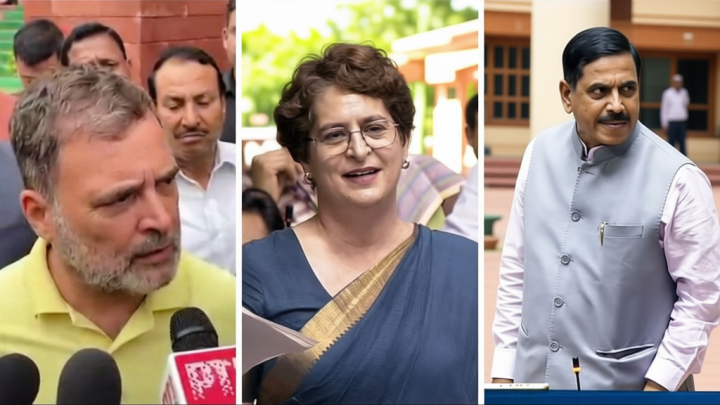
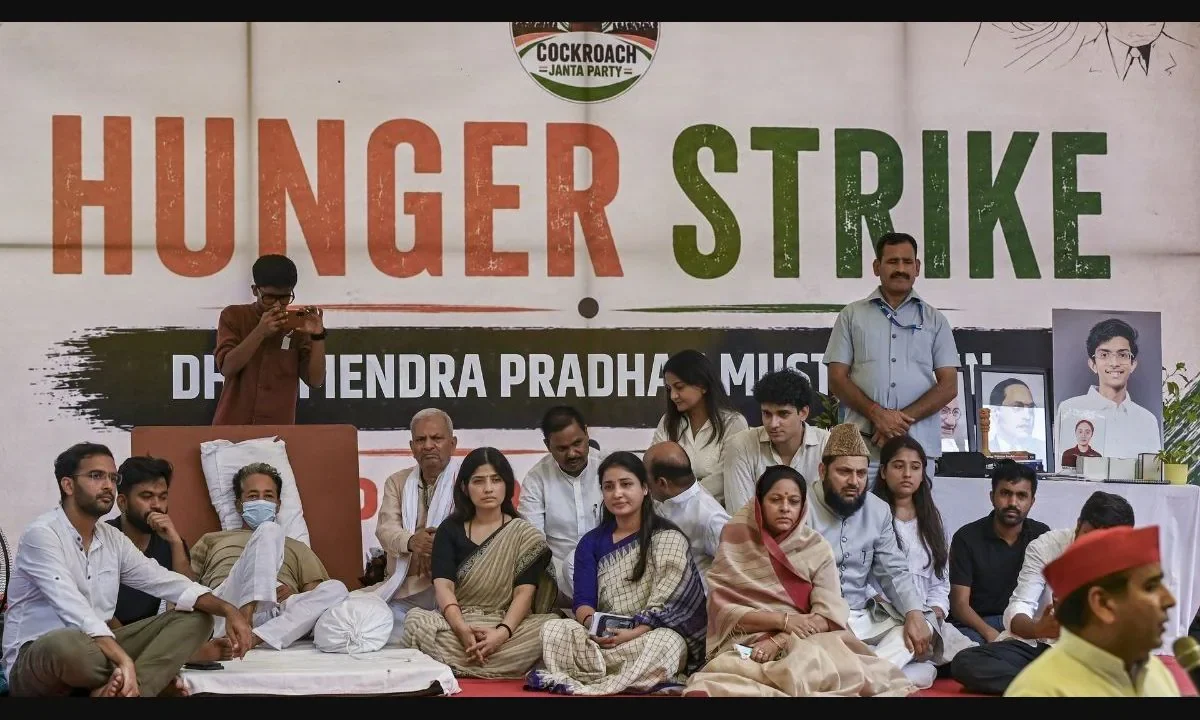
Political leaders have increasingly joined the protest, amplifying its visibility and public resonance. Dimple Yadav, spouse of Akhilesh Yadav and a prominent Samajwadi Party figure, was seen at Jantar Mantar in a white saree with black borders, symbolizing her support for Wangchuk’s cause. The presence of leaders like Arvind Kejriwal and Sanjay Singh underscores the growing alignment between grassroots movements and political agendas. However, critics argue that this support may dilute the protest’s core message, shifting focus from systemic reform to a narrative of accountability centered on individual actions. As the opposition backs Wangchuk’s fast, the question remains: will their involvement translate into tangible policy changes, or will it remain a gesture of temporary solidarity?
Students’ Frustration with Systemic Flaws
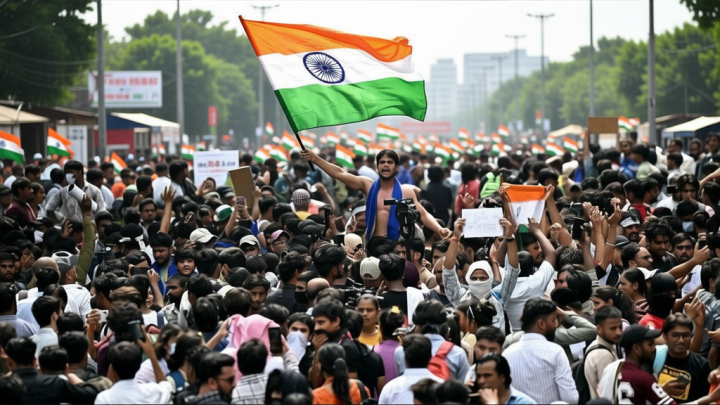
Students at the forefront of the protest insist that the real test lies in implementing long-term reforms to rectify deep-seated issues within the education system. They cite recurring problems such as paper leaks, inconsistent grading, and opaque recruitment procedures as evidence of institutional failure. For many, Wangchuk’s fast represents a rallying point to demand transparency and fairness, but the movement has also sparked debates about the efficacy of hunger strikes as a tool for policy change. While some view the strike as a powerful statement, others argue that it must be accompanied by sustained advocacy and legislative action to achieve lasting results. As the opposition backs Wangchuk’s fast, students are pushing for a shift from short-term protests to systemic solutions that address the root causes of educational inequality.
Divided Perspectives on the Movement’s Strategy
At the protest site, opinions are split on the effectiveness of Wangchuk’s hunger strike as a strategy for reform. Bhim Kumar of Krantrikari Yuva Sangathan argues that the focus on individual acts like fasting may overshadow broader structural challenges. “We need to target the system, not just one person,” he emphasized, highlighting the need for a more comprehensive approach. Meanwhile, Sharanya from the Students’ Federation of India defended the strike, stating, “This twenty-four-hour fast is meant to create a lasting impact.” The debate reflects a deeper tension within the movement: balancing immediate visibility with the pursuit of long-term change. As the opposition backs Wangchuk’s fast, the challenge is to ensure that political support translates into actionable reforms that benefit the entire educational ecosystem.
Questions About Political Accountability
The involvement of political leaders in Wangchuk’s fast has also raised questions about their commitment to reform. Kapil Topo, a tribal residential school operator in Jharkhand, expressed skepticism about the movement’s direction, noting that some figures linked to the examination system have faced scrutiny for past scandals. “Outdated methods may not resonate in today’s fast-paced society,” he remarked, advocating for modernization over symbolic gestures. Students from the All India Students’ Association have echoed these concerns, criticizing the government for its lack of progress despite weeks of protests. As the opposition backs Wangchuk’s fast, the movement now faces the critical test of whether political backing will lead to meaningful accountability or remain a superficial endorsement of protest.
The Road Ahead for Educational Reform
With the protest entering its second week, the stakes have escalated for both students and political allies. As opposition backs Wangchuk’s fast, the momentum has forced ministers and policymakers to reconsider their stance on educational reforms. The growing public support for the movement has also brought attention to the need for independent oversight mechanisms to prevent corruption in examinations and recruitment. While the hunger strike has galvanized students, the long-term success of the movement will depend on sustained pressure and concrete policy proposals. As the Monsoon Session of Parliament unfolds, the challenge is to transform collective frustration into a roadmap for transformative change, ensuring that the reforms demanded are not just symbolic but substantive. The outcome of this movement will serve as a pivotal moment in India’s educational discourse, shaping the future of policy and accountability in the sector.